
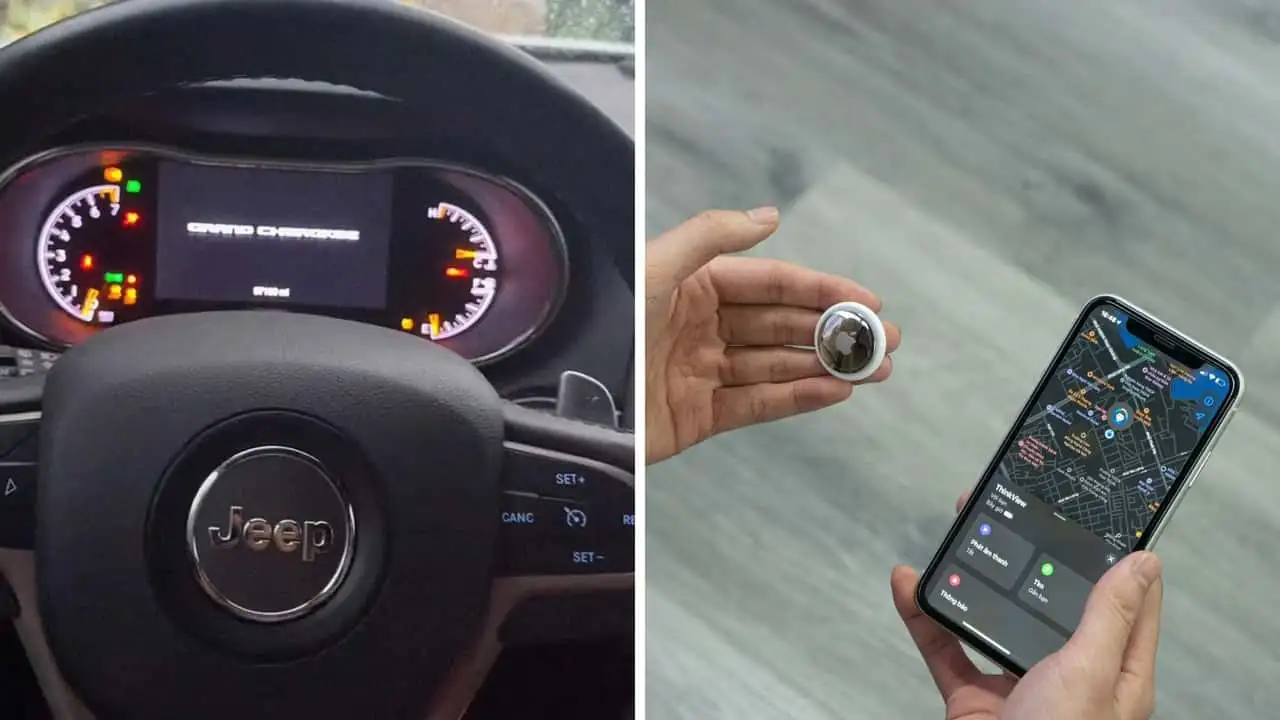

When a driver starts to feel like the same car is always behind her or that her routes are oddly predictable to someone else, it can sound like paranoia. For a growing number of women, however, that uneasy feeling has ended with a crawl under the bumper and the discovery of a small tracking tag stuck to the frame. What looks like a harmless gadget for finding lost keys is quietly reshaping how stalking, control and domestic abuse can play out on everyday streets.
Across the United States, women have reported finding Bluetooth and GPS devices hidden in wheel wells, tucked into trunks and even magnetized to the undercarriage of their vehicles. Their stories reveal how consumer technology, sold as a convenience product, is being repurposed in ways that lawmakers and law enforcement are still scrambling to address.
The moment suspicion turns into proof

For the woman who finally slid under her car and spotted a tracking tag clipped near the rear axle, the discovery did not come out of nowhere. She had already noticed a pattern of the same vehicle appearing in her mirrors and friends mentioning that someone seemed to know when she arrived or left specific places. That creeping sense that her movements were not private pushed her to check the places most drivers never look, the underside of the car where a tracker can sit for weeks without anyone noticing.
Her experience mirrors a series of cases in which women only confirmed their fears after physically inspecting their vehicles. In one report from AUBURN, a driver in East Alabama became concerned enough to search her car and found a device attached underneath, prompting police to urge others to report anything suspicious. In suburban Glencoe, a woman discovered an Apple AirTag hidden under her vehicle and later said she was grateful she trusted her instincts instead of dismissing the early signs as coincidence.
How tiny trackers became a stalking tool
The devices turning up on cars were not built for harassment. They are marketed as compact location tags that help people find lost items, from luggage to backpacks, through a smartphone app. A quick search for a Bluetooth tracking product turns up dozens of coin sized gadgets that promise long battery life, precise location data and easy sharing with family members. Those same features, when misused, can give someone a live map of another person’s movements without their knowledge.
Apple’s AirTag, in particular, has been at the center of several incidents. In Southwest Louisiana, a woman said she found an Apple AirTag hidden in her car, describing it as a device originally designed to help locate lost keys or a wallet. Another woman in Medford, Ore, found an Apple AirTag attached to her car and watched as it kept pinging locations across Southern Oregon and Northern California, turning what should have been a safety feature into a source of fear.
From Glencoe to Auburn, a pattern emerges
Once the Glencoe driver realized an AirTag was hidden under her car, she went public with a warning, urging neighbors to check their own vehicles and pay attention to any unexplained tracking alerts on their phones. The report noted that NBC Universal, Inc captured her account of discovering the device and her frustration that the guilty party had not yet been identified. Her story underscored how easily a small tag can be hidden on the underside of a car, where most owners never think to look.
In Alabama, the woman in Close proximity to AUBURN had a similar experience when she found a tracker underneath her vehicle. The report, labeled By Justin Brown and Published in Sep at 3:59 PM PDT, described how she contacted law enforcement, who then reminded the public to report any suspicious devices and not to ignore alerts that a tracker might be moving with them. Together, the Glencoe and Auburn cases show that this is not a problem confined to one city or region, but a pattern emerging in suburbs and small towns alike.
When the threat comes from someone you know
Not every hidden tracker is planted by a stranger in a parking lot. In Florida, a 22 year old woman said her boyfriend secretly tracked her using a hidden Bluetooth device attached to her car. She described how the tracking was used for control and abuse, allowing him to monitor where she went and confront her about her movements. The device itself was small and easy to conceal, but its impact on her sense of autonomy was enormous.
Domestic violence advocates have long warned that technology can become another tool for coercive control, and the Florida case illustrates how location tags fit into that pattern. Instead of hacking into a phone or installing complex spyware, an abuser can simply slip a Bluetooth tracker into a trunk or attach it near a wheel well. Once in place, the device quietly feeds location data back to the person who planted it, turning everyday errands into a source of surveillance.
Four trackers in one Nebraska car
In Nebraska, the problem escalated far beyond a single tag. A Nebraska woman discovered four hidden tracking devices in her car, each one a separate window into her daily life. She had not installed any of them and realized that someone had gone to significant effort to monitor her movements from multiple angles. The discovery raised immediate questions about who had placed the devices and how long they had been there.
Her case highlighted a dangerous gap in the state’s stalking laws, which had not fully anticipated the rise of cheap, consumer grade trackers. The report on the Nebraska woman noted that she found four devices she definitely did not install, underscoring how current statutes can lag behind technology. When a single person can be tracked by multiple hidden gadgets at once, the legal system’s definitions of stalking and harassment are tested in new ways.
Police warnings and the limits of alerts
Law enforcement agencies are starting to respond, but their guidance often arrives after someone has already been targeted. In Tulsa, officers investigated a case where a hidden AirTag was used to track a woman’s car, and Tulsa Police urged residents to take tracking alerts seriously. Officers shared safety tips, encouraging people who receive a notification about an unknown tracker moving with them to stop in a safe, public place and call for help rather than driving straight home.
Those warnings reflect a growing recognition that built in alerts are not enough on their own. Some victims never receive a notification, either because they do not use a compatible smartphone or because the device has been configured in a way that delays or suppresses alerts. In the Auburn case, authorities stressed that anyone who physically finds a tracker should report it to law enforcement, a message echoed by Officers in Tulsa who emphasized that they can help locate and remove hidden trackers before they lead someone to a victim’s front door.
Why undercarriages and wheel wells are prime hiding spots
The underside of a vehicle has become a favored hiding place for trackers because it offers both concealment and a clear view of the road. A small device can be tucked into a wheel well, clipped to a suspension component or attached with a magnet to the frame, where it is shielded from casual inspection but still able to communicate with nearby phones. In the Glencoe case, the AirTag was found underneath the car, and in Auburn the tracker was also discovered on the vehicle’s underside, reinforcing how often that area is targeted.
These locations are difficult for drivers to inspect without tools or a safe place to crawl under the car, which is why some victims only discover a device when a mechanic or tire shop spots it during routine service. In Medford, the woman who found an Apple AirTag attached to her car treated it like a tracking device and kept pinging it to see where it had been, learning that it had followed her across Southern Oregon and Northern California. Her experience, along with the Medford report, shows how a device hidden in a hard to reach spot can still maintain a reliable signal as long as it remains on the vehicle.
Tech companies’ safeguards and their blind spots
Manufacturers of tracking tags have introduced safety features, but real world cases suggest those measures are not catching every misuse. Apple has promoted anti stalking tools for its AirTag, including alerts that notify iPhone users when an unknown tag appears to be traveling with them. Yet women in Glencoe, Medford and Southwest Louisiana still ended up discovering hidden AirTags on their cars, sometimes only after they physically searched the vehicle. In Southwest Louisiana, the woman who found an Apple AirTag in her car described it as a device meant to help find lost items, not something she ever expected to be used against her.
Other brands of Bluetooth trackers may lack even the limited safeguards that AirTags offer, especially when paired with Android phones or third party apps. The Florida case involving a hidden Florida Bluetooth device shows how easily a tag can be used for control and abuse when there are no robust cross platform alerts. As more companies enter the market with their own tracking gadgets, the patchwork of safety features and compatibility gaps leaves significant blind spots that determined stalkers can exploit.
What drivers can do if they fear they are being tracked
For drivers who suspect their car is being monitored, experts recommend a mix of digital and physical checks. If a smartphone displays an alert about an unknown tracker moving with the user, the first step is to stop in a public, well lit area and follow the on screen instructions to locate the device without going home. Police in Tulsa have urged residents to take such alerts seriously, and Officers there have shared tips on how to safely search a vehicle and contact law enforcement if a tracker is found.
Physically inspecting a car can be challenging, but there are specific areas worth checking, including wheel wells, the underside of bumpers, the spare tire compartment and storage pockets inside the cabin. In AUBURN, authorities advised anyone who finds a suspicious device to avoid destroying it and instead bring it to police, who can sometimes trace it back to the purchaser. The woman in Universal, Inc’s Glencoe report chose to share her story publicly, hoping that others would be quicker to trust their instincts if they ever felt their car was being targeted.
The law races to catch up
The Nebraska woman who found four hidden trackers in her car exposed how existing statutes can fall behind fast moving technology. Her case, detailed in a report on a Nebraska woman who discovered four devices she definitely did not install, raised questions about whether current stalking laws adequately cover the use of multiple consumer trackers. When a person can be monitored through several tags at once, each potentially registered to a different account, proving intent and assigning responsibility becomes more complex.
Lawmakers and police departments are beginning to acknowledge that a device small enough to slip into a cup holder can have outsized legal and personal consequences. In AUBURN, the tracker found underneath a woman’s car prompted renewed calls to report suspicious devices, while in Tulsa, Tulsa Police used an AirTag case to highlight the need for stronger protections. Until laws are updated to reflect how easily trackers can be misused, women who feel their cars are being targeted will continue to rely on a mix of personal vigilance, community warnings and the hope that a small device hidden in the shadows of a chassis will not go unnoticed for long.
More from Wilder Media Group: