

Ask a fan who’s been watching since the Winston Cup days what’s changed about NASCAR, and you’ll get an earful that has almost nothing to do with who’s winning races. It’s about texture — the sound, the sponsorships, the sense that you were watching a genuinely regional, slightly rough-around-the-edges sport rather than a polished national broadcast product.
None of this is really an argument that modern NASCAR is worse, exactly. Safety is better, the racing is more competitive week to week, and the cars are more sophisticated than anything from the era old-school fans get nostalgic about. But sophistication and nostalgia rarely pull in the same direction, and here are twelve things longtime fans still bring up when they talk about what the sport used to feel like.
A Full-Season Points Champion, Not a Bracket
For most of NASCAR’s history, the Cup Series championship simply went to whoever piled up the most points across the entire season, rewarding consistency and durability over any single hot stretch of races. That changed with the introduction of the Chase format in 2004, which reset points for a final group of contenders and later added elimination rounds on top of that. Old-school fans miss the simple math of the earlier system, where a champion’s full body of work over 30-plus races actually determined the outcome rather than a handful of playoff events. There’s something appealing about a title that can’t be lost to a single bad Sunday buried deep in a points reset. It’s the single most frequently cited difference whenever longtime fans compare the sport’s past and present structure.
Carbureted Engines You Could Actually Tune By Ear
Cup cars ran carburetors for decades, and crew chiefs and drivers alike developed an almost musical ear for what a properly tuned engine should sound like at different RPM ranges. Fuel injection eventually replaced carburetors in the sport, bringing more precise and consistent fuel delivery but also removing some of the old hands-on tuning artistry that veteran mechanics had spent careers perfecting. Fans who grew up around short tracks and local garages associate that carbureted sound and feel with a more mechanically intimate version of the sport, one where you could diagnose a problem by listening rather than plugging in a laptop. The switch made sense from a performance and reliability standpoint, but it also marked a symbolic shift away from stock car racing’s greasy-hands origins. It’s a small technical change that carries outsized nostalgic weight among fans who came up in the garage rather than in front of a screen.
Manual Transmissions and Solid Rear Axles
Cup cars relied on manual transmissions and solid rear axles for generations, mechanical choices that connected directly back to the sport’s origins as genuinely modified street cars rather than purpose-built racing machines. The Next Gen car introduced in 2022 brought independent rear suspension to the Cup Series for the first time, a genuine engineering leap that also moved the cars further from their stock-bodied ancestors. Old-school fans see the shift as part of a longer trend of the “stock” in stock car racing becoming more of a marketing term than a literal description. There’s real appreciation for the technical sophistication of the newer cars, but also a sense of mourning for the more mechanically straightforward machines that used to define the sport. It’s one of those changes that made total sense on a spec sheet while still costing the sport a little bit of its founding identity.
More Races at Bullring Short Tracks
NASCAR’s schedule used to lean more heavily on small, tightly banked short tracks where cars ran close together and contact was practically guaranteed by the layout itself. As the sport grew and chased bigger media markets, more race dates shifted toward larger intermediate ovals better suited to bigger crowds and national broadcast logistics. Fans who came up watching short-track racing miss the close, physical, fender-rubbing style those bullrings produced almost by default, regardless of who was actually leading. Intermediate tracks can produce great racing too, but the sheer proximity and contact of a genuine short track is a different, rowdier animal entirely. It’s a scheduling shift that longtime fans still bring up whenever the topic of the sport’s “authentic” roots comes up.
Cars That Actually Looked Like the Cars in the Showroom
There was a stretch when a Cup Series car’s silhouette genuinely resembled the manufacturer’s showroom model it was supposedly based on, giving fans a real, if loose, connection between what they watched on Sunday and what they might drive home from a dealership. As safety and performance standardization pushed the cars toward more shared underlying architecture, the manufacturer-specific styling became more of a surface-level skin over largely identical mechanical packages. Fans still root for their manufacturer of choice, but the visual and mechanical connection between race cars and street cars has thinned out considerably compared to earlier decades. It’s a tradeoff most fans accept as necessary for safety and cost reasons, even while missing the more literal “stock” car identity of the past. The badge on the nose still matters to fans, even if what’s underneath has converged more than it used to.
Regional and Mom-and-Pop Sponsor Liveries
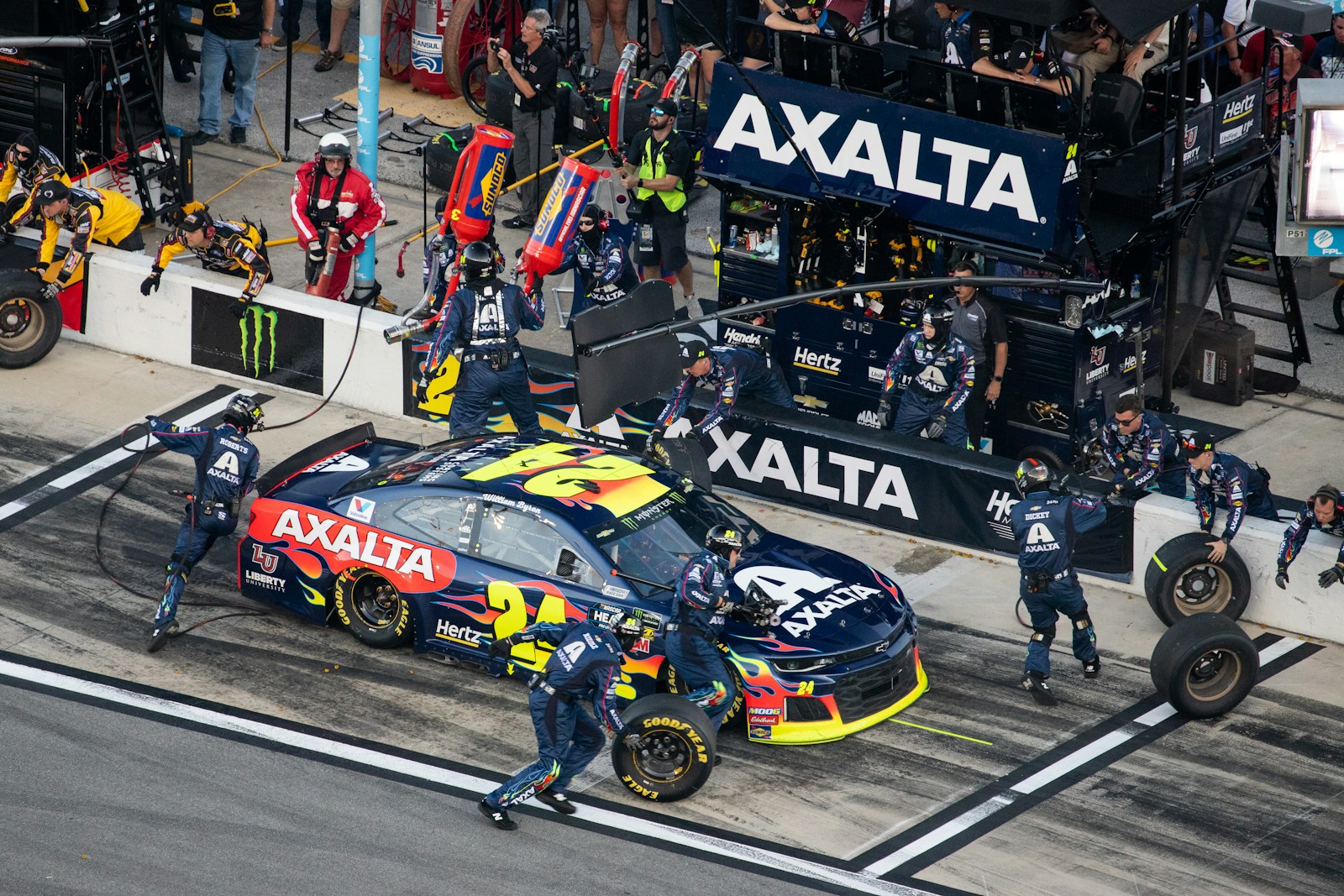
Cup cars used to carry sponsorships from regional businesses, local car dealerships, and smaller brands that gave every paint scheme a slightly homegrown, distinctly Southern flavor. As the sport’s national profile grew, sponsorship money increasingly came from major national and multinational corporations, producing more polished but also more homogenous paint schemes across the field. Fans miss the era when a car’s livery could tell you something specific about the team’s regional roots or a driver’s hometown connections. There was a charm to seeing a car sponsored by a local furniture store or auto parts chain that simply doesn’t exist in an era of national ad campaigns. It’s a small aesthetic shift, but it’s one that longtime fans notice every single week the field rolls off pit road.
Drivers Who Doubled as Their Own Mechanics
Many of NASCAR’s earliest stars built and wrenched on their own cars, blurring the line between driver and mechanic in a way that gave them an intimate, hands-on understanding of exactly what their machine could and couldn’t do. As the sport professionalized and teams grew into large, specialized organizations, drivers increasingly became one part of a much bigger operation, focused purely on driving while dedicated engineers and crew chiefs handled the mechanical side. That specialization has produced better-prepared, more consistent race cars, but it’s also distanced drivers from the grease-under-the-fingernails image that defined the sport’s earliest generations. Fans who remember that earlier era miss the sense that a driver’s success was tied directly to their own mechanical ingenuity, not just their talent behind the wheel. It’s part of a broader professionalization of the sport that’s brought real benefits while quietly erasing some of its scrappier origins.
One Network, One Broadcast, No Streaming Fragmentation
For a long stretch, watching a NASCAR race meant tuning into one broadcast network for the whole event, with one broadcast team calling the entire race from green flag to checkered flag. As media rights deals grew more complex, race coverage began splitting across multiple networks and streaming platforms, sometimes even within a single season, requiring fans to track exactly where a given weekend’s race would actually air. Older fans miss the simplicity of that single, predictable broadcast home, along with the familiarity of hearing the same announcing team call every race throughout a season. The fragmentation reflects broader trends across the entire sports media landscape, not just NASCAR, but that doesn’t make it any less frustrating for fans trying to follow a full season. It’s a modern convenience issue more than a racing issue, but it comes up constantly in conversations about how much harder it’s become to just watch a race.
Unscripted, Unfiltered Victory Lane
Post-race interviews used to feel genuinely spontaneous, with drivers speaking bluntly and emotionally in the immediate adrenaline rush of a win, sometimes saying things that would raise eyebrows in today’s more media-trained environment. As sponsorship dollars and personal branding became bigger priorities, driver interviews grew noticeably more polished and careful, with media training visibly shaping how drivers talk in victory lane and beyond. Fans who remember the rawer era miss the unpredictability of hearing a driver’s genuine, unfiltered reaction rather than a well-rehearsed set of sponsor-friendly talking points. There’s still real emotion in modern victory lane celebrations, but the language around it has gotten measurably more careful over the decades. It’s a byproduct of the sport’s growth into a much bigger business, one that old-school fans generally understand even as they miss the rougher edges it smoothed away.
The Winston Cup Era’s Identity
For decades, NASCAR’s top series carried the Winston Cup name, and that single sustained sponsorship gave the sport a consistent identity and branding that fans strongly associated with the series itself. Changing federal restrictions on tobacco advertising eventually forced that sponsorship relationship to end, and the top series has carried different title sponsors in the years since as the sport adapted to a changing regulatory and business landscape. Fans who grew up with the Winston Cup name still use it reflexively when talking about the sport’s history, treating later naming changes as a real, if necessary, break from tradition. The shifting title sponsorships reflect broader changes in how professional sports get funded, not a NASCAR-specific quirk, but the emotional attachment to that original name has proven remarkably durable. It’s a branding detail that carries far more nostalgic weight for longtime fans than a simple name change probably should.
Pack Racing at Daytona and Talladega Before Restrictor Plates
Before NASCAR mandated restrictor plates at Daytona and Talladega following Bobby Allison’s 1987 crash, cars at those superspeedways ran at genuinely unrestricted speeds, spreading the field out more based on raw horsepower and setup rather than bunching everyone into tight packs. Some longtime fans miss that earlier style of racing, arguing it rewarded genuine mechanical advantage and driving skill more directly than the pack racing that followed. Others acknowledge the safety rationale behind the change was completely sound, even while missing the pure speed spectacle of cars running flat-out with no artificial power ceiling. The restrictor-plate era that followed produced its own kind of drama, but it’s a fundamentally different flavor of racing than what came before. It’s one of the clearest examples of a safety-driven change that fans broadly accept as necessary while still mourning what it replaced.
Wide-Open Garage Access for Fans
Fans used to be able to wander through the garage area at many tracks with relatively minimal restriction, getting close enough to watch crews work on cars, catch a driver walking between the hauler and pit road, or grab an autograph without navigating layers of credentialing. As the sport grew into a bigger commercial operation with more sponsors, media, and liability concerns to manage, garage access tightened considerably, moving most fan interaction into more controlled, scheduled settings. That shift makes sense from a safety and logistics standpoint given how much bigger the sport’s infrastructure has become. Fans who remember the looser access nostalgically describe it as feeling like being part of the operation rather than watching it from a controlled distance. It’s a small logistical change that, added up over the decades, has genuinely altered how connected fans feel to the sport on race weekend.