

You’ll travel through a lineup of seven massive V8s that shaped muscle, luxury, and towing titans — engines that prioritized displacement, torque, and a distinct personality over economy. You’ll learn which production V8s pushed size and purpose to the limits and why those choices mattered for the cars they powered.
Expect a mix of vintage behemoths and late-era performance monsters, with each entry showing how manufacturers balanced packaging, purpose, and performance. You’ll get context on where these engines lived, what they aimed to do, and why they still spark debate among enthusiasts.
Cadillac 500 cubic inch V8 (1970 Eldorado)
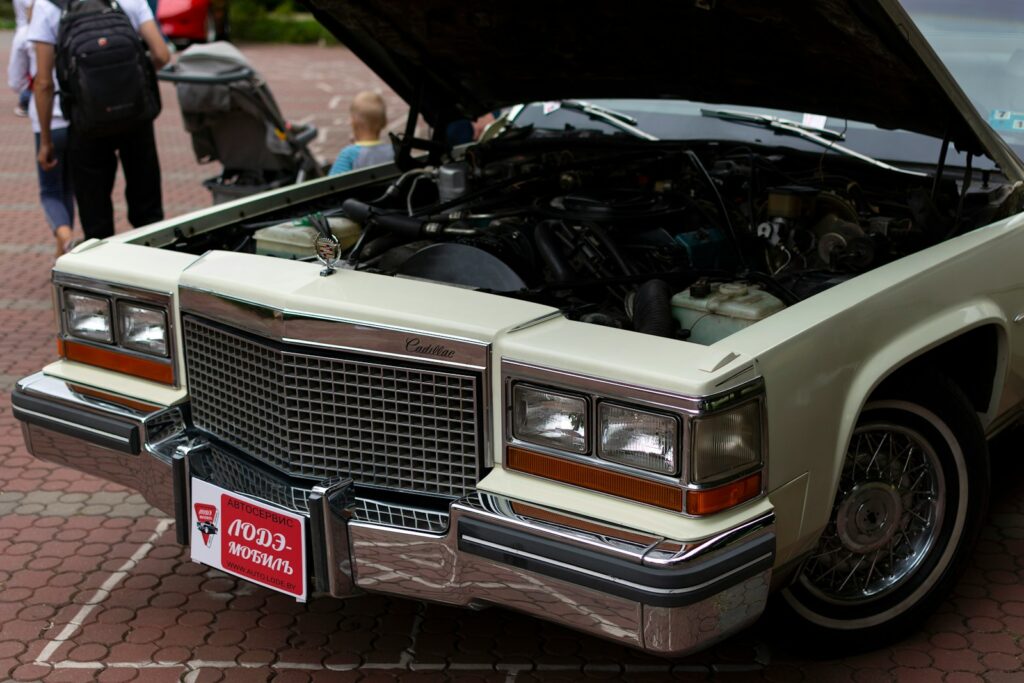
You get an 8.2-liter big-block V8 that Cadillac introduced in 1970, built to deliver massive low-end torque for the Eldorado.
It used a 4.300-inch bore and a 4.304-inch stroke to reach 500.02 cubic inches, producing around 400 hp and roughly 550 lb-ft in early tune states.
This engine was nearly exclusive to the Eldorado at launch and became a defining example of American displacement-first thinking.
Read more about its place in Cadillac history at Pure Power: Inside the Mighty V8.
Chevrolet Vortec 8100 V8 (Suburban)
You’ll find the Vortec 8100 tucked into late‑2000s Suburbans as GM’s last big‑block V8.
It displaces 8.1 liters, delivers roughly 340 hp and about 450 lb‑ft of torque in truck tune, and was built on the 454 architecture.
If you haul heavy loads or tow, this engine’s torque feels decisive and low‑end strong.
Read more about the 8.1L’s history and specs on the detailed Vortec 8100 guide from DRIFTED.
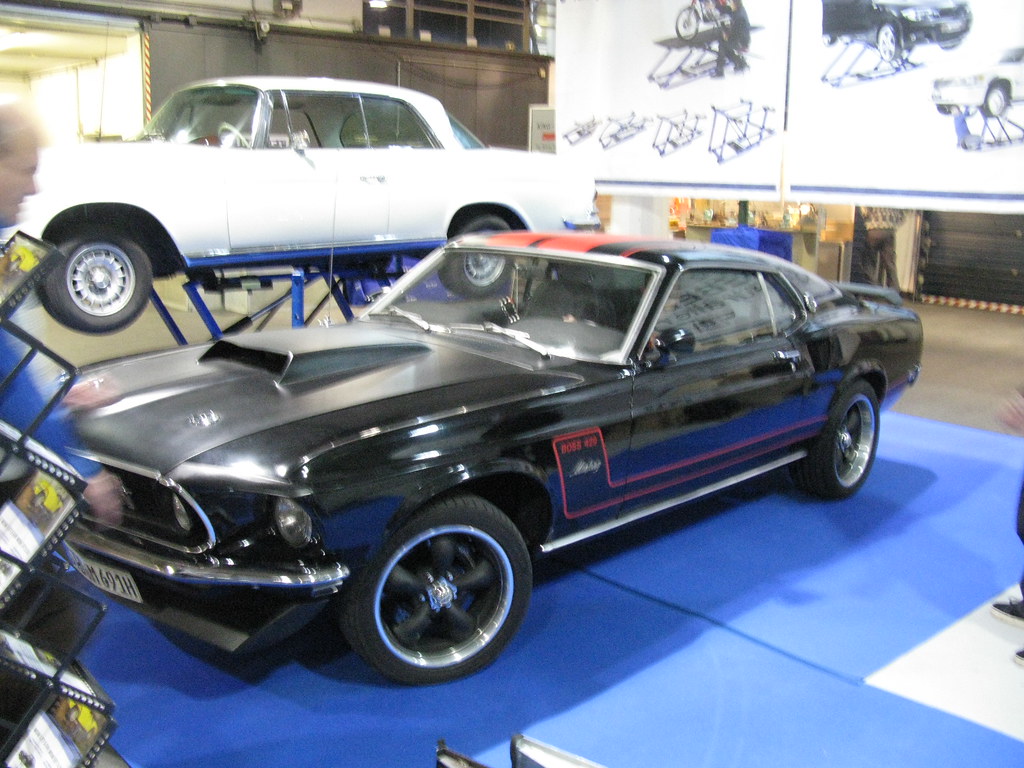
Ford 7.03L Boss 429 V8
You’ll recognize the Boss 429 as Ford’s 7.0-liter big-block built to homologate a race engine for NASCAR. It lived in the 1969–1970 Mustang and squeezed a massive casting into a compact engine bay.
You get a semi-hemispherical-headed design that prioritized cylinder flow over packaging, giving strong torque at low revs. Read more about the Boss 429’s history and specs on the Boss 429 Mustang wiki page.
GM LT4 6.2-liter supercharged V8 (Corvette Z06)
You get a 6.2-liter supercharged V8 that pushed GM’s performance envelope when it debuted in the C7 Z06.
It delivers about 650 hp and 650 lb-ft, pairing a 1.7L Eaton TVS supercharger with direct injection and VVT for strong midrange power.
You can find this engine in the Camaro ZL1 and CTS‑V as well, and Chevrolet offers crate versions for swaps and builds.
Read more on the LT4’s factory details at Chevrolet Performance LT4 crate engines.
Chevrolet 427 big-block V8
You’ll recognize the Chevrolet 427 as a 7.0-liter big-block V8 that helped define late‑1960s muscle power. It powered Corvettes, Camaros, and full‑size Chevys in several high‑output variants, from streetable L36s to race‑focused L88s.
If you want specs or history, Chevrolet’s Mark IV 427 is well documented and remains sought after by collectors and builders. Learn more about the 427’s place in Chevy big‑block history at Chevrolet’s performance parts page: 427 Big‑Block Crate Engine | Chevrolet Performance Parts.
Dodge 440 Magnum V8
You’ll recognize the Dodge 440 Magnum as a 7.2-liter, 440 cubic-inch big-block V8 that powered many late‑60s and early‑70s Mopars. It offered strong low-end torque for street and strip use.
You can find it in Chargers, Road Runners, Challengers, and large Chryslers; production ran into the late 1970s. The Magnum heads and larger valves improved breathing over earlier 440s, boosting performance without exotic parts.
For a detailed history and engine specs, see this guide to the Chrysler 440 V8.
Oldsmobile 455 cubic inch V8
You’ll recognize the Olds 455 as a big, torquey V8 that powered muscle and luxury cars from 1968–1976.
It produced roughly 210–400 hp depending on year and tune, and delivered strong low-end torque for easy passing.
You can find the 455 in Cutlasses, 442s, Delta 88s and Toronados, with variations across GM brands.
For a detailed history and production notes, see this overview of the Oldsmobile Rocket 455 (production years and applications).
More from Steel Horse Rides: