


You know that feeling: you glance in the rearview mirror and spot a patrol car behind you. Suddenly your hands are at ten and two, your speed is suspiciously perfect, and you’re convinced your taillight is doing that “blink twice, give up” thing. Here’s the part most people don’t realize—before an officer ever hits the lights, they’re usually doing a quick mental checklist.
Traffic stops aren’t typically random, and they’re not only about speeding. Officers are trained to notice patterns, small cues, and safety issues that help them decide whether to keep watching, pull someone over, or move on. So what exactly are they looking at while you’re just… driving?
1) The “story” your driving is telling
Police pay attention to driving behavior that looks inconsistent or hard to explain. That could be drifting within your lane, braking for no obvious reason, accelerating and slowing repeatedly, or making turns that are oddly wide or hesitant.
It doesn’t automatically mean “something’s wrong,” but it can suggest distraction, impairment, fatigue, or a driver who’s nervous for a reason. In practice, it’s the difference between “normal human driving” and “this person’s car looks like it’s being controlled by a sleep-deprived raccoon.”
2) Lane discipline and the little stuff that adds up
Small lane violations are a big deal because they’re easy to spot and can be genuinely dangerous. Touching or crossing the lane line, failing to signal, rolling through a stop sign, or turning from the wrong lane are the kinds of things that catch an officer’s eye fast.
Sometimes these are used as the legal reason for a stop even when the officer’s real concern is bigger—like checking whether a driver is impaired or whether the car might be stolen. It’s not always dramatic; often it’s just “that was a clear violation, and I can’t ignore it.”
3) Vehicle condition: lights, plates, and “obvious” equipment issues
Broken lights are the classic: headlights out, brake lights not working, one sad little taillight hanging on for dear life. Officers also notice cracked windshields that obstruct the driver’s view, missing mirrors, or tires that look dangerously worn.
Then there’s the license plate situation—expired tags, plates that are dirty or covered, or plates that don’t match the vehicle’s registration. Many patrol cars also have automated license plate readers (ALPRs) in some areas, which can flag stolen vehicles, wanted persons linked to a plate, or expired registration—depending on local policies.
4) Speed, yes—but also how you’re speeding
Everyone knows speeding can get you pulled over. What people forget is that officers often focus on speed that stands out: the fastest car in a pack, the one weaving to maintain speed, or the driver who rockets away from every light like it’s a drag strip.
Speed paired with other behavior—tailgating, rapid lane changes, aggressive passing—is more likely to draw attention than someone gently drifting five over with the flow of traffic. It’s not “fair,” exactly, but it’s realistic: officers are looking for the drivers most likely to cause a crash.
5) How the car “fits” the time and place
Cops notice context. A car creeping through a residential area at 2 a.m., circling the same block, or lingering near closed businesses can look like casing or suspicious activity—even if it’s just someone lost and arguing with their GPS.
Likewise, a vehicle leaving a parking lot right after an alarm call, or accelerating away from an area where something just happened, can get extra attention. It’s not about mind-reading; it’s about probabilities and patterns built from experience.
6) Occupant behavior: heads, hands, and “why are you doing that?” moves
Officers watch what’s happening inside the car as much as the car itself. They look for things like the driver and passengers making sudden movements, repeatedly reaching under seats, ducking down, or shifting around in a way that suggests hiding something or grabbing something.
A lot of these “tells” can be totally innocent—someone picking up a dropped phone, digging for chapstick, or trying to stop a coffee from baptizing the center console. But from the officer’s perspective, unknown movements create risk, so they may decide to stop the car sooner rather than later.
7) Whether you seem to notice them—and what you do when you do
People act weird when they spot a patrol car. Some instantly slam the brakes, others overcorrect into perfect-little-angel driving, and a few make a panicky turn into the nearest driveway like they just remembered they left the oven on in 2009.
Overreaction can stand out as much as a violation. An officer might think, “Why the sudden change?” Calm, consistent driving is less memorable than a driver who goes from normal to robot-mode the moment a cruiser appears.
What to do if you think you’re being watched (without spiraling)
The best move is boring: drive normally and follow the rules you already know. Keep a steady speed, signal your turns, and don’t make sudden lane changes just because a patrol car is nearby.
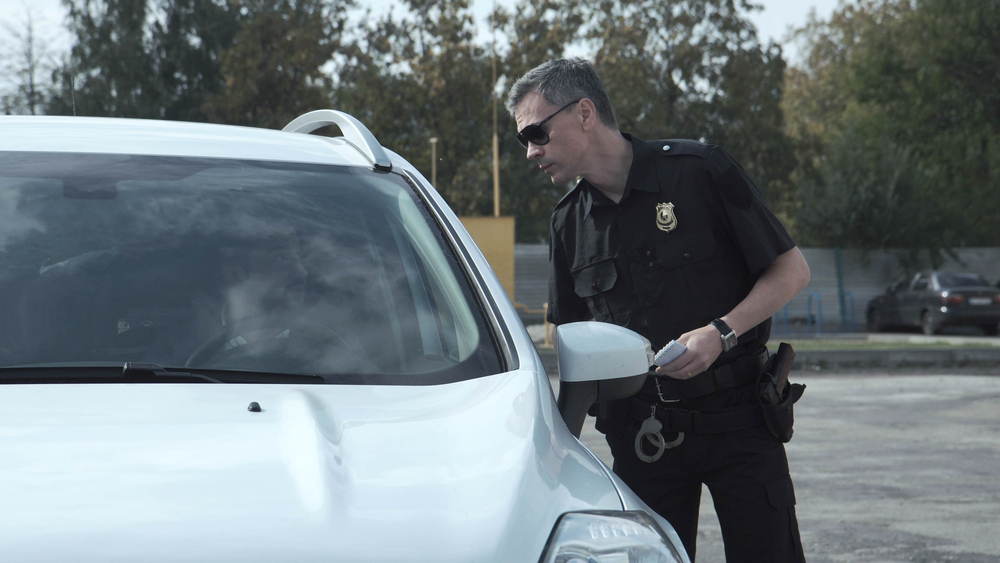
If you do get pulled over, prioritize safety and clarity—signal, pull over to a safe spot, and keep your hands visible. It helps to have your license and registration ready, but don’t start digging around while the officer is walking up; that’s one of those things that can look sketchy even when it isn’t.
The takeaway
Before the lights come on, officers are usually doing a quick risk-and-reason scan: driving behavior, equipment issues, context, and what the people inside the car are doing. Most of it is about safety and patterns—some of it is about enforcement, and yes, sometimes it’s about instinct built from experience.
So if a patrol car gets behind you, breathe. The goal isn’t to drive like you’re taking a final exam—it’s just to drive predictably, keep your car in good shape, and avoid giving anyone a reason to think, “Huh. That’s odd.”
More from Steel Horse Rides: