

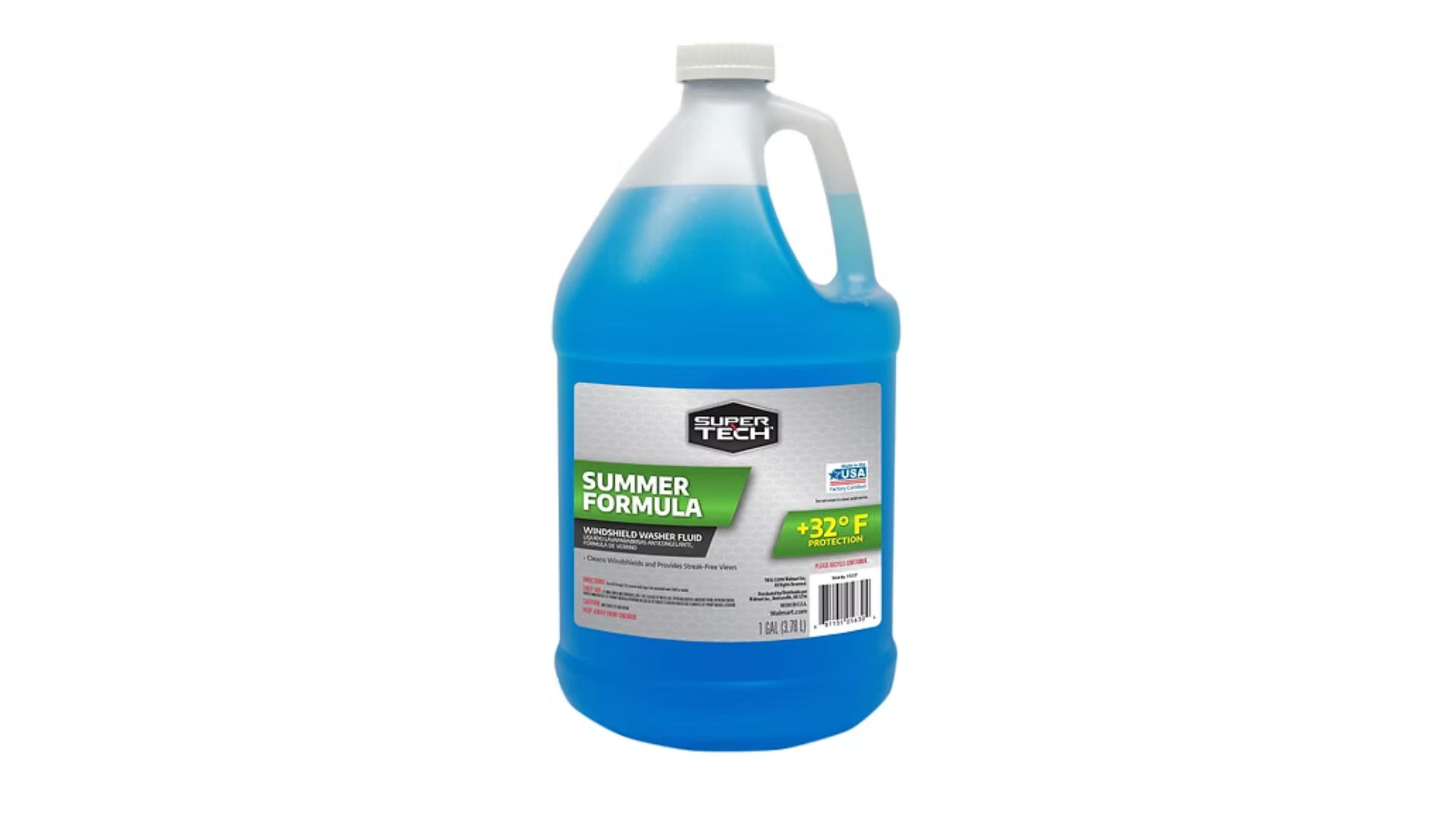
Windshield washer fluid seems like the last place you’d expect the formulation to matter much, but the temperature rating printed on the jug is one of the more consequential specs on any bargain shelf. A fluid that isn’t rated for your winter can turn to slush in the reservoir during a genuine cold snap, leaving you with no way to clear road salt and grime off the windshield exactly when visibility matters most.
Discussions among drivers on forums like BobIsTheOilGuy return to the same handful of pitfalls again and again. Here are seven washer fluid choices that work fine in one climate and cause trouble in another, and what to check before your next fill-up.
Summer-Formula Fluid Used Year-Round in Cold Climates
Many washer fluids sold in warm months are built for bug and grime removal rather than freeze resistance, and some protect no lower than 32 degrees Fahrenheit, the same as plain water. Drivers who buy whatever is cheapest at a summer fill-up and don’t switch before the first freeze risk a solid block of ice in the reservoir. Ice expands, so it can crack the tank or split a line, and running the pump against a frozen system can strain the pump too. In early fall, run the reservoir low with normal use, then refill with a winter formula and spray for several seconds so the new fluid reaches the lines and nozzles, which are thin and freeze first. Don’t count on a half tank of summer fluid topped off with winter fluid, because the blend protects to a temperature somewhere between the two ratings. Check the freeze rating printed on the jug, not just the price, and use the coldest night you expect as the number to beat.
Dollar-Store Fluid With No Printed Freeze Rating
Some of the cheapest washer fluid, the kind stacked at dollar stores and gas station counters, carries no specific freeze rating on the label, leaving buyers to guess whether it suits their climate. Discussion threads on BobIsTheOilGuy about cheap washer fluids generally recommend sticking with products that clearly disclose a freezing point, since the absence of that number is itself a reasonable signal to look elsewhere for winter driving. Read the whole label before buying. A usable jug states a temperature, such as “protects to -20°F,” and not just words like “all-season” or “winter,” which have no fixed meaning. Color tells you nothing either, since summer and winter fluids are often dyed the same blue. If you already own an unrated jug, test it cheaply: pour some into a clear bottle and leave it outside on a cold night. Slush or ice at temperatures your area sees regularly means it belongs in the summer supply, not in a reservoir heading into January.
Fluid Diluted With Water by Sellers or Owners
Washer fluid that has been watered down, whether by a seller cutting costs or an owner stretching a jug, freezes at a higher temperature than its label promises. The antifreeze in most washer fluid is methanol, and Poison Control says ready-to-pour washer fluid typically contains 30 to 50 percent of it, while concentrates can run 90 to 100 percent. Protection falls quickly as that share drops. Engineering ToolBox’s methanol and water freezing table puts a 30 percent mix by weight at about -15°F, a 20 percent mix at 0°F and a 10 percent mix at only 20°F. So topping off a half-empty winter reservoir from a garden hose can turn a cold-rated fluid into one that slushes on an ordinary January morning. Buy pre-mixed fluid rated for your climate. If you do use a concentrate, follow the maker’s dilution chart for your lowest expected temperature, measure rather than eyeball it, and mix in a separate jug before pouring.
Fluid That Leaves Streaking on Hydrophobic Windshield Coatings
A windshield treated with a hydrophobic coating or rain repellent behaves differently under the wipers, and a washer fluid that cleaned fine before can seem to smear afterward. The coating maker’s own guidance is the best place to start. Rain-X’s FAQ, for example, says that on water repellent-treated windshields, initial hazing is normal and should disappear with wiping or washer fluid. If the haze stays, work through the cheap causes first. Clean the glass thoroughly, wipe the blade edges with a damp cloth, and replace blades that are cracked or hardened. Some fluids include their own water-repellent additive, so switching to a plain formula with the same freeze rating is a useful test. Change one thing at a time so you know what fixed it. In cold climates the stakes are higher, because a smeared film combined with road salt and low winter sun makes glare much worse than it would be in July.
Bug-Removal Formulas With Strong Solvents on Fresh Paint or Trim
Washer fluids marketed for bug and tar removal use more aggressive cleaners than a standard all-season formula, and every spray puts some of that fluid on the hood, cowl, roof and trim as well as the glass. On a cured factory finish that overspray is rarely an issue, but it is worth more caution on a freshly repainted panel, new vinyl wrap or uncoated plastic trim. If the car has just come out of a body shop, ask how long the paint needs before it sees chemical cleaners, and use a plain fluid until then. Rinse off dried overspray when you wash the car instead of letting it bake on in the sun. The climate catch is separate. Bug formulas are usually summer products, and many carry little or no freeze protection, so a reservoir filled in July for a road trip needs to be used up or replaced before the first frost. Check the label for both a freeze rating and any surface warnings.
Fluid Purchased in Bulk and Stored Improperly for Extended Periods
Buying washer fluid by the case when it goes on sale is a reasonable way to save money, but how the jugs are stored decides whether they still perform months later. Heat is the main concern. The alcohol that provides freeze protection evaporates more readily than water, so a jug with a loose or cracked cap sitting in a hot shed can slowly lose the ingredient you paid for, and the fluid left behind freezes at a higher temperature than the label says. Keep the caps tight, store the jugs upright out of direct sun, and use opened jugs first. Label each one with its freeze rating if summer and winter formulas share a shelf, since they often look identical. Safety matters as much as performance. Because most washer fluid contains methanol, Poison Control advises keeping it in its original container, with the cap secured, away from children and pets, and never pouring it into cups or drink bottles.
Fluid Rated for Moderate Cold Used in Extreme Sub-Zero Conditions
Even a fluid rated to a respectable -20°F can come up short in the coldest parts of the northern United States and Canada, where temperatures can drop well past that mark during a serious cold snap. A rating also describes the fluid in the jug, not how it behaves once it is sprayed on cold glass. On a windshield at highway speed, the alcohol evaporates quickly and the water left behind can freeze into a thin glaze, which is why drivers sometimes see fluid ice over on contact at temperatures above the number on the label. Leave a margin. If your area sees -20°F, buy a de-icer formula rated to -30°F or -40°F rather than one that merely matches the forecast. Warm the windshield with the defroster before you spray, and keep a spare jug in the trunk, because slush and road salt on a long winter drive can empty a reservoir faster than you expect.