

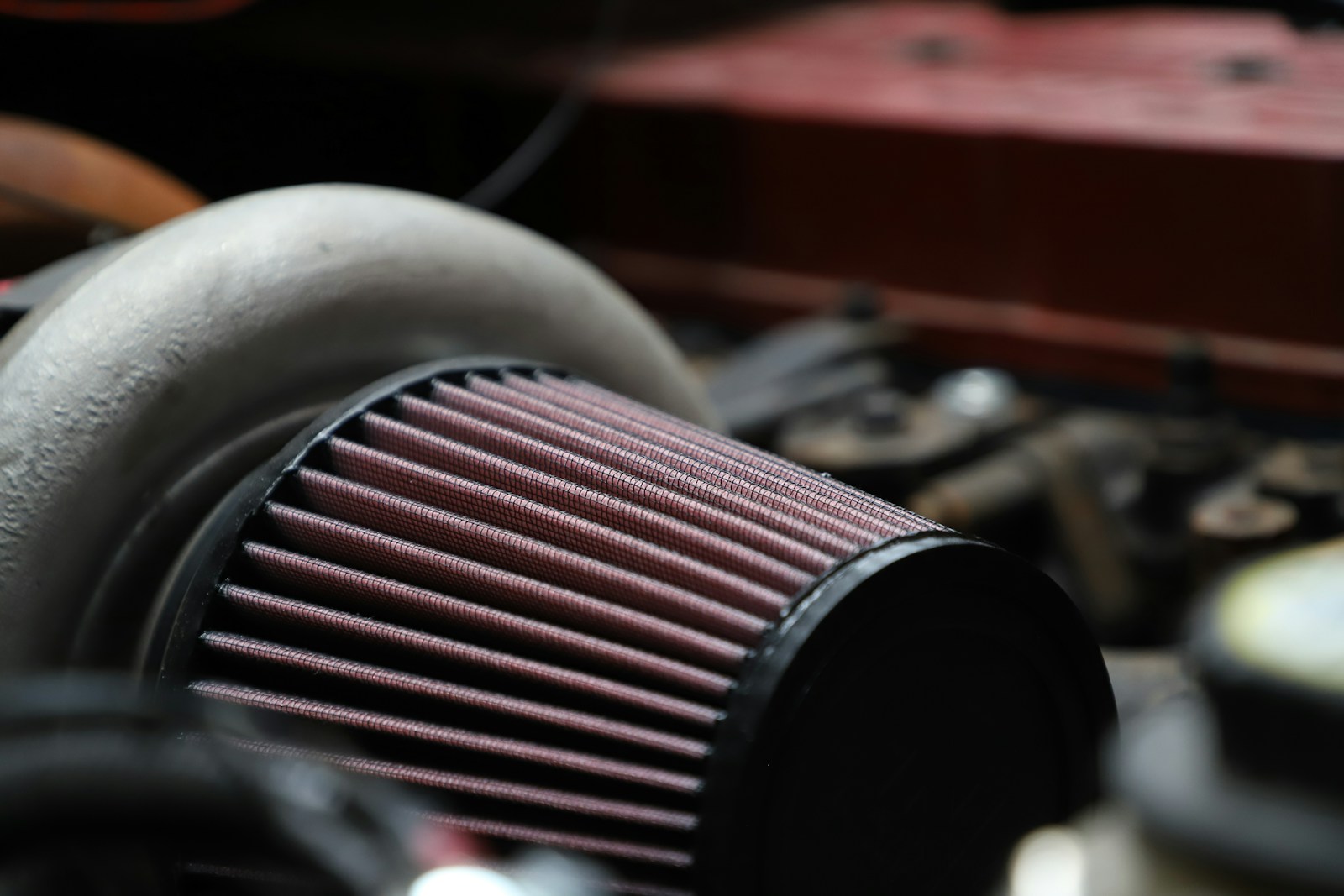
An engine air filter has one job: keep dirt, dust, and debris out of the combustion chamber while letting enough air through for the engine to breathe properly. It sounds simple, but filters that look nearly identical on a parts store shelf can differ in how much dirt they stop, how much they hold, and how well they seal.
Forums including BobIsTheOilGuy’s ongoing air filter testing threads and outlets like SlashGear’s comparison of cheap versus expensive air filters have dug into where the money goes and where it doesn’t. Here are eight red flags that suggest a filter isn’t worth what you’re being asked to pay for it.
Filters With Thin, Low-Density Paper Media
The paper media inside an air filter is pleated to maximize surface area, and the density and quality of that paper affects how well it captures fine particulate without choking airflow. SlashGear’s reporting notes that cheaper filters rely on basic paper media that tends to clog faster and break down sooner, while better filters offer more dirt-holding capacity and longer service intervals. Fine grit that gets past a weak filter contributes to gradual wear on cylinder walls and piston rings over a long enough timeline. You can do a quick comparison at the counter. Hold the new filter next to the one coming out of the car: the media should feel stiff rather than flimsy, the pleats should stand up on their own, and the pleat pack should be about as deep as the original. If a bargain filter is noticeably lighter and its pleats flatten under a fingertip, the savings will probably be eaten by replacing it sooner.
Filters With Inconsistent Pleat Spacing
Pleats only work when air can reach both faces of every fold. When they are bunched together in one area and spread wide in another, the crowded pleats block each other, so part of the media you paid for does very little while the open sections take most of the airflow and load up with dirt first. Better filters hold their pleats in place with glue beads, embossed ridges, or a wire or plastic screen, and you can see that before you buy. Fan through the pleats with a finger and look for folds that are stuck together, leaning over, or crushed where they meet the frame. Don’t treat pleat count alone as a quality score, though. In the BobIsTheOilGuy thread linked above, forum members pointed out that the filter with the best results in the test they were discussing had one of the lowest pleat counts in the group. Even spacing and a rigid pleat pack tell you more than a big number on the box.
Filters With Poorly Sealed Rubber Gaskets
The gasket that seals a filter into its housing keeps unfiltered air from sneaking around the edges of the media. A poor seal undermines even a well-made filter, because air always takes the path of least resistance. Budget filters sometimes use a thinner or stiffer gasket that doesn’t compress evenly against the airbox, and the problem gets worse each time the filter is pulled out and reinstalled during service. Before you close the housing, check that the gasket is one continuous piece with no gaps, flash, or flat spots, and that it sits fully in its groove all the way around. The lid should need firm, even pressure to latch; if the clips snap shut with no resistance, the filter may be undersized. At the next change, wipe a clean rag along the engine side of the airbox. A dusty film there means air has been getting past the seal. That check costs nothing and works with any brand.
Oiled Performance Filters Overcleaned and Overoiled by Owners
Reusable oiled cotton filters, a category popularized by K&N, aren’t inherently a bad product. The trouble usually starts at cleaning time. SlashGear’s coverage notes that oiled gauze filters need frequent cleaning and careful maintenance to avoid gumming up sensors, and on most modern engines the mass airflow sensor sits directly downstream of the filter. That is a maintenance problem rather than a manufacturing defect, and it doesn’t apply to disposable paper filters. K&N’s own cleaning instructions spell out the steps people tend to rush: let the filter dry naturally, don’t apply oil until it is completely dry, run the oil along the crown of each pleat, then wait about 20 minutes for it to wick before touching up light spots. Soaking the media until it drips, or oiling a damp filter, is where owners go wrong. If you won’t follow that routine every time, the higher purchase price buys you a chore, and a quality paper filter is the better value.
Generic Replacement Filters With No Stated Filtration Efficiency
Many budget filters, particularly private-label and no-name options sold in bulk online listings, give only physical dimensions and a list of compatible vehicles. There is no filtration efficiency percentage and no test standard. That makes it impossible to compare the filter against a name-brand alternative before you buy. The benchmark to look for is ISO 5011, the lab procedure filter makers use. As K&N’s explanation of the test puts it, the protocol measures the percentage of dust the filter retains, which is its efficiency, and the total amount of dust it holds, which is its capacity. K&N also notes that the tester can choose coarse or fine test dust, so two percentages are only comparable when the dust grade matches. A listing that states an efficiency figure, the standard, and the dust grade gives you something to check. One that says only “high flow” or “premium quality” is asking you to pay on faith.
Filters That Restrict Airflow More Than OEM Specifications
A filter’s other job is letting the engine breathe, and airflow is the main selling point for most upgrade filters. StrikeEngine’s flow bench comparisons summarize a test of nine panel filters for the same Duramax diesel: seven OEM-type paper filters and two performance filters. With the filters clean, the gap between the best- and worst-flowing was only 1.69 inches of water at 350 CFM, about 0.06 psi, and the article concludes that switching to a performance filter will probably make no difference to power. The more telling result came after 200 grams of test dust had been fed in. At that point the OEM-type paper filters were less restrictive than the performance filters. The paper filter that flowed worst when new also let the least dirt through. So a filter sold on airflow can end up breathing worse than the stock part once it gets dirty. If a listing promises horsepower and shows no restriction data against the factory filter, keep your money.
Filters Sold Without a Clear Country of Manufacture
Sourcing transparency varies widely in the air filter market. Some budget and marketplace-only filters don’t clearly say where or by whom they were made, which makes quality consistency hard to research before you buy. That doesn’t automatically mean poor quality, but it removes a useful signal for a part that directly affects engine life. It is also a basic legal expectation for imports: under federal country-of-origin marking rules, every article of foreign origin brought into the United States, or its container, has to be marked conspicuously and legibly with the English name of the country it came from. So look at the box and the filter frame. You should find a manufacturer or importer name, a part number you can cross-reference on the maker’s own website, and a country of origin. When a listing shows a plain white box, a brand name that exists only on that marketplace, and no origin, you have nothing to research.
Filters Marketed as “Lifetime” Without a Usage Interval Disclosed
Some reusable filters are marketed as “lifetime” products without clearly stating how often they must be cleaned to keep working, which can lead owners to neglect them far longer than the product supports. A washable filter is only maintenance-free between services. Reputable makers put the number in writing. K&N, for example, says its filters can go up to 50,000 miles before a cleaning is needed, compares that with replacing a disposable paper filter every 12,000 to 15,000 miles, and backs the product with what it calls a Million-Mile Limited Warranty. Use that as the standard. Before paying several times the price of a paper filter, find the cleaning interval, the price of the cleaning and oil kit, and the warranty terms. Then do the math for how long you expect to keep the car. If you’ll sell it before the reusable filter outlasts two or three paper ones, the “lifetime” claim isn’t saving you anything.