

Time-travel a NASCAR fan from the mid-1990s into a modern Cup Series race weekend, and it wouldn’t take long before the confusion set in. The cars would sound different, the championship math would make no sense without an explanation, and half the sponsors on the hoods would be for products that didn’t exist three decades ago.
Some of these changes crept in gradually enough that current fans barely notice them anymore, while others arrived as sudden, deliberate overhauls. Taken together, though, they add up to a sport that would genuinely disorient someone stepping in fresh from 1996. Here are eight things that would leave a time-displaced fan doing a double take.
A Car Built Around Standardized, Single-Source Parts
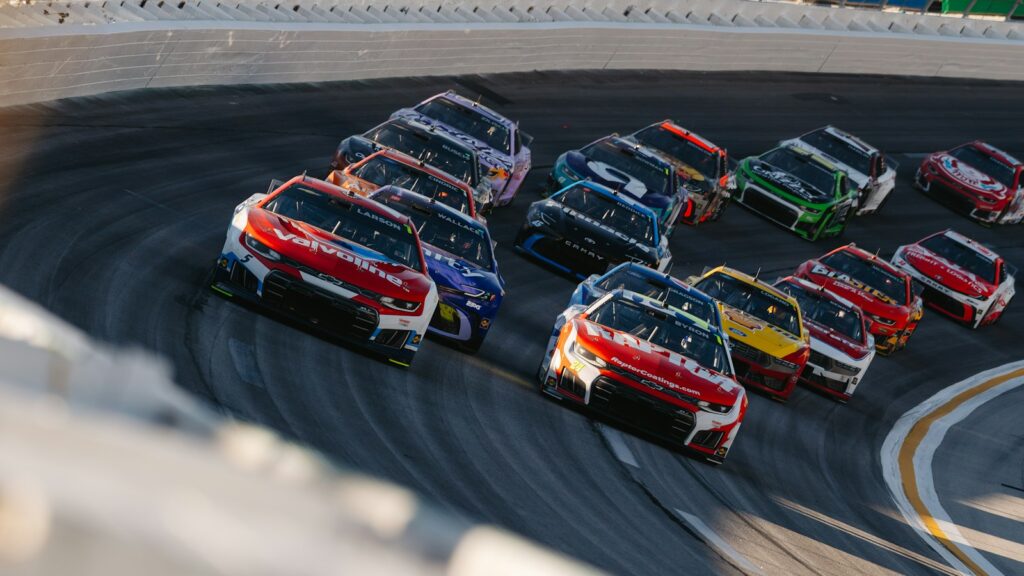
The Next Gen car introduced in 2022 replaced decades of team-fabricated components with parts sourced from single approved suppliers across the field, along with an independent rear suspension that no Cup car had ever used before. A fan from the 1990s, used to teams building much of their own chassis and suspension components in-house, would find the entire idea of a spec-parts ecosystem almost unrecognizable as “stock car racing.” The car’s styling is also far more standardized across manufacturers than anything from three decades ago, when body shapes carried much more brand-specific character. It represents one of the most fundamental engineering shifts in the sport’s history, touching everything from how teams budget to how cars get repaired after contact. A visitor from 1996 would need a fairly thorough explanation before any of it made sense.
A Playoff Bracket Instead of a Season-Long Points Race
In the mid-1990s, the Cup Series champion was simply whoever accumulated the most points across the full season, full stop. NASCAR introduced the Chase format in 2004 and later added elimination rounds, transforming the championship into a structured, bracket-style playoff that reshuffles points among a smaller group of contenders late in the year. A fan from thirty years ago would need real convincing that a champion crowned this way was legitimate, given how differently the math works from what they grew up watching. The new format’s logic, keeping the title race alive deeper into the season, makes sense on its own terms, but it’s a genuinely different sport structurally from the one that existed before 2004. It remains the single biggest conceptual gap between old-school and modern NASCAR fandom.
Races Broken Into Scored Stages
Every points race now runs in three distinct stages, complete with bonus points and a scheduled caution at the end of the first two segments, a structure that didn’t exist at all until NASCAR introduced it in 2017. A fan from the 1990s watching a race run straight through with no scheduled interruption would be baffled by a caution flag flying for no apparent on-track incident. The strategic layer stage racing adds, giving teams more decision points throughout a race rather than just at the end, simply didn’t exist in the sport’s earlier structure. It’s a rules change that fundamentally altered the pacing and rhythm of every single points race on the calendar. Explaining stage points to someone unfamiliar with the format takes longer than explaining almost anything else about how the modern sport works.
Guaranteed Starting Spots Through Team Charters
NASCAR’s 2016 charter system guarantees a fixed group of teams an entry into every points race and a defined share of the sport’s revenue, a franchise-like structure that simply didn’t exist for most of the sport’s history. A fan from the 1990s, used to an open-entry system where qualifying performance alone determined who made the field, would find the very concept of a guaranteed starting spot at odds with how they understood competition to work. The system reshaped which organizations can realistically compete at the Cup level and how the sport’s business side operates behind the scenes. It’s a change that mostly plays out in team ownership and business circles rather than on the track itself, but it fundamentally altered who gets to show up on race day. A fan from three decades ago would need a real primer on modern sports league economics to fully grasp why it exists.
Mandatory Head Restraints and Modern Track Safety Barriers
Following Dale Earnhardt’s fatal crash at the 2001 Daytona 500, NASCAR mandated head-and-neck restraint devices for drivers and pushed hard for the widespread adoption of energy-absorbing barriers at tracks across the schedule, safety measures that were far from standard in the sport thirty years ago. A fan from the mid-1990s would be struck by just how much safety equipment now surrounds every driver, from the restraint systems to reinforced roll cages to the barriers lining the walls themselves. The sport has not lost a driver in a Cup Series race since those changes took hold, a track record that would have seemed almost unimaginable to someone watching in the 1990s, an era when serious and fatal crashes were a more regular, grimly accepted part of the sport. It’s arguably the single most important category of change on this list, even if it’s the one modern fans think about the least during an ordinary race weekend. A visitor from thirty years ago would likely find the current safety standards the most reassuring difference of all.
A Schedule Leaning Toward Bigger Markets Over Short Tracks
NASCAR’s modern schedule features considerably more races at large intermediate ovals in major metropolitan markets compared to the heavier concentration of small Southern short tracks that defined the sport’s calendar decades ago. A fan from the 1990s would recognize plenty of track names still on the schedule, but the overall balance has shifted toward bigger facilities built for national television audiences and larger live crowds. That shift reflects the sport’s genuine growth into a national television product rather than a regional attraction, a transformation still very much in progress thirty years ago. Some historic short tracks have found their way back onto the calendar in recent years, but the overall footprint of the schedule looks meaningfully different than it did in the mid-1990s. It’s a change that reflects the sport’s business evolution as much as anything happening on the track itself.
Fuel Injection Instead of Carburetors
Cup cars ran carburetors for the sport’s entire history until NASCAR made the switch to electronic fuel injection in the early 2010s, bringing more precise, computer-managed fuel delivery to a series that had relied on mechanical carburetion since its founding. A fan from the 1990s popping the hood on a modern Cup car would find an engine bay that looks and functions meaningfully differently from what they remembered, even though the basic V8 architecture underneath is still broadly recognizable. The switch brought real performance and consistency benefits, giving teams more precise control over fuel delivery across different track and weather conditions. It’s a technical change that most casual fans never think about, but it represents a genuine break from decades of mechanical tradition. Old-school crew chiefs who built careers tuning carburetors by feel had to adapt to an entirely different, more computer-driven skill set.
Drivers as Full-Blown Media Personalities
Modern Cup Series drivers manage personal social media followings, produce their own video content, and build individual brand identities that extend well beyond whatever car number and sponsor they happen to be driving for in a given season. A fan from the 1990s, used to getting driver personality almost entirely through in-person appearances, print interviews, and brief television segments, would be amazed by how much direct, unfiltered access modern fans have to drivers’ daily lives and opinions. That direct connection has reshaped how fans form attachments to drivers, often following an individual’s personal brand as closely as their on-track performance. It’s also changed how sponsors think about driver marketing, treating drivers as standalone media properties rather than just names on a hood. A visitor from three decades ago would likely find this shift the most culturally disorienting of all, since it has less to do with rules or cars and everything to do with how fans and drivers actually relate to each other now.