
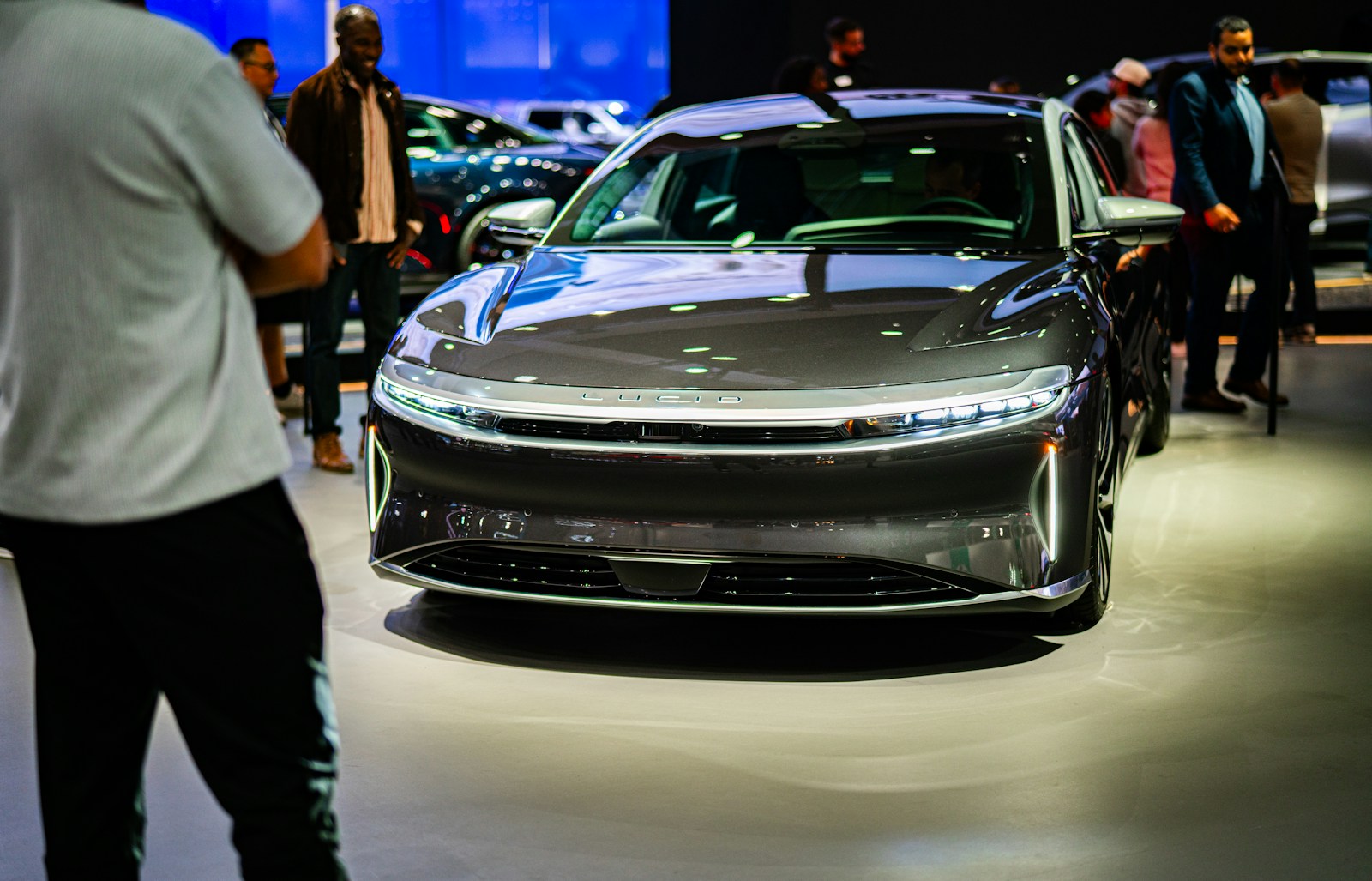

Lucid Motors is making a major push toward accessibility with a comprehensive announcement about its future vehicle lineup. The electric vehicle manufacturer revealed its new Midsize platform on March 12, 2026, which will underpin a family of vehicles starting below $50,000, marking a significant departure from the company’s current luxury-focused offerings. The platform will support at least three consumer models, including the Lucid Cosmos and Earth SUVs, bringing the brand’s efficiency and performance credentials to a broader market segment.
During an investor day presentation in New York, the California-based automaker outlined not just new products but an entire business transformation. The company introduced its next-generation Atlas electric drive unit, shared details about upcoming software features including an in-vehicle AI assistant, and previewed a robotaxi concept called Lunar. These announcements represent Lucid’s strategy to scale its operations while accelerating its path to profitability.
The timing reflects a pivotal moment for Lucid as it seeks to compete beyond the premium luxury segment. The Midsize platform leverages the company’s core efficiency advantages while incorporating design-for-manufacturing principles that reduce costs without sacrificing the performance characteristics that have defined the brand since the launch of the Air sedan.
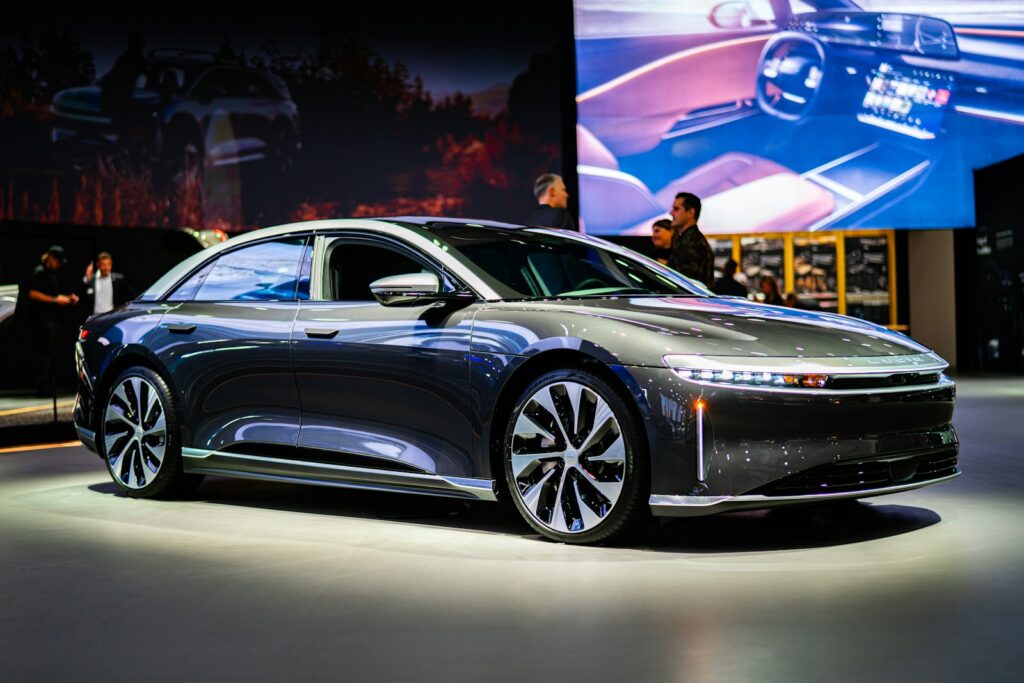
Lucid’s Next-Generation $50,000 EV Platform Unveiled
Lucid Group has pulled back the curtain on its Midsize platform, a brand-new architecture designed to bring the company’s signature efficiency and performance to a starting price below $50,000. The platform will underpin at least three vehicles, starting with two SUVs named Lucid Cosmos and Lucid Earth, along with a new Atlas electric drive unit that promises to extend the company’s efficiency leadership while reducing manufacturing costs.
Midsize Platform Architecture and Core Innovations
The Midsize platform represents a ground-up engineering effort focused on delivering Lucid’s advanced technology at higher production volumes. At its core sits the Atlas electric drive unit, an all-new component that advances Lucid’s integrated efficiency approach through a smaller, lighter, and simpler design.
The Atlas features identical front and rear housings and mounts, a decision that improves manufacturing scale and reduces cost complexity. This approach aligns with Lucid’s broader design-for-manufacturing philosophy, which includes eliminating traditional beltline moldings on doors to reduce part count and assembly time.
Lucid has already completed prototypes for the Midsize platform, with production scheduled for late 2026 at high volume scale. The platform prioritizes lower costs and improved manufacturability without sacrificing the efficiency that distinguishes Lucid from competitors.
Key Models: Lucid Cosmos and Lucid Earth
Lucid Cosmos arrives as an SUV designed for customers seeking exceptional efficiency, space, and performance in a package smaller than the Gravity SUV. The vehicle aims to compete directly with models like the Tesla Model Y in the premium midsize segment.
Lucid Earth takes a different approach, extending the company’s signature driving dynamics into a product designed to appeal to buyers with a more adventurous spirit. Derek Jenkins, Senior Vice President of Design and Brand at Lucid, emphasized that these vehicles deliver unmistakable Lucid design while embracing a simpler, more efficient approach to manufacturing.
Platform highlights include:
- Starting price below $50,000
- Segment-leading range and efficiency
- Signature Lucid performance and driving pleasure
- Third consumer model to be announced later
The company revealed key technical details at its investor day in New York, positioning both Cosmos and Earth as vehicles that maintain Lucid’s “Compromise Nothing” philosophy while reaching a broader market.
Efficiency, Performance, and Competitive Advantages
Lucid continues to position efficiency as its core differentiator, both as a customer benefit and a structural business advantage. Industry-leading efficiency enables the required range with significantly smaller battery packs, which matters because batteries represent approximately 30-40% of an electric vehicle’s cost.
The smaller batteries translate directly into lower vehicle costs while maintaining performance expectations. Fewer parts and tighter integration mean the Midsize platform delivers better performance and a superior customer experience simultaneously.
This efficiency advantage becomes particularly important as Lucid targets the mass-market segment dominated by Tesla’s Model 3 and Model Y. The company’s approach of designing the entire vehicle as one integrated system allows it to compete against both electric competitors and combustion-powered alternatives at scale.
Advanced Technology, Autonomy, and Business Strategy
Lucid’s midsize platform combines engineering innovations with strategic partnerships to deliver efficiency gains and new revenue opportunities. The company introduced breakthrough drivetrain technology alongside ambitious autonomous vehicle plans and a clear framework for achieving profitability.
Atlas Electric Drive Unit and Battery Breakthroughs
The new Atlas electric drive unit represents Lucid’s next generation of powertrain technology. Atlas features a smaller, lighter, and simpler design compared to previous systems while maintaining the efficiency standards that define the brand.
The drive unit uses identical front and rear housings and mounts, which improves manufacturing scale and reduces production costs. This standardization allows for more efficient assembly processes while maintaining performance capabilities.
Key efficiency advantages include:
- Smaller battery packs due to superior energy management
- Reduced overall vehicle weight
- Simplified manufacturing processes
- Lower material costs through fewer unique components
The technology directly supports the company’s cost reduction goals. Since batteries represent approximately 30-40% of an electric vehicle’s total cost, requiring less battery capacity through improved efficiency creates significant savings that can be passed to consumers.
Autonomous Vehicle Capabilities and Robotaxi Initiatives
Lucid introduced Lunar, a purpose-built two-seat robotaxi concept based on the midsize platform. The concept vehicle maximizes efficiency, utilization, and lifetime operating economics for autonomous mobility applications.
The company highlighted advanced discussions with Uber to finalize an agreement deploying midsize platform vehicles at a scale similar to the Lucid Gravity robotaxi program, with intentions to increase deployment over time. Dara Khosrowshahi, Uber’s CEO, emphasized Lucid’s efficiency and autonomy-ready vehicle architectures as key factors in the partnership.
While Lunar remains in the concept phase, it demonstrates how the midsize platform can support future autonomous and commercial applications. The robotaxi concept complements Lucid’s consumer vehicle strategy by opening additional revenue streams through mobility services and autonomous technology licensing.
Cost Leadership, Capital Efficiency, and Path to Profitability
Lucid outlined four primary levers for achieving profitability: midsize platform scale to increase addressable markets and fixed-cost absorption, radical efficiency in engineering and manufacturing, diversified revenue streams, and capital-efficient partnerships.
The company emphasized design-for-manufacturing innovations throughout the midsize platform. Engineers eliminated traditional beltline moldings on doors, reducing part count, assembly time, and cost while creating cleaner exterior styling.
Revenue diversification strategy includes:
- Software and services subscriptions
- Platform licensing agreements
- Robotaxi partnerships
- Advanced driver assistance features
CFO Taoufiq Boussaid stated that while the midsize platform fundamentally improves unit economics in the mid-term, near-term progress depends on scaling Lucid Gravity, disciplined capital deployment, and diversified revenue streams. The company maintains strict capital allocation discipline to shorten the path to positive free cash flow.
For 2026, Lucid focuses on scaling Gravity production, expanding global commercial reach, advancing software offerings, and accelerating material cost and manufacturing efficiency initiatives.
More from Steel Horse Rides: