
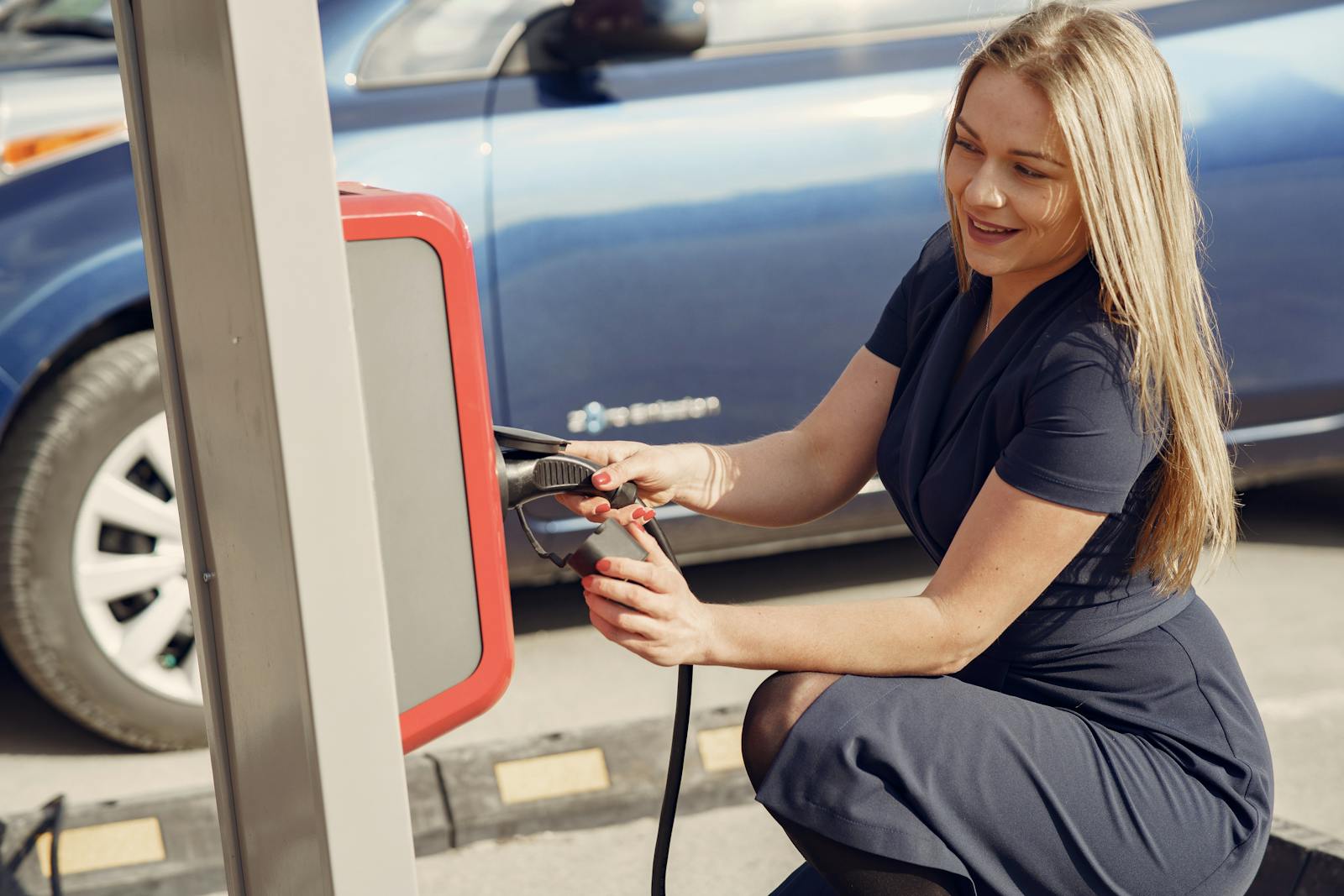

While gas prices surge and energy markets react to global tensions, electric vehicles have been working behind the scenes to reshape oil consumption patterns. The global electric vehicle fleet avoided consuming 1.7 million barrels of oil per day in 2025, equivalent to roughly 70% of Iran’s oil exports through the Strait of Hormuz. Most people didn’t notice this shift happening.
The numbers reveal a striking story about how electric vehicles are affecting global oil demand. Iran typically exports 2.4 million barrels per day through one of the world’s most critical oil chokepoints. The fact that EVs now offset such a substantial portion demonstrates how quickly transportation is changing.
This displacement of oil consumption comes at a time when energy crises expose vulnerabilities in fossil fuel dependency, particularly across Asia. The transition happened gradually over several years as EV adoption accelerated, but the cumulative impact only became clear when analysts compared the numbers against major oil-producing nations.
How Electric Vehicles Quietly Offset Global Oil Demand
The global ev fleet displaced 1.7 million barrels per day of oil in 2025, a figure that represents roughly 70% of Iran’s total oil exports. This shift happened largely without public fanfare, even as it reshaped energy markets and reduced dependence on vulnerable supply routes like the Strait of Hormuz.
EVs’ Impact Compared to Iran’s Oil Exports
Electric vehicles worldwide saved enough oil to equal nearly 70% of Iran’s exports in 2025. Iran typically exports around 2.4 million barrels per day, making the 1.7 million barrels displaced by EVs a substantial comparison point.
The savings increased from 1.3 million barrels per day in 2024, showing rapid acceleration. BloombergNEF reported that growing global adoption of electric vehicles helped avoid consumption of 2.3 million barrels of oil per day last year in their modeled scenario.
China alone saves over $28 billion annually in avoided oil imports through its current EV fleet. Europe banks about $8 billion per year, while India saves $0.6 billion annually from reduced oil consumption.
Strait of Hormuz and Oil Supply Shocks
The Strait of Hormuz carries a fifth of the world’s oil and LNG through a narrow, shallow passage. The wider Gulf region produces 29% of global oil output and 17% of gas, making it the most vulnerable chokepoint in the global commodity system.
About 80% of the oil and 90% of the LNG transiting Hormuz heads to Asian markets. This represents roughly 40% of Asian oil demand and over a quarter of Asian LNG imports. Japan, South Korea, India, and Thailand depend on it as their main supply source.
The recent closure exposed how deeply the world remains tied to fossil fuel imports. The energy security implications revealed that three-quarters of the world’s population live in net fossil fuel importing countries, with 79% residing in oil-importing nations.
Rise of the Global EV Fleet
EV sales have doubled since 2022, with 39 countries now showing EV sales shares above 10%. China crossed the 50% threshold for EV sales share in 2025, while Vietnam reached 38% and Uruguay hit 27%.
Multiple emerging markets now surpass advanced economies in adoption rates. Thailand achieved 21% EV sales share, while India reached 4%, Mexico 6%, and Brazil 9%. Indonesia’s EV sales share jumped to 15% in 2025, overtaking the United States at 10%.
Electric vehicles are increasingly at sticker price parity with combustion cars. Battery prices dropped 36% since 2022, while annual deployment of grid batteries increased sevenfold. The technology became both cheaper and more readily available in just four years.
Ember’s Report and Key Findings
Ember, an energy think tank, calculated that EVs cut 1.7 million barrels of oil per day in 2025 based on global EV sales data. Daan Walter and other researchers at the organization tracked how the electric vehicle fleet offset oil consumption across net importing countries.
The International Energy Agency has steadily brought forward its peak oil demand forecast. A decade ago, the IEA saw no peak before 2050. The latest forecast puts it at 2029, at around 106 million barrels per day.
The current crisis may accelerate that timeline further. The IEA already cut its 2026 oil demand growth forecast to just 0.6 million barrels per day. Even China, the largest growth market for oil over the past decade, saw demand fall in 2025 as electric vehicles displaced consumption.
Bigger Picture: EVs, Fuel Prices, and the Energy Transition
The shift to electric vehicles intersects with oil market dynamics and geopolitical tensions in ways that reshape energy security calculations. Meanwhile, rising gas prices are reinvigorating interest in electric vehicles after months of slower sales growth.
Oil Markets and Price Volatility
The global oil market faces a paradox. Electric vehicles are already displacing millions of barrels of oil per day, yet oil consumption hasn’t collapsed. The International Energy Agency expects world oil consumption to peak at the end of this decade at 103 million barrels per day.
Oil shocks from geopolitical conflicts continue to drive gasoline prices higher. The war in Iran has sent fuel costs surging, exposing ongoing oil vulnerability even as avoided oil imports from EVs grow. Analysts note that declining oil demand doesn’t guarantee lower oil prices if investments in new supply capacity drop faster than consumption.
The global economy remains sensitive to these oil market swings. Countries that embraced electric vehicles earlier now enjoy reduced exposure to fuel price volatility, strengthening their energy independence.
EV Adoption Trends and Government Incentives
Electric vehicle sales exceeded 10 million globally in 2022, with the market continuing its strong growth trajectory. Spiking gas prices are sparking consumer interest in electric vehicles as drivers compare operating costs.
Government incentives have played a crucial role, though their impact varies by region. Hybrid vehicles also contribute to reduced oil consumption, offering a middle ground for hesitant consumers.
The cost comparison shifts as fuel prices fluctuate. Though higher natural gas prices can increase electricity costs, natural gas prices haven’t risen as sharply as oil prices recently. Electricity prices remain more stable than gasoline prices, partly because the grid draws from diverse sources including coal, nuclear, and renewables.
Renewables, Electrification, and Energy Security
The energy transition presents a fundamental shift in how nations approach energy security. Electric vehicles are only as clean as the electricity charging them, which means the shift creates opportunities for wind and solar expansion.
Grid infrastructure requires significant upgrades. Charging stations, transmission capacity, and battery storage will all need expansion to support widespread electrification. The pivot away from oil imports toward domestic electricity generation—especially from renewable energy—offers strategic advantages.
Countries investing in renewables alongside EV adoption are building resilience against both oil shocks and climate risks. Nuclear power also plays a role in providing stable baseload electricity. This transformation is creating new opportunities in the evolving energy landscape as traditional oil-industry stakeholders adapt to changing demand patterns.
More from Steel Horse Rides:
- 13 Most Powerful Muscle Cars of All Time
- 13 Underrated JDM Cars That Deserve More Love
- 15 JDM Cars That Were Illegal in the U.S.
- 13 SUVs From the ’90s That Are Surprisingly Cool Today