
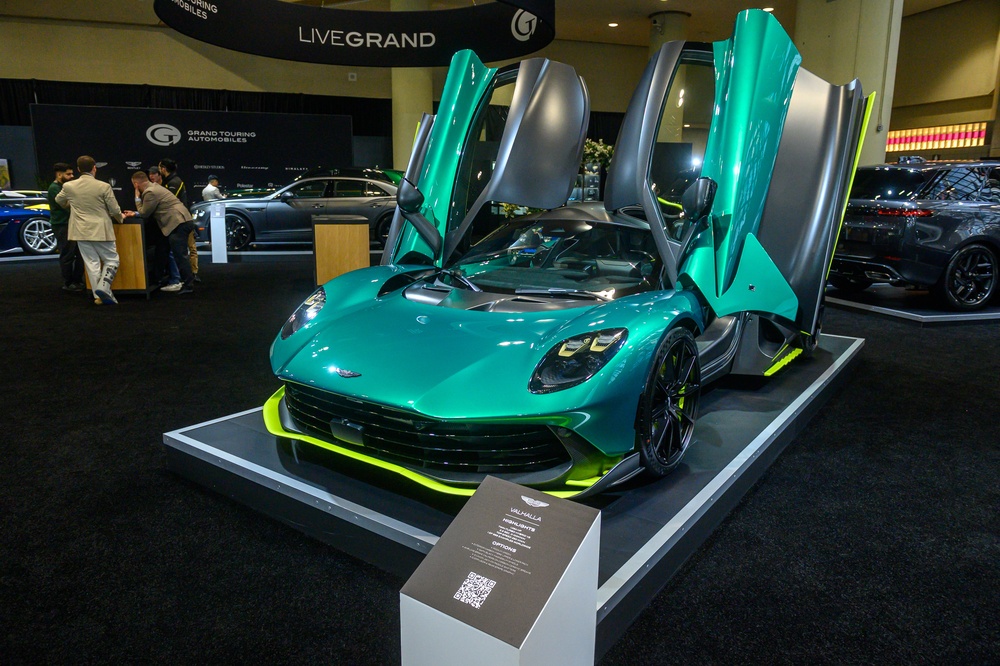

Aston Martin has pulled back the curtain on something extraordinary, and the automotive world can’t stop talking about it. The British luxury carmaker’s Valhalla represents its first-ever mid-engine plug-in hybrid supercar, combining Formula 1-inspired technology with over 1,000 horsepower of raw performance. Limited to just 999 units, this machine marks a transformational moment for a brand known for elegant grand tourers rather than track-focused supercars.
The Valhalla blends a 4.0-liter twin-turbo V8 with three electric motors to generate 1,079 horsepower and a top speed of 217 mph. It’s not just about brute force though. The supercar features active aerodynamics that deliver over 600 kilograms of downforce at 150 mph, keeping it glued to the pavement whether carving corners on a track or tearing down an open road.
What sets this hybrid apart is how deeply Aston Martin’s Formula 1 expertise has influenced every aspect of its design. From the pushrod front suspension visible through the carbon fiber bodywork to the raised-heel driving position borrowed directly from F1 racing, Valhalla represents a completely new direction for Aston Martin as it enters production in the second quarter of 2026.
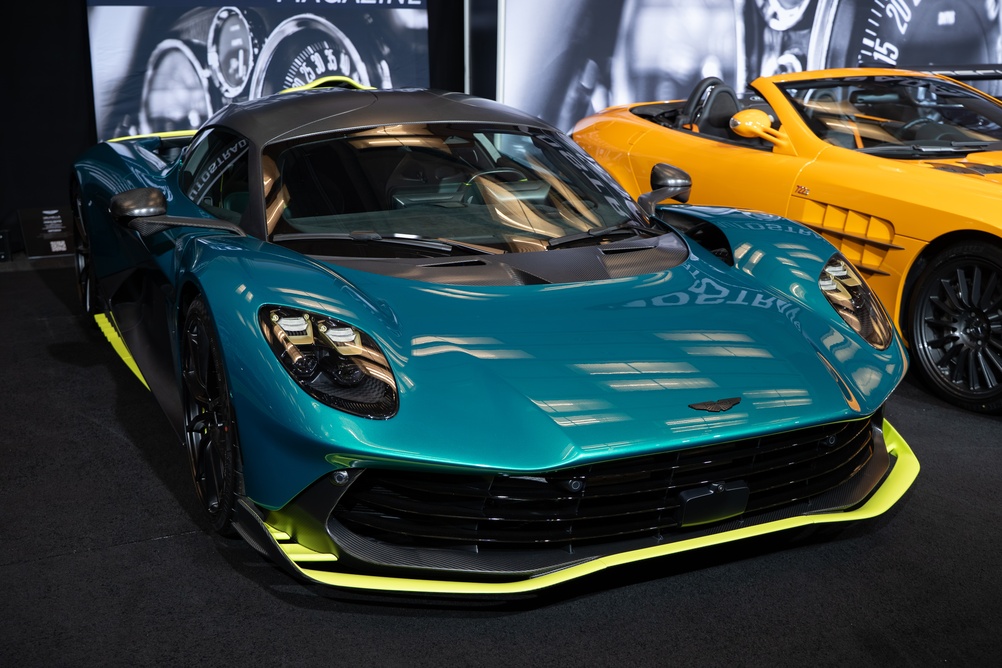
Aston Martin Valhalla: The New Hybrid Supercar Making Waves
The 2026 Aston Martin Valhalla represents the British marque’s first attempt at a mid-engine plug-in hybrid supercar, blending Formula 1-inspired technology with a potent powertrain that produces over 1,000 horsepower. Limited to just 999 units with an estimated $1 million price tag, this machine marks a significant departure from traditional Aston Martin design philosophy.
Sneak Peek: What We Know About the Valhalla So Far
The Valhalla’s production timeline has finally been confirmed, with deliveries starting in the second half of 2025 as a 2026 model. Aston Martin will build no more than 999 examples of this mid-engine hybrid supercar.
The car stretches 186.9 inches in length and sits just 45.7 inches tall, with a 108.7-inch wheelbase. Dihedral doors add to the exotic appearance, while the carbon fiber central tub keeps weight around 3,900 pounds. The exterior features an exaggerated version of Aston Martin’s signature grille paired with aerodynamically optimized bodywork.
Inside, the cabin emphasizes carbon fiber construction throughout. The driver faces a rectangular F1-style steering wheel with integrated infotainment controls. A column-mounted digital display shows different information depending on driving mode—a linear tachometer in Race mode or speedometer and navigation during road driving.
Plug-In Hybrid Powertrain: Combining Performance and Efficiency
At the heart of the Valhalla sits a Mercedes-AMG-sourced twin-turbocharged 4.0-liter V-8 with a flat-plane crankshaft. The gas engine produces 817 horsepower on its own and sends power to the rear wheels through an eight-speed dual-clutch automatic transmission.
Three electric motors supplement the V-8. Two motors power the front wheels while a third integrates into the transmission. Combined output reaches 1,064 horsepower and 811 lb-ft of torque. The 6-kWh lithium-ion battery pack enables about nine miles of pure electric driving.
Aston Martin claims the Valhalla reaches 62 mph in 2.5 seconds, though independent estimates suggest it could be considerably quicker given the all-wheel-drive setup. Top speed is pegged at 217 mph. The car even handles reverse electrically rather than through a traditional transmission gear.
Formula 1 Technology and Design Influences
The Valhalla draws heavily from Formula 1 engineering, particularly in its suspension and aerodynamics. It uses pushrod front suspension and multi-link rear suspension, both featuring adaptive dampers that adjust to driving conditions.
Active aerodynamics play a central role in performance. Movable front and rear wings automatically adjust to balance downforce and drag, maximize cornering grip, and enhance braking performance. Carbon-ceramic brakes come standard to handle the extreme speeds.
An electronically controlled limited-slip differential manages rear-wheel torque distribution. The racing influence extends to the driver-focused cockpit layout, where single-piece carbon fiber seats prioritize track performance over long-distance comfort. Storage space is virtually nonexistent, reinforcing the car’s singular focus on driving dynamics.
Pushing Boundaries: Valhalla’s Cutting-Edge Engineering
The Valhalla represents a significant technical achievement, combining a powerful combustion engine with electric propulsion and Formula 1-derived aerodynamics. Aston Martin has integrated advanced composite construction methods and active systems throughout the car.
Flat-Plane Crank V8 and Three Electric Motors Explained
The Valhalla’s powertrain features a 4.0-litre twin-turbo V8 with a flat-plane crank configuration, making it the most powerful engine ever fitted to an Aston Martin. This hot-V design incorporates new twin-scroll turbos and air charge coolers that reduce intake temperatures to optimize combustion.
Three electric motors complement the V8 engine. Two front motors enable torque vectoring across the front axle, actively eliminating understeer and oversteer while improving steering precision. These motors also provide torque-fill between gear shifts to eliminate turbo lag and power the car in EV mode.
A rear motor integrates into the transmission, acting as a starter generator and delivering additional torque-fill for smoother acceleration. The complete plug-in hybrid system produces 1,079PS and 1,100Nm of torque, with the car capable of reaching 217mph. An 8-speed dual clutch transmission delivers power to all four wheels, with an electronic rear differential ensuring optimal traction and balance.
Active Aerodynamics and Aerodynamic Balance
The Valhalla’s active aerodynamics system generates over 600kg of downforce at 150mph. An active front wing hidden behind the traditional grille works in conjunction with a hydraulically activated rear wing that rises up to 255mm from the bodywork in Race mode.
Both wings react within 0.5 seconds to constantly optimize aerodynamic balance. The system includes automatic drag reduction (DRS) functionality and air brake capability for extreme braking performance. When the air brake activates, it shifts the center of pressure rearward to improve stability.
A roof scoop channels air to the turbochargers, air charge coolers, and directly into the hot-V configuration. Rear venturi tunnels and an active air-dam manage underbody airflow, with a cooling bypass minimizing drag in road modes. Five vortex generators at the rear of the side skirts increase downforce in the car’s midpoint, borrowed directly from Formula 1 chassis design.
Chassis, Suspension, and Composite Construction
The Valhalla’s carbon fibre monocoque was developed in partnership with Aston Martin Performance Technologies. The lower tub uses resin-transfer-moulding (RTM) technology, while the carbon upper structure creates a complete safety cell around occupants.
Ultra-rigid aluminium subframes attach to this lightweight core. The car employs race-derived pushrod front suspension with inboard-mounted springs and damper units, positioning them out of the airflow to improve cooling flow to the rear side coolers. A conventional 5-link rear suspension setup completes the package.
Integrated Power Braking (brake-by-wire) provides progressive stopping power through 410mm carbon ceramic discs on the front axle and 390mm discs at the rear. Brembo monobloc calipers feature ventilated piston inserts for thermal management, with cooling ducts offering uninterrupted airflow to reduce brake fade.
Production Plans and How It Stacks Up to Rivals
Aston Martin will limit Valhalla production to 999 units, positioning it as an exclusive alternative to mid-engined supercars from Ferrari, Lamborghini, and Porsche. The car marks Aston Martin’s first series-production mid-engined hybrid supercar, representing a departure from the brand’s traditional front-engine layout.
The Valhalla sits below the Valkyrie in Aston Martin’s lineup but delivers what the company describes as “true hypercar performance” at a more accessible price point. Its combination of 1,079PS output and advanced aerodynamics puts it in direct competition with established players in the hybrid supercar segment.
Aston Martin Formula 1 drivers provided input on the Race mode display layout at the team’s Silverstone headquarters. The car offers multiple driving modes including Sport mode and Race mode, with the latter activating the full aerodynamic package and performance systems.
More from Steel Horse Rides: