

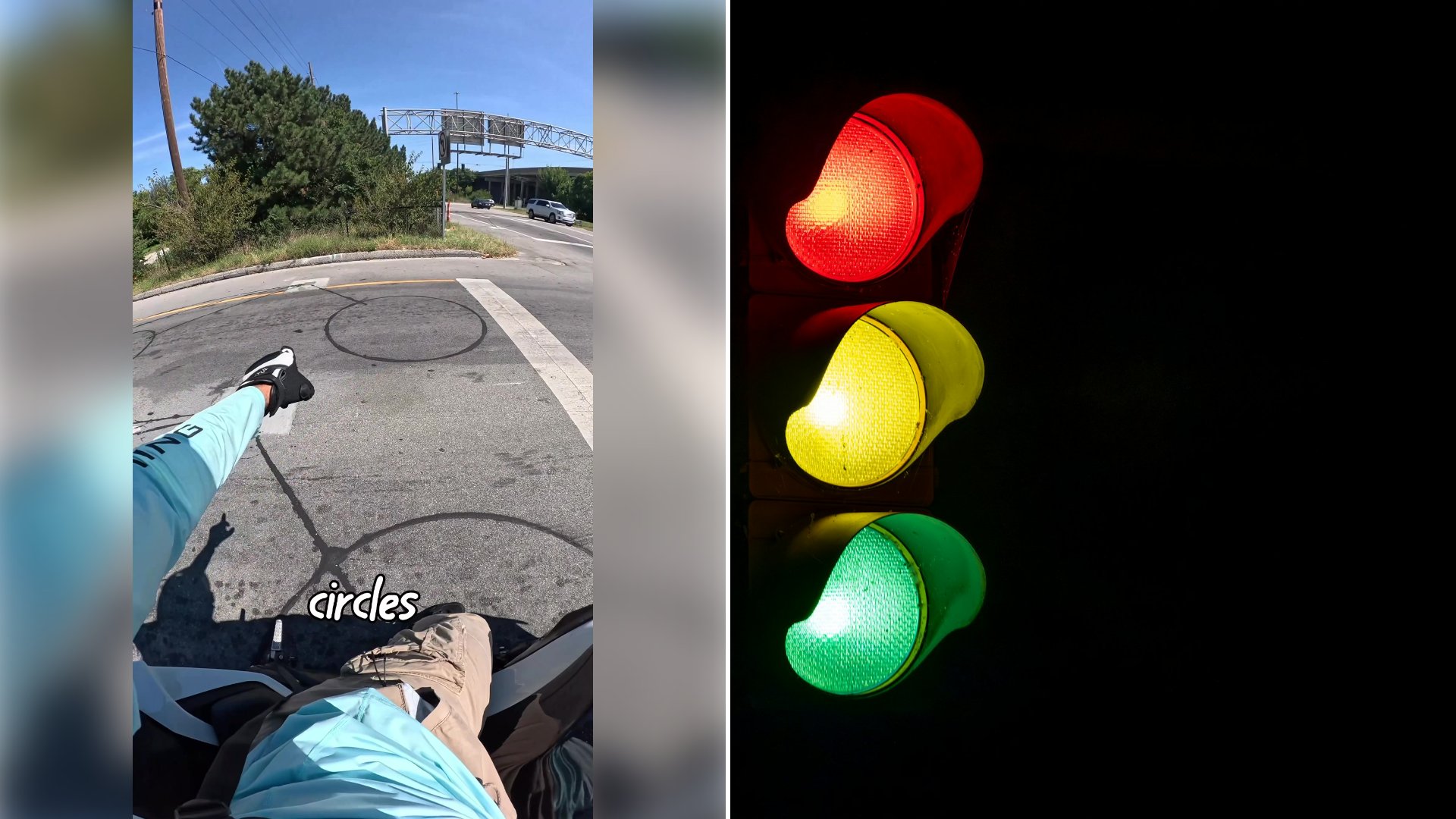
A POV video from the account kal_6r, filmed from the handlebars of a motorcycle stopped at an Indianapolis intersection, shows the rider pointing straight down at the pavement as on-screen text labels the circular saw-cuts in the asphalt: “circles.” The caption lays out the punchline: “Or your bike has like no metal in it💀 #trafficlight #motolife #bikelife #indianapolis.” The video pulled in 17,000 likes, 107 comments, 1,146 saves, and 322 shares.
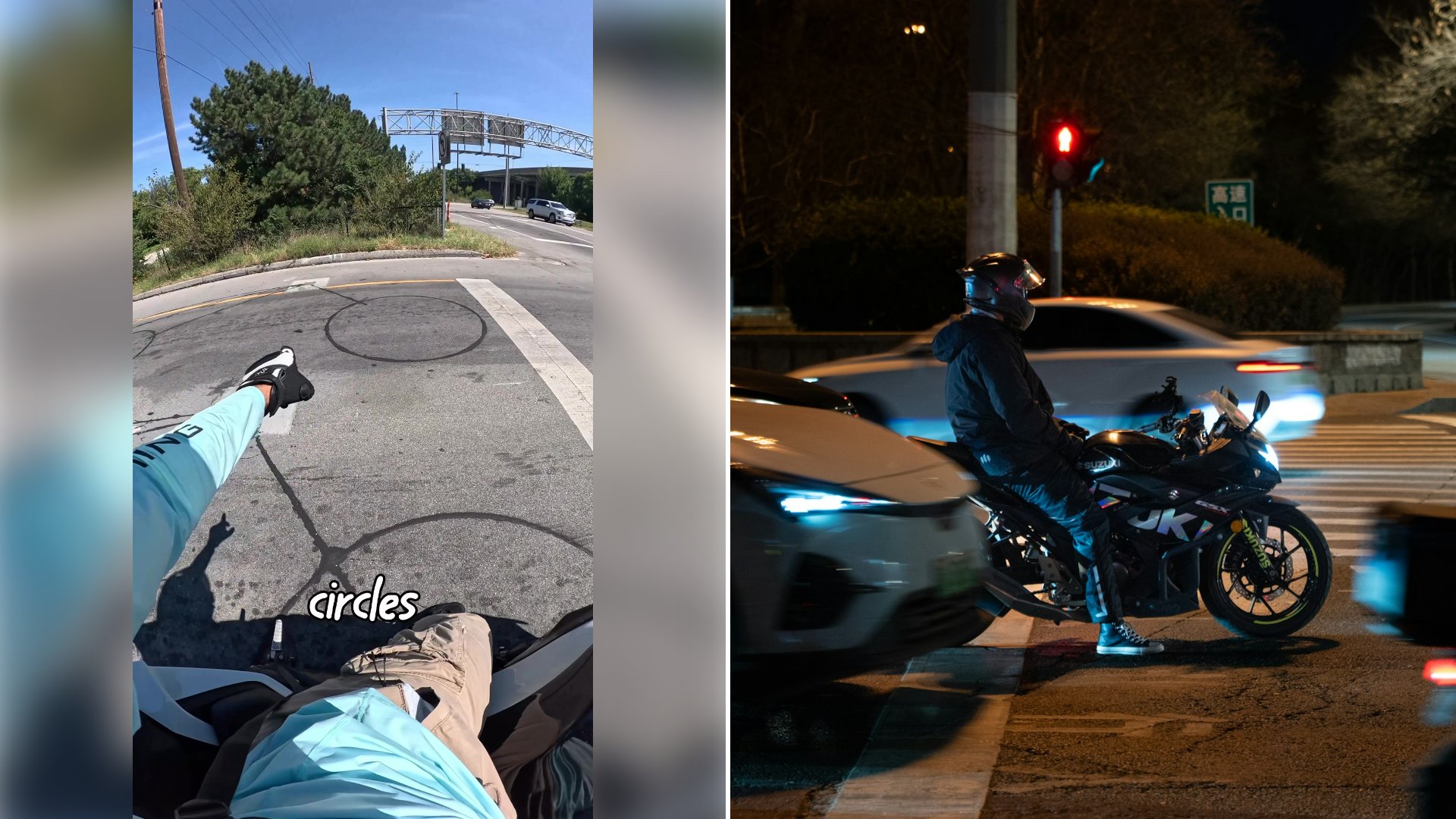
@kal_6r Or your bike has like no metal in it💀
Those circular cuts mark an inductive loop, a wire embedded in the pavement that detects the metal mass of a vehicle’s engine block sitting above it and tells the signal controller a car is waiting. WebBikeWorld’s explainer on the technology says the loops simply aren’t always sensitive enough to pick up a motorcycle, and the problem compounds on bikes built with a lot of aluminum alloy rather than steel, since aluminum produces a weaker signal in the loop than a car’s mostly-steel engine does. The same article notes traffic engineers can dial up a loop’s sensitivity, but only to a point, since turning it up too far starts falsely triggering off cars sitting in the next lane over.
WebBikeWorld’s practical fix is positioning, not waiting it out: riders get the best detection sitting directly over one of the loop’s cut lines, ideally the one farther from an adjacent through-lane rather than the one closest to passing traffic, since a car that drifts over while merging poses less risk from that side. Where that still doesn’t work, the article’s other suggestions are asking a car behind to pull up over the loop instead, or reporting the specific intersection to the local road authority, which may be able to adjust that loop’s sensitivity on request.
For exactly the scenario the circles create, riding in Indiana carries a specific legal out that most states still don’t offer. Indiana Code 9-21-3-7(b)(3)(D), in effect since July 1, 2014, lets a motorcyclist or bicyclist treat a red light as a stop sign if they’ve waited roughly two minutes without the signal changing, confirmed the loop simply isn’t picking them up. The law only shifts when a rider may legally proceed, not who’s at fault if something goes wrong afterward: the rider is still the one responsible for confirming the intersection is clear before going, the same way a driver facing a four-way stop sign would be. For a rider stuck exactly where this video is filmed, knowing the two-minute dead red rule exists is the difference between sitting at an empty intersection indefinitely and having a legal path through it.
More from Steel Horse Rides
- Buyer Says He Bought a 90K Mile Bentley Continental GTC Sight Unseen at Auction, Then Finds a Check Engine Light, a Parking Brake Failure and a Fuel Door That Won’t Open
- Owner Says the Seats in a 1986 Toyota 4Runner Smell Exactly How You Would Imagine, Then Pulls Out the Carpet and Asks Followers to Pick the Color for the New Kit
- Narrator of a Repair Clip Says a Car That Shook Every Time the Owner Hit the Gas Had an Engine Mount Cracked Clean in Half, Then Explains Why the Impact Wrench Is Not the Last Step