

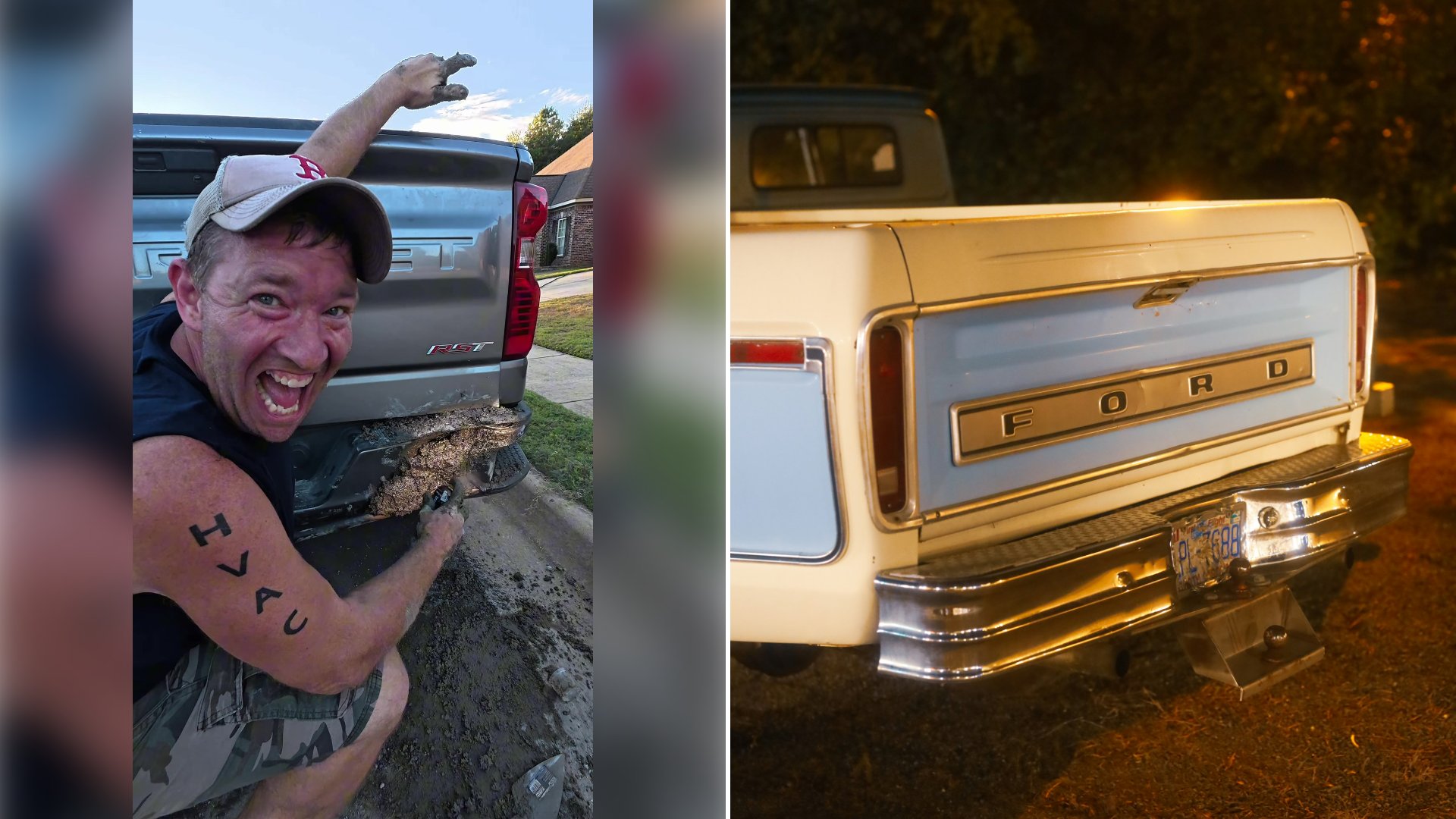
A creator pulls up to a dented truck bumper, mixing bag in hand, and starts troweling wet concrete straight into the crumpled panel like it is spackle on drywall. The clip from @mrfatcheeto plays the whole thing completely straight, narrating the “repair” step by step as if packing a truck bumper full of concrete were a totally normal Saturday afternoon job. By the time he smooths the surface flat and steps back to admire the work, it is clear this is satire, but it is delivered with such a straight face that the comments section spent just as much time arguing over whether it would actually hold as they did laughing at it.
The joke works because it pokes at something real: dented bumpers are one of the most common and most overpriced repairs in auto body work. A plastic bumper cover with a crease or a puncture can often be pulled, heated, and reshaped from behind rather than replaced outright, a method called paintless dent repair when the panel allows for it. For plastic bumpers specifically, shops frequently use a plastic welder to melt matching material into cracks, then sand and refinish the surface, a process that holds up far better than anything poured in wet and left to cure.
@mrfatcheeto
On real cost, a minor bumper dent repair at a body shop typically runs between 150 and 600 dollars depending on whether paint and clear coat are involved, while a full bumper replacement with painting and labor can climb past 1,000 dollars on many modern vehicles with integrated sensors and parking cameras. DIY dent pullers and heat-gun kits sold for home use run as low as 20 to 50 dollars and can handle small dents reasonably well on their own driveway, which is part of why the concrete bit lands as such an obvious exaggeration — there are already cheap legitimate options that do not involve mixing a bag of Quikrete.
Concrete itself is also just the wrong material for the job on every practical level. Cured concrete is rigid and brittle under flex, while a vehicle bumper is engineered to absorb impact energy through controlled deformation. Concrete does not bond well to the flexible plastics and coated metals used in modern bumper covers, has no give when the panel flexes over a bump or during a low-speed impact, and adds a meaningful amount of dead weight exactly where a bumper needs it least. Any real adhesion would depend on mechanical keying rather than a chemical bond, meaning the slab would be more likely to crack off in chunks than stay put.
None of that stopped the video from becoming a hit, because the appeal was never really about whether concrete works on a bumper. It is about the deadpan delivery of someone clearly in on the joke who refuses to break character, which is exactly the kind of bit that travels fast in car content circles where real repair know-how and absurd parody sit side by side in the same feed.
More from Steel Horse Rides
- Detailer Tapes Off a Cloudy Toyota Headlight, Sands It With a Cordless Tool and Then Passes a Wand Over It Until It Turns Clear, in a Clip He Says Saved the Owner $400
- Restorer Pulls a Pontiac GTO Body From an Acid Dip Tank and Shows How It Gets Neutralized and Pressure Washed To Reveal the Metal Underneath the Rust
- Detailer Announces He Is Building a 90s Truck, Then Has a Sun Faded Black Chevy Z71 Chained to a Shop Rack and Cleans Its Maroon Interior With a Brush and a Hot Water Extractor