

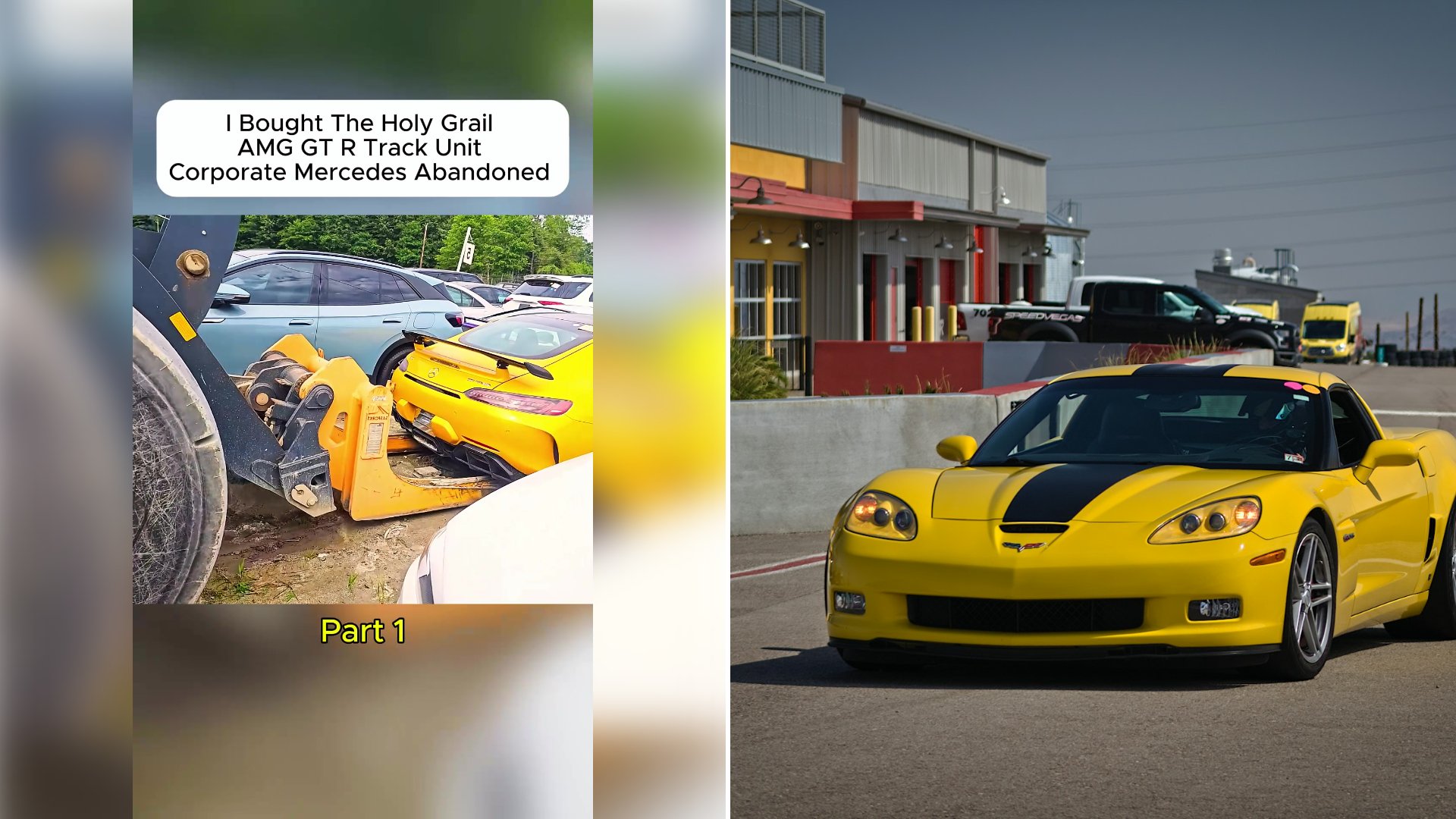
A video circulating online shows a buyer walking around a Mercedes-AMG GT R track unit he just bought, loading it onto a trailer while talking through everything he knows, and doesn’t know, about where the car actually came from. Rather than a straightforward story of buying a rare performance car, the clip turns into a buyer trying to piece together a paper trail that jumps between corporate entities, with the AMG GT R’s prior ownership history still only partly explained even after the purchase closed.
The video comes from @sparrow00015, a creator who documents rare and track-focused car purchases, including the paperwork headaches that come with buying something that was never built to be a normal street car in the first place.
@sparrow00015
The AMG GT R track-only variant at the center of this story is one of the rarer branches of Mercedes-AMG’s GT lineup. Unlike the street-legal GT R, these track units are built without road-going equipment such as license plates, airbags, or full street emissions compliance, and they’re typically sold through manufacturer-affiliated racing or customer-motorsport programs rather than through a normal dealership. That distribution model is exactly why ownership trails on cars like this one get murky. A track unit can pass through a factory motorsport division, a regional importer, a private racing team, and a holding company used purely for asset ownership before it ever reaches an independent buyer, and each handoff doesn’t always leave a clean public record behind.
Corporate fleet resale is a well-documented pattern in the high-performance and racing car world generally. Manufacturers and their motorsport arms frequently register competition and track-focused cars under corporate names, leasing entities, or event-support companies rather than an individual’s name, both for liability reasons and because these cars are often used for demonstration laps, driver coaching programs, or factory-backed track days before they’re ever sold off. When that happens, a car can rack up a title history that bounces between two or three different business entities in a short span, which is precisely the kind of pattern that leaves a new owner scratching his head about who actually controlled the car and when.
Production numbers only add to the intrigue. The GT R nameplate itself was never a high-volume model to begin with, and track-only variants built for customer racing programs are produced in far smaller numbers than their street-legal counterparts. Mercedes-AMG has built customer racing cars in limited run batches tied to specific racing series homologation windows, meaning a given model year’s track unit production can be measured in dozens of cars worldwide rather than hundreds. That scarcity means every individual chassis has a documented, traceable history somewhere, even when that history isn’t easy for a private buyer to access after the fact.
For buyers chasing this kind of car, the ownership gap shown in the video is a real-world example of why specialist pre-purchase inspections and chassis-specific history checks matter so much more with track and motorsport-spec vehicles than with ordinary used cars. A standard vehicle history report built around a VIN and state title records often doesn’t capture a car’s time inside a corporate racing program, since those cars are frequently never registered for road use and can move between related business entities without triggering the kind of title transfer records consumer buyers are used to checking.
None of that murkiness takes away from what the buyer in this video actually walked away with. A genuine GT R track unit is a rare piece of hardware built with a purpose far removed from commuting, and the fact that its full corporate paper trail still isn’t completely clear only adds to the mystique of a car that was never meant to live an ordinary life. It’s the kind of purchase that comes with homework attached, and the video captures that reality better than any glossy listing photo could.
More from Steel Horse Rides
- Buyer Says He Bought a One Hundred Thousand Pound Mercedes GLE That Nobody Could Even Open and Explains What a Salvage Rebuild History Can Hide From New Owners
- Spectator at a Packed Car Auction Films the Bidding Open at $20 Million, and the Fee Math Shows Why the Price in the Record Books Is Never the Bid Called Out in the Room
- Buyer Looks Over a Black 1998 Toyota Supra Turbo Tagged $50,000, Puts Both Hands on His Head When the Number on Screen Jumps to $52,000, Then Shakes Hands at $50,000