

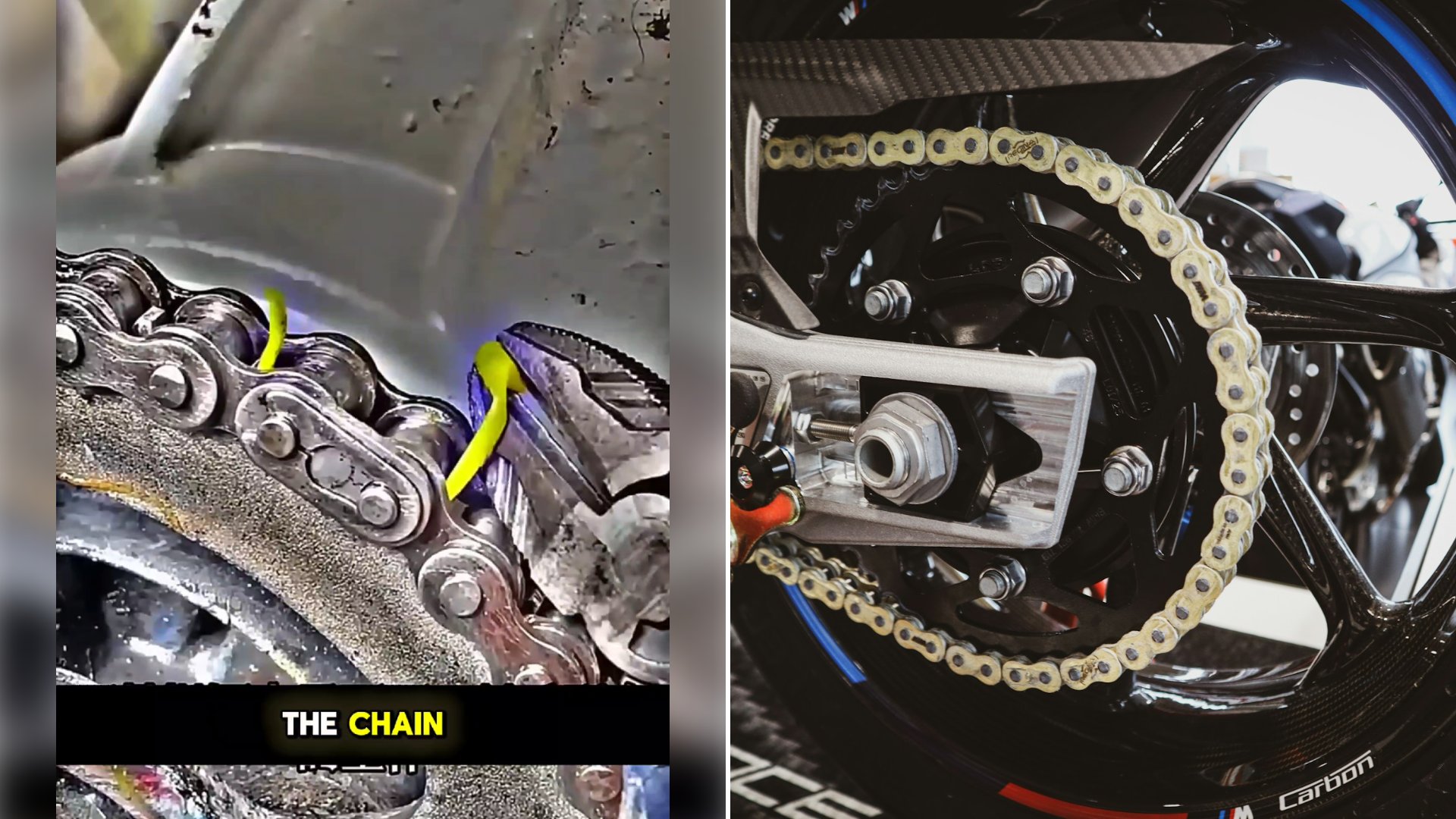
A mechanic lines up a motorcycle’s drive chain, holding the two loose ends together where the master link needs to go, and instead of reaching for a specialty chain tool, he grabs something every garage already has in a drawer: a plain zip tie. The clip from @curafur shows him cinching the tie around the chain to hold both ends under tension and perfectly aligned, which frees up both hands to seat the master link plate, O-rings, and clip without the chain slipping apart or sagging out of position.
Anyone who has tried to install a master link solo knows the problem this solves. The two chain ends want to droop apart under their own weight the moment you let go to grab the link or the clip, and a dedicated chain tool or a vise grip clamp usually does the holding job, but not everyone has one on hand. A zip tie cinched snug around the two ends essentially becomes a free, disposable clamp, holding tension evenly across both strands so the rider can focus entirely on seating the link correctly instead of wrestling with the chain itself.
@curafur
The trick saves time, but it does not replace the parts of the job that actually determine whether the chain stays safe. Most manufacturers specify a master link clip orientation where the closed end of the C-clip faces the direction of chain travel, so it is less likely to catch on something and pop off. The riveted-style master links common on higher-performance chains need a proper chain press tool to peen the pin heads correctly, and skipping that step in favor of a clip-style link on a bike that calls for a rivet link is a real safety compromise, not just a shortcut.
Torque and fit matter just as much as orientation. Most clip-style master link manufacturers call for the plate to be pressed on until a specific amount of the pin extends past the plate, typically measured in fractions of a millimeter, rather than tightened to a torque spec the way a bolt would be. Over-pressing the plate can crack the O-rings that seal grease inside the chain’s pins and bushings, while under-pressing leaves the plate loose enough to walk off over time. Chain maintenance after installation follows a simpler rule: most manufacturers recommend lubricating the chain every 300 to 600 miles and checking slack every 500 to 1,000 miles, since a chain that runs dry or loose wears out its sprockets far faster than one kept properly tensioned and lubed.
The zip tie hack is the kind of small, obvious-once-you-see-it trick that spreads fast in rider communities precisely because it costs nothing and solves a problem almost everyone has fought with alone in a garage. It will not replace the chain press tool for riveted links, but for a clip-style master link job, it turns a two-person task into something one rider can handle cleanly by themselves.
More from Steel Horse Rides
- Rider Shows What Countersteering Feels Like From the Seat of a Motorcycle and Explains Why Pushing the Right Bar Actually Turns the Bike Right
- Creator Rescues a Nineteen Eighty Nine Honda Gold Wing That Sat Two Years in a Shed After the Owner Got Scared To Ride and Shows How It Cleaned Up for Nine Hundred Dollars
- Motorcyclist Explains How Inductive Traffic Sensors at Stoplights Work and Why Some Bikes Never Trigger a Green Light and What Riders Can Do