

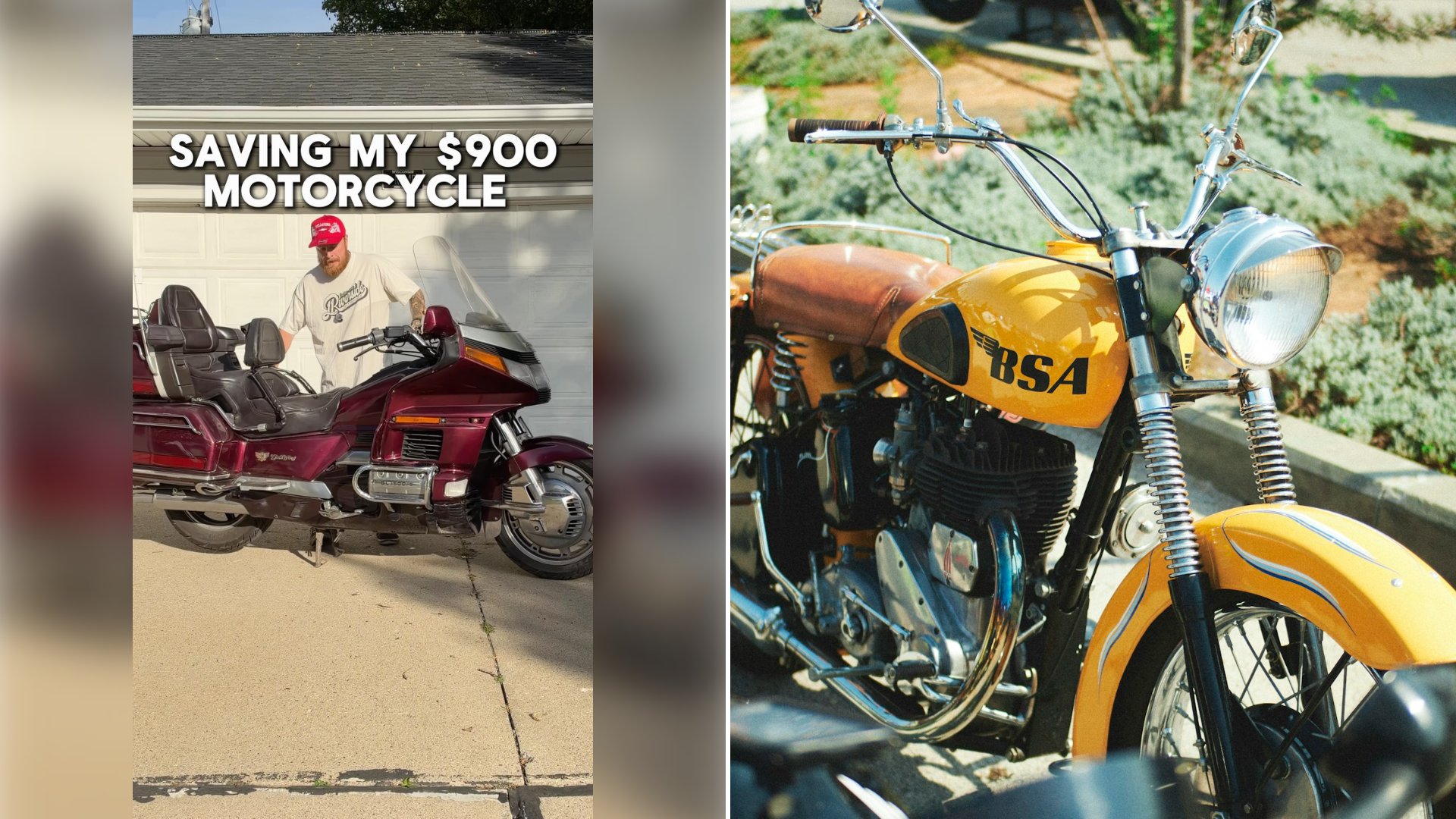
A video from the account dakotastonee documents a $900 rescue with real heart behind it: a 1989 Honda Gold Wing GL1500 that sat untouched in a shed for two years after its previous owner tipped it into a ditch at the end of his own driveway and got too scared to ride it again. “I was able to scoop it up running and driving with a clean title,” the caption reads, “but knowing it needed some love to get back to its glory days. It cleaned up pretty well if you ask me, but there’s still more to do!” Tagged #motorcycle, #honda, #goldwing, #motorcyclelifestyle, and #barnfind, the video pulled in 90,100 likes, 344 comments, and 856 shares.

A clean title and a bike that already runs and drives puts this Gold Wing in a much better starting position than most barn finds, but Gold Wing owner forums are consistent that “running” after two years of sitting isn’t the same as “sorted.” Longtime GL1500 owners discussing bikes that sat for years in similar threads point first to the fuel system: overhauling the carburetors, replacing the fuel filter and carb holders, and swapping out old vacuum lines, since stale fuel left in the float bowls for that long commonly gums up jets and passages even on a bike that technically starts. They also flag checking the rear drive fluid for a milky appearance, which signals water intrusion, and inspecting tire sidewalls for the kind of cracking that develops from age and sitting rather than mileage, a problem separate from tread depth that’s easy to miss on a bike that otherwise looks fine.
The cosmetic side of the revival, which is really the star of this particular video, has its own set of right and wrong moves. Cycle Gear’s guide to motorcycle chrome care warns against polishing chrome directly, since the plating is thin enough that aggressive polishing wears it away rather than restoring it; the safer approach is a gentle soak and clean with a soft rag, followed by a non-harsh wax to seal out moisture and grime going forward. For rust that’s crept in on exposed steel underneath the chrome, the guide recommends a white vinegar soak followed by scrubbing with a copper pad rather than steel wool, since steel wool leaves behind particles that actually promote new rust rather than removing the old kind.
What makes a two-year shed stay survivable at all, mechanically and cosmetically, comes down to how it was stored and why it stopped being ridden in the first place. A bike parked after an owner lost confidence rather than because something broke tends to come back easier than one abandoned mid-repair, since the underlying mechanicals were presumably sound when it went into storage. That’s consistent with what this Gold Wing shows: a machine that needed cleaning and attention rather than a ground-up rebuild, proof that sometimes the biggest obstacle standing between a bike and the road isn’t the engine, it’s the rider’s nerve.
More from Steel Horse Rides
- Owner Says the Seats in a 1986 Toyota 4Runner Smell Exactly How You Would Imagine, Then Pulls Out the Carpet and Asks Followers to Pick the Color for the New Kit
- Mechanic Pulls a Snapped Crankshaft Apart in Two Pieces on the Shop Bench, Says the Car Drove In Like That and Jokes the Customer Only Wanted an Oil Change
- Narrator of a Repair Clip Says a Car That Shook Every Time the Owner Hit the Gas Had an Engine Mount Cracked Clean in Half, Then Explains Why the Impact Wrench Is Not the Last Step