

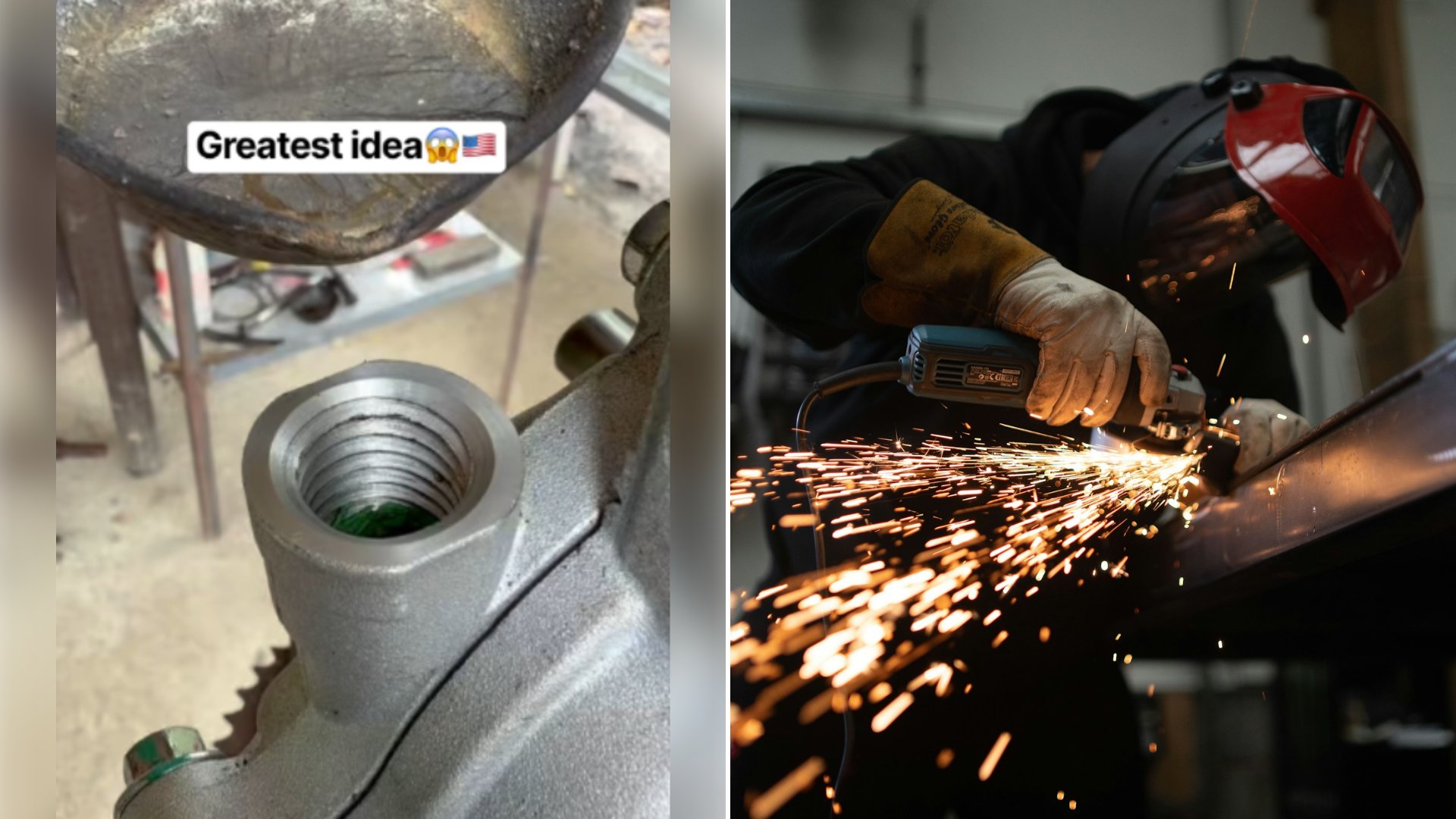
A mechanic examines a threaded bolt hole that has been stripped, cracked, or otherwise chewed up beyond the point where a bolt will grip, and instead of reaching for the usual fix, he heats a small batch of metal to its molten state and carefully pours it directly into the damaged socket. The clip from @tips_vat1 shows the metal filling the cavity, cooling into a solid plug, and then getting re-drilled and re-tapped from scratch, essentially rebuilding the threaded hole from raw material rather than patching around the damage.
Stripped and damaged threads are one of the most common headaches in any garage, and most shops reach for one of two standard fixes long before anything involving molten metal. The first is a helicoil, a coiled wire insert that gets threaded into an oversized, re-tapped hole to recreate the original bolt size and thread pitch. The second is welding, where a shop builds up weld material inside or around the damaged area and then re-drills and re-taps it once the metal cools, which is closer in spirit to the pour-and-tap method shown here but done with a welder’s precision and controlled heat input instead of a ladle.
@tips_vat1
Cost is where the comparison gets interesting. A helicoil repair kit for a common thread size runs roughly 10 to 30 dollars for a DIY kit, or somewhere between 50 and 150 dollars at a shop including labor, making it by far the cheapest and most accessible option for a weekend mechanic. Welding a damaged hole and re-tapping it is a more involved job that typically costs more at a shop, often 100 to 300 dollars or more depending on the material and location, since it requires a skilled welder, proper heat control to avoid warping surrounding material, and precise re-tapping afterward. Pouring molten metal directly into a hole without the heat control a welder provides risks warping nearby castings or leaving voids and poor fusion in the fill, which is exactly why most professional shops stick with helicoils or controlled welding instead.
The appeal of the molten pour method in this clip is less about it being the industry standard and more about it being a resourceful, old-school fix for someone without access to a helicoil kit or a welder on hand. For low-stakes repairs on soft metals, a careful pour-and-tap can genuinely work, but on anything load-bearing, like an engine mount, a suspension point, or a structural bracket, the controlled, tested methods remain the safer call precisely because they do not depend on getting the pour, the cooling rate, and the bonding all correct on the first try.
Either way, the video is a reminder that a stripped thread does not have to mean a scrapped part. Whether the fix comes from a ten-dollar helicoil kit or a torch and a careful hand, the goal is the same: get a solid, trustworthy thread back where one used to be.
More from Steel Horse Rides
- Mechanic Shows a Simple Hack To Adjust Cam Timing on a Honda Engine Without Taking the Whole Thing Apart and Explains When It Works and Why It Matters
- Off Roader Peels the Toyota TrueStart Sticker Off a Car Battery and Finds an Interstate Batteries Label Underneath, Then Points at It in a Clip He Calls Rebranded Car Parts
- Mobile Mechanic Says a Dealership Blamed a Timing Chain for Up to Five Thousand Dollars, Then He Pulls a Clogged VVT Solenoid and Watches Every Camshaft Code Disappear