

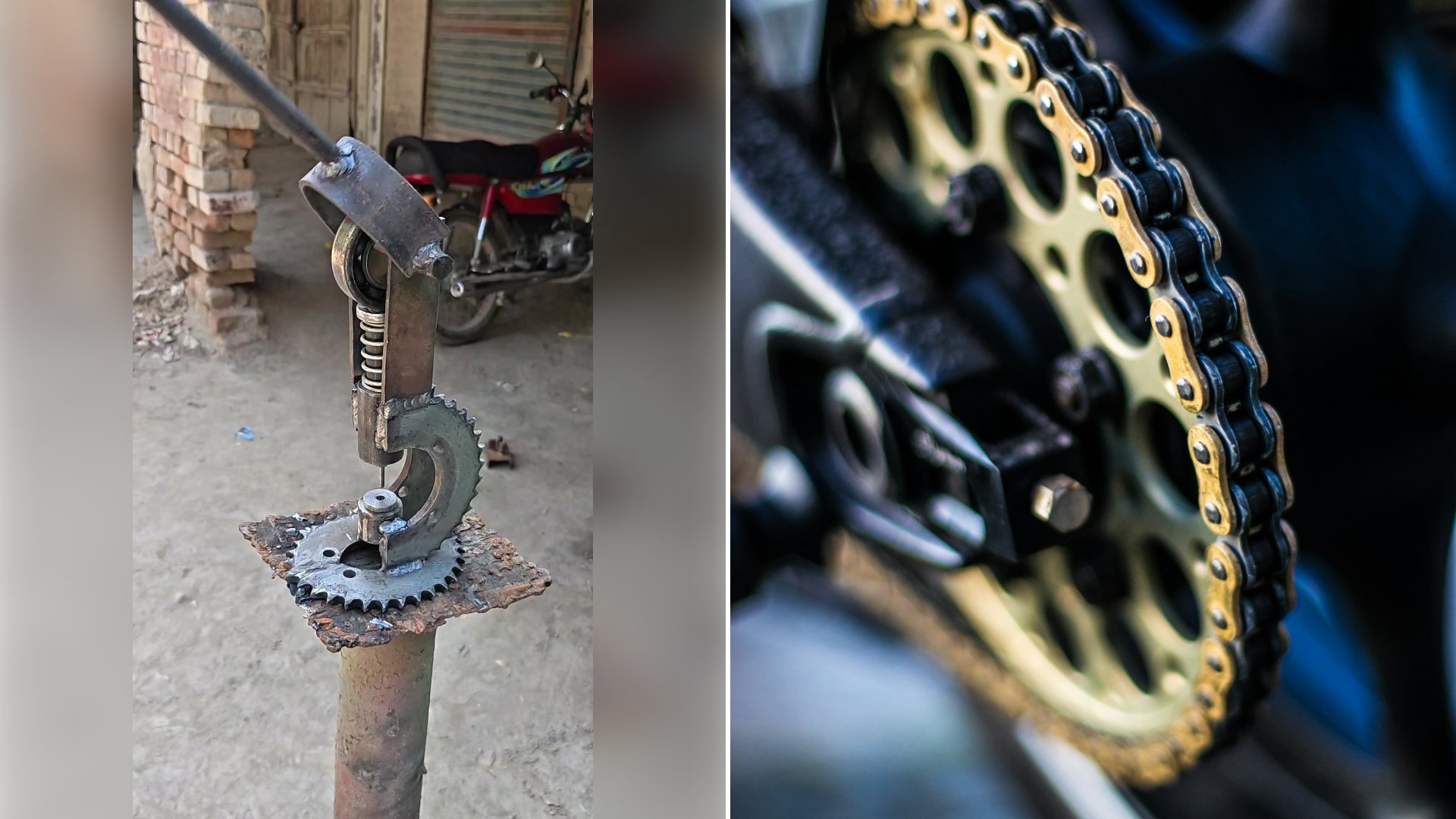
A fabricator sets a motorcycle drive chain into a vise, picks up a tool he welded and machined together himself, and uses it to pop a chain link apart with a few confident turns. The video from @no1ideas5 walks through how the tool was built, showing the pins, the pressing plate, and the leverage point he engineered to do the same job as a commercial chain breaker, all without spending a dollar on a specialty tool that most riders only use a handful of times a year.
A motorcycle chain breaker is a simple concept mechanically: it clamps around a rivet-style link and uses a threaded pin or press to force the pin heads out of the link plate, separating the chain without damaging the surrounding links. The tool itself is not complex, which is exactly why a skilled fabricator with a welder, a drill press, and some scrap steel can build one that performs the same core function, even if it lacks the hardened finish and precision machining of a mass-produced version.
@no1ideas5
On price, the math tells the real story. A decent commercial motorcycle chain breaker and riveting tool combo typically runs anywhere from 30 dollars for a basic breaker-only version to well over 150 dollars for a combination tool that also presses new master links back together. Specialty versions built for larger chain sizes used on bigger touring and adventure bikes can climb higher still. Building a one-function breaker at home, by contrast, mostly costs whatever scrap steel and welding consumables the fabricator already has lying around, plus the time it takes to design and machine it properly.
The tradeoff is versatility and precision. A commercial tool is designed to handle multiple chain sizes, includes a riveting head to properly peen new master link pins afterward, and is built from hardened steel that will not deform under repeated use. A homemade breaker built for one specific chain size does exactly one job well, but will not easily adapt to a different bike with a different chain pitch, and without a proper riveting attachment, the fabricator still needs a separate plan for closing up a new master link once the old chain is off.
For a garage that already has welding and machining capability, building a single-purpose tool like this makes complete sense, especially for a one-off job or a shop that handles the same bike repeatedly. It is the same instinct that drives a lot of DIY fabrication content: why buy a specialty tool used twice a year when the skills and equipment to build an equivalent one are already sitting in the shop.
More from Steel Horse Rides
- Rider Shows What Countersteering Feels Like From the Seat of a Motorcycle and Explains Why Pushing the Right Bar Actually Turns the Bike Right
- Creator Rescues a Nineteen Eighty Nine Honda Gold Wing That Sat Two Years in a Shed After the Owner Got Scared To Ride and Shows How It Cleaned Up for Nine Hundred Dollars
- Guy Tearing Apart the Ruined Interior of His 1986 Toyota 4Runner Is Now Asking Total Strangers Online to Help Him Pick the Replacement Carpet Color for It