

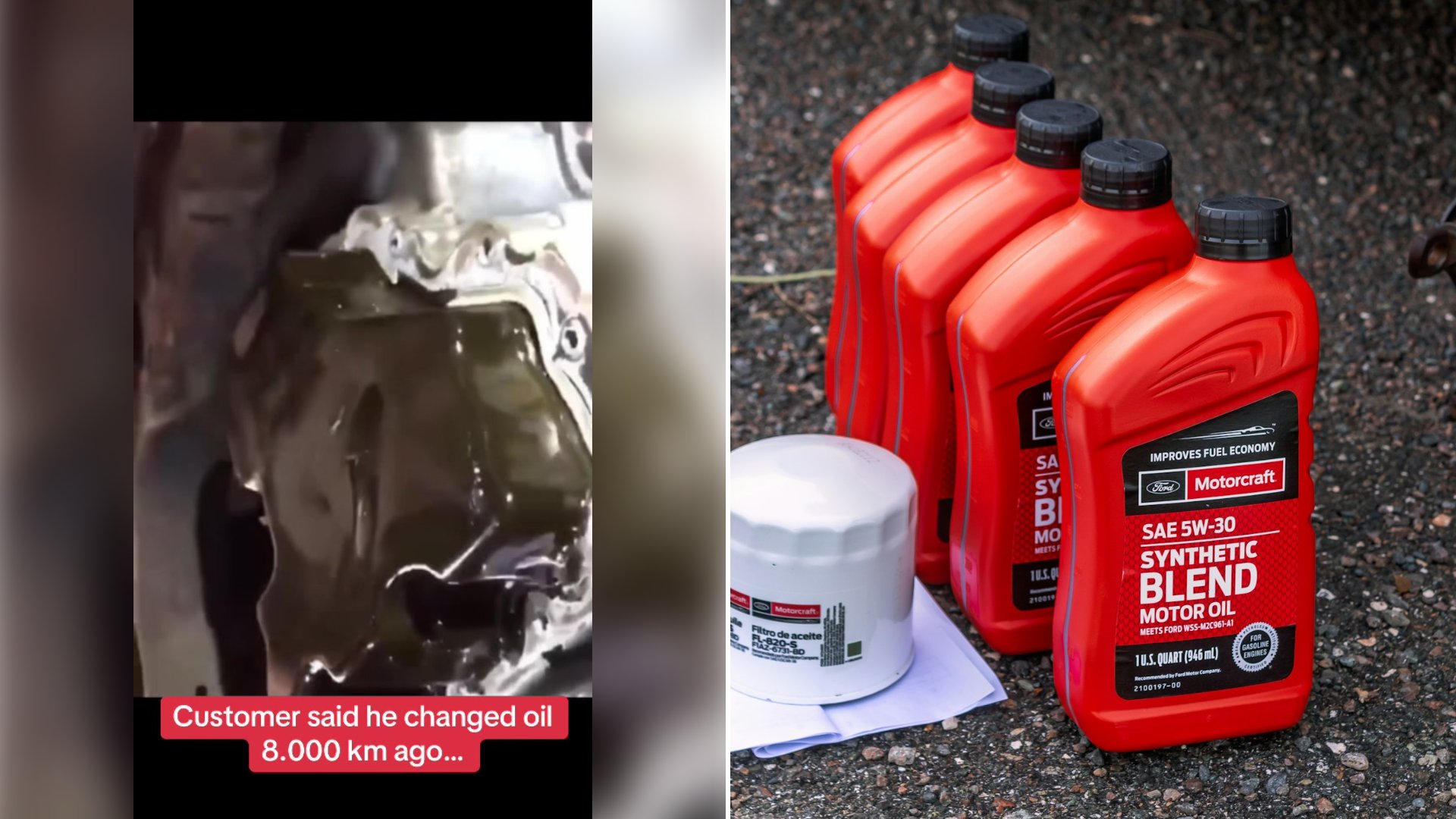
A video making the rounds shows a mechanic dropping an oil pan to find a massive, congealed blob of black sludge sitting where clean oil should be, pulled from a car whose owner insisted the oil had been changed just a few thousand miles earlier. The footage lingers on the sheer volume and texture of the sludge, a thick, tar-like mass that looks more like old roofing material than motor oil, and the mechanic’s reaction makes clear this isn’t a routine oil change gone slightly overdue.
The video comes from @confused.mechanics, a creator who documents real shop discoveries, including the kind of engine conditions that leave even experienced mechanics shaking their heads.
@confused.mechanics
Engine sludge like this doesn’t form overnight, and it almost never forms from a single skipped oil change. Sludge builds up when motor oil breaks down from prolonged heat exposure and oxidation, mixing with combustion byproducts, moisture, and dirt until it thickens into the gel-like substance shown in this video. That process typically takes many thousands of miles of neglect to fully develop, which is exactly why a claim of a recent oil change sits so uneasily next to what the mechanic actually found in the pan. A sludge buildup this severe is far more consistent with oil that’s gone unchanged for tens of thousands of miles, or with a pattern of using the wrong oil type, skipping multiple service intervals in a row, or running the engine hard without ever properly flushing the system.
Short-trip driving habits make the problem worse even for owners who do change their oil on a reasonable schedule. An engine that rarely gets driven long enough to reach full operating temperature struggles to burn off moisture and fuel byproducts that naturally end up in the oil, letting contaminants accumulate faster than they would in an engine that regularly gets a longer highway run. Combine that pattern with infrequent oil changes or a lower-quality oil that breaks down faster under heat, and sludge can form considerably quicker than most owners would expect.
The damage sludge like this can cause goes well beyond a dirty-looking oil pan. Once sludge builds up, it clogs the narrow oil passages that are supposed to deliver lubrication to critical components like the camshaft, bearings, and valve train, starving those parts of the oil flow they need to avoid metal-on-metal wear. In severe cases, sludge can block the oil pickup tube inside the pan entirely, causing a sudden and catastrophic loss of oil pressure that destroys an engine in a matter of minutes rather than gradually wearing it down. Repair costs for sludge-related engine damage vary widely depending on how far it’s progressed, ranging from a thorough internal engine flush and oil system cleaning on the lower end to a full engine replacement on the higher end if bearings or other internals have already been damaged by the restricted oil flow.
Whatever actually happened with this particular car’s maintenance history, the video doubles as a pretty effective public service reminder: oil changes exist specifically to prevent exactly what’s shown in that pan, and an engine that looks fine on the outside can be quietly building toward a sludge problem long before any warning light ever comes on.
More from Steel Horse Rides
- Mechanic Opens on a Clean Valvetrain Under the Words 3k Mile Oil Changes Versus 10 to 20k, Then Cuts to a Sludge Caked Engine and Notes This CRV Only Had 80k on It
- Mechanic Points to Sooty Black Residue Inside a Kia K5 Exhaust Tip and Tells Viewers To Stop Buying Hyundai and Kia Over Known Engine Reliability Problems
- Mobile Mechanic Says a Dealership Blamed a Timing Chain for Up to Five Thousand Dollars, Then He Pulls a Clogged VVT Solenoid and Watches Every Camshaft Code Disappear