

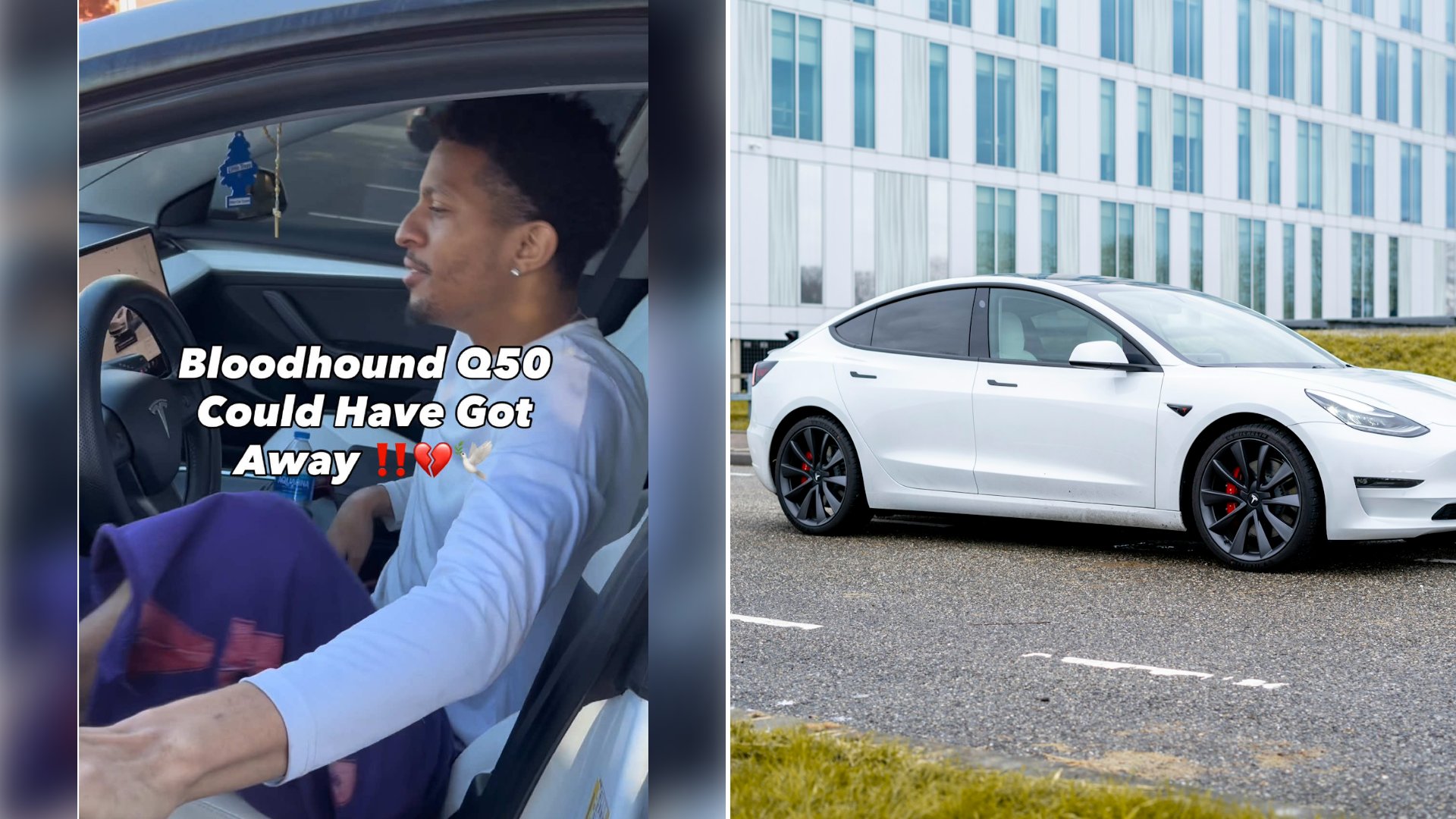
A creator sets out to settle an argument that had been circulating online, running a real world experiment to prove a Tesla can still drive away with one of its doors left wide open. The test directly challenges a viral claim tied to a specific chase incident that suggested a Tesla would not move, or would be seriously disabled, with a door ajar, and the results on camera leave very little room for debate.
The experiment from @dtunhacked_1 is straightforward by design: open a door, put the car in gear, and see what actually happens, rather than relying on speculation or secondhand claims about how the vehicle’s systems should behave. That hands on approach is exactly why mythbusting content like this performs so well, it replaces online arguing with a test anyone can watch and judge for themselves.
@dtunhacked_1
Tesla’s door design has been a recurring source of online confusion for years, and it is easy to see why. Tesla models use electronically actuated door releases rather than a simple mechanical latch pull on most trim levels, with the rear doors on several models historically requiring the vehicle to sense a closed and locked state before certain drive functions would fully engage in some software versions. That complexity has fed a steady stream of viral claims about what a Tesla can or cannot do with a door open, some accurate, many exaggerated or flatly wrong, because the actual behavior depends heavily on which model, which software version, and which specific door is involved.
In reality, like the vast majority of modern vehicles regardless of manufacturer, a car being drivable with a door open is the norm rather than the exception. Nearly every production vehicle sold today can be shifted into gear and driven with any door ajar, since door sensors are designed to trigger a warning chime and dashboard alert rather than physically prevent the vehicle from moving, a safety choice that exists specifically so a car is never mechanically disabled by something as simple as a door that did not latch fully. Disabling drive entirely over an open door would create its own safety hazard in an emergency situation, which is why no major manufacturer builds their vehicles that way.
The specific chase incident that originally sparked this claim picked up traction online partly because of how unusual and visually striking footage of a moving car with an open door tends to look, feeding assumptions that something mechanically unusual must have been happening. Mythbusting experiments like this one serve a real purpose in that environment, cutting through assumption with a direct, repeatable test rather than letting a viral clip’s implied narrative go unchallenged.
For Tesla owners specifically, the practical takeaway is simple: an open door warning should always be treated as a reminder to pull over and close it safely, not evidence that something is mechanically broken with the vehicle, and the car will generally keep moving exactly as commanded until the driver chooses to stop.
More from Steel Horse Rides
- Mechanic Points to Sooty Black Residue Inside a Kia K5 Exhaust Tip and Tells Viewers To Stop Buying Hyundai and Kia Over Known Engine Reliability Problems
- Car Expert Lays Out the Most Reliable Used Cars To Buy at Every Budget From One Thousand Dollars Up To Twenty Five Thousand Dollars and Explains Why
- Driver Asks Did I Overreact Over Dashcam Footage of an Oncoming Silver Car Coming at Him Near the Center Line, Then Shows His Face Barely Moving the Entire Time