

A garage-door reveal from @dodi_auto_sales has reached 1.5 million views by delivering one of the automotive world’s most reliable crowd-pleasers: a dusty cover pulled back to show a vintage Porsche 911 that had been sitting hidden for years. The dealer walks viewers through how the car ended up stashed away in the first place, turning a simple unveiling into a genuine origin story.
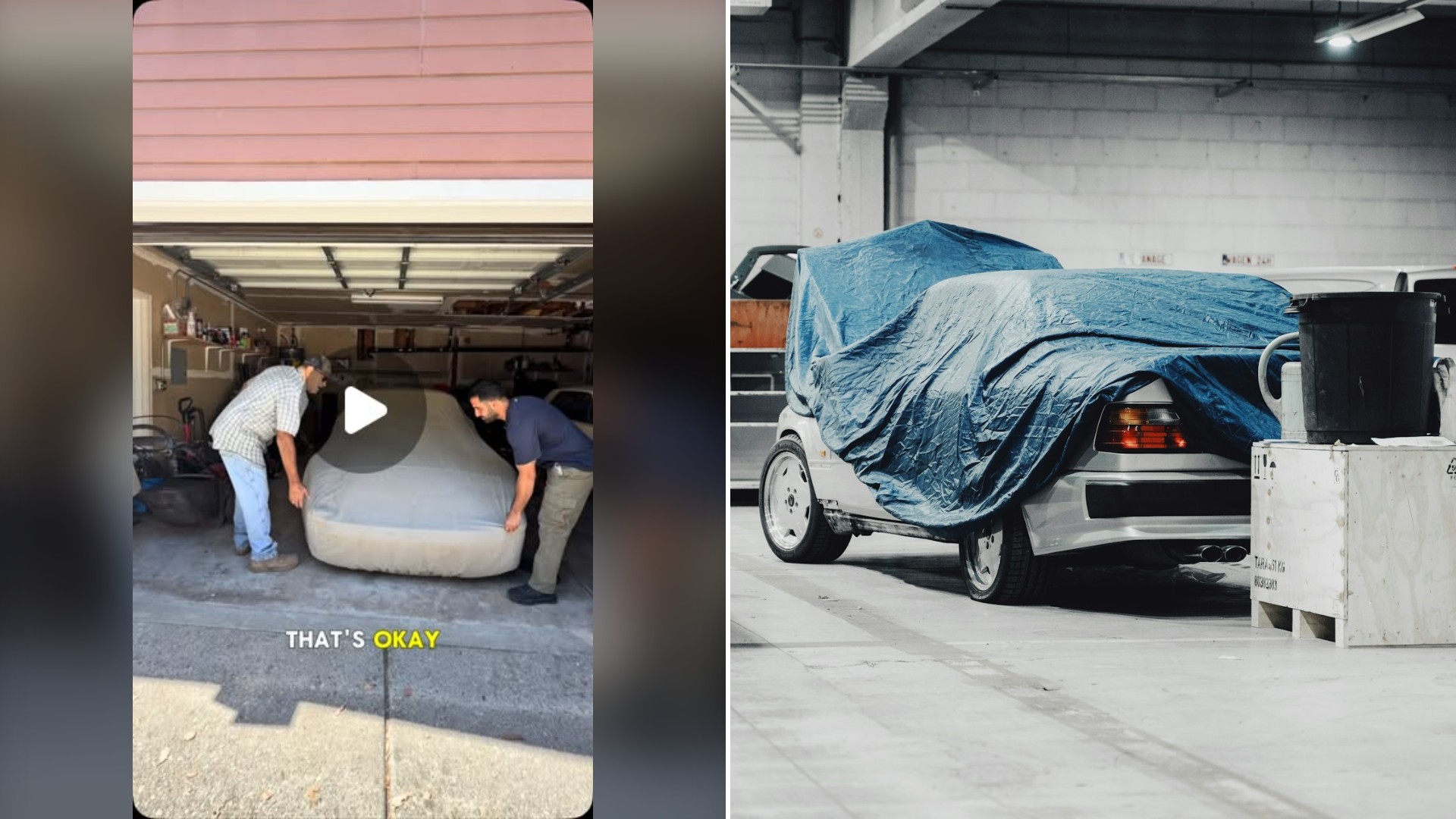
Barn-find and garage-find reveals work as a format because they tap into a fantasy almost every car enthusiast shares: that somewhere out there, a genuinely valuable classic is sitting forgotten, waiting to be rediscovered. The moment the cover comes off is the entire payoff, and it rarely disappoints.
Long-term storage does real, lasting things to a classic car that aren’t always obvious from the outside, and the air-cooled Porsche 911 in particular has a few well-documented trouble spots that any buyer should check before getting swept up in the romance of a barn-find story. Fuel systems are usually the first casualty: gasoline left sitting for years degrades, leaving behind a gummy varnish residue that clogs fuel lines, the fuel pump, and injectors or carburetors, often requiring a full fuel-system cleaning or replacement before the engine can safely run again.
Seals and rubber components degrade over time regardless of mileage, simply from age and exposure to temperature swings inside a garage. Brake lines, fuel lines, and engine seals on an air-cooled 911 can become brittle or cracked after a decade or more of inactivity, which is why specialists generally recommend a full brake system inspection and fluid flush, along with a check of all major rubber seals, before a long-stored car goes back on the road rather than simply turning the key and driving off.
Rodents and pests are a less glamorous but very real risk for any vehicle stored for extended periods, especially in a garage or barn without a fully sealed environment. Mice and other small animals are drawn to the insulation in wiring harnesses and the enclosed, undisturbed space under a car’s hood or interior, and a chewed wiring harness can cause electrical gremlins that take far longer to diagnose than the physical damage itself might suggest. A thorough inspection for nesting material and chew marks is standard practice before a stored classic gets its first start in years.
On the value side, originality and documentation tend to matter even more for a long-stored classic than for one in regular use. A Porsche 911 that’s been sitting for decades with its original paint, interior, and matching-numbers engine intact can command a significant premium over a comparable car that’s been repainted or had mechanical components swapped over the years, since collectors increasingly prize unmolested originality. Any paperwork that survived storage alongside the car — service records, the original window sticker, prior ownership history — can meaningfully boost both the asking price and buyer confidence.
For a dealer or private seller sitting on a car like this, the recommended path is almost always the same: a full mechanical inspection by a specialist familiar with the specific model before driving it any real distance, rather than trusting that a car which looks intact under a cover is mechanically ready simply because the sheet metal survived the years untouched.
More from Steel Horse Rides
- A Pinstriper Is Still Applying Real Gold Leaf By Hand The Exact Old School Way Traditional Craftsmen Did It Decades Ago On A Classic Car Engine Turned Panel
- A Weekly Bank Repo Auction Just Sold An Entire Running Car For Only Three Hundred And Fifty Dollars And The Crowds Reaction Says Everything About How Shocked They Were
- A Buyer Risked Five Hundred Dollars On A Mercedes GL450 Worth Close To Fifteen Thousand Dollars And Is Revealing Every Hidden Mechanical Flaw One By One