

There is a special kind of tension in the moment before a machine that has been silent for generations is asked to run again. Inside a museum garage, a small crew set out to do exactly that with an antique American motorcycle roughly a hundred years old, and the host admitted up front that nobody could say when it last fired.
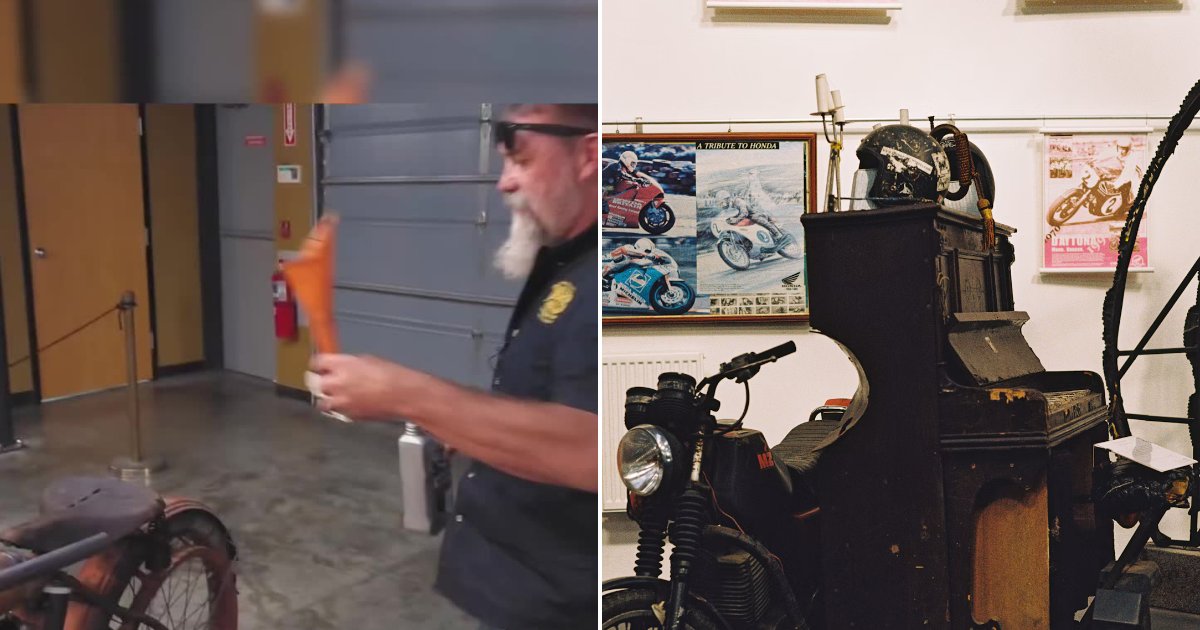
What follows is not a rush to hit the starter. It is a careful, step by step prep, and it is a great look at how people approach a very old engine without damaging it.
The work is documented by @wheelsthroughtimes, and the whole job is narrated live by the people doing it, in natural shop conversation with plenty of surprises along the way.
@wheelsthroughtimes
Oil first, because old engines are thirsty
The first job is lubrication. The host fills the front frame tube with fresh oil, and it goes in a long way before it stops. He worries aloud about the leather washer inside that creates the suction, and then he hears the oil weeping. The oil also looks off to him, though he wonders whether it is only the tint or air being whipped into it as it flows.
The bike has no drip feed, so oil has to be put where it is needed by hand. After a pause, the crew moves to the lower end and pumps clean oil straight into the crankcase through a three way shutoff valve. The host clearly loves the design. Oil leaves the bottom of the tank into the valve, and from there it can be pulled into a tube by a plunger and sent out into the case. Nothing is coming out the bottom at first, which leads to the sober guess that the washers will eventually need servicing.
Checking compression before anything else
With oil in place, the team checks whether the engine can hold pressure. The controls are laid out in a way that feels foreign today, with the throttle on the left hand and the spark advance and decompression lever on the right. They confirm that the decompression lever lifts the exhaust valve, then keep it raised, turn the engine over by hand and feel for resistance.
The answer is a relief. There is good compression, and the crew decides there is no need to mess with that side of the engine any further.
Spark, a duct taped battery and a 120 year old plug
Next comes spark. When they pull out the battery canister they find nothing inside except a regular wire, and the host explains why: the tube is a new piece, one of the only parts on the machine that had to be fabricated. That is why he does not hesitate to tape a modern battery to the outside of it with red duct tape. The goal, he says, is to get the bike under its own power.
Then comes the highlight. The original spark plug comes out, and it turns out to be a Bethlehem, a mica insulated plug from before porcelain was common. It uses pipe thread, so there is no washer to seat against the cylinder. It simply threads in until it stops. The gap looks to be about twenty thousandths. They ground the plug on the cylinder head and prepare to see whether it fires, and that is where the story pauses, with the bike’s first start still in the balance.
How enthusiasts wake a sleeping engine safely
The crew’s order of operations is the classic one, and it is useful far beyond antique motorcycles. A dormant engine of any age deserves patience.
- Drain and replace old fluids, and make sure oil actually reaches the places that need it before the engine turns.
- Turn the engine over by hand and feel for binding, a stuck valve or a seized piston.
- Check compression, then spark, then fuel, in that order, since each one is easier to confirm separately.
- Inspect fuel lines, tank and carburetor for rust, varnish and old residue before adding fresh fuel.
- Test the ignition away from the fuel system and keep an extinguisher close.
These are general practices, and every machine has its own quirks. Anyone who is not experienced with early engines should bring in a specialist or a museum level restorer instead of guessing.
Why preserving originals matters
One reason this crew works slowly is that nearly everything on the bike is original, including that plug. Replacing a rare part with a modern equivalent is quick, but it can erase history. A good rule among restorers is to repair first, replace only when needed and keep any removed original parts so the next caretaker can see what the machine really looked like.
The taped on battery fits that thinking. It is a simple, reversible way to get spark without altering the frame, and the reproduction canister it sits against is the one piece the crew had to fabricate.
Whether or not the engine fires on the first try, the real story is care. Every step is about giving the machine a fair chance while protecting what a century has left intact.
Credit for the original post goes to @wheelsthroughtimes on TikTok.
More from Steel Horse Rides
- Enthusiast Is Showing Off A Rare 1948 Tucker That Somehow Lets The Driver Shift Every Single Gear Without Ever Taking Their Hands Off The Steering Wheel
- Watch a cheap, wrecked Mitsubishi Lancer get torn apart piece by piece and reborn as a jaw dropping slammed custom show car nicknamed the Frankenlancer.
- Young Mechanic Showed His Father The Engine He Was Tearing Down And The Two Discovered A Concerning Camshaft Issue Neither One Of Them Expected