

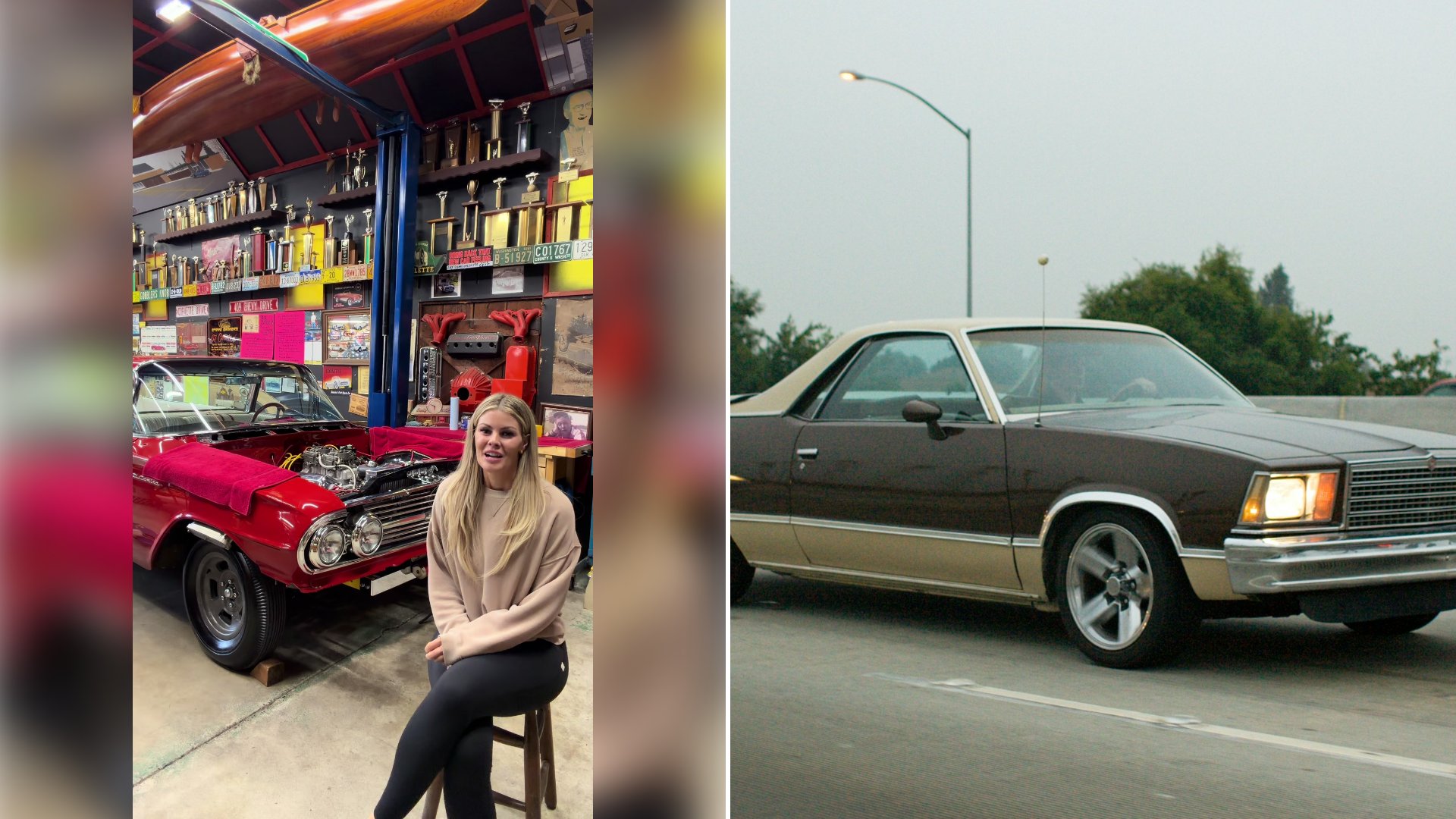
Some restorations are about money, and some are about finishing a promise. When @classiccarsisters shared the night her family’s 1960 El Camino fired up for the first time in her lifetime, she did not just show an engine running. She told the story of a car that waited more than three decades for someone to bring it back.
@classiccarsisters
Walker Chevrolet, Tacoma, 1959
She introduces herself as Christine Barker, and she explains that her dad was Steve Barker. In 1959, she says, he walked into Walker Chevrolet in Tacoma, Washington, and pre ordered this 1960 El Camino. Pre ordering a car in those days meant choosing your options and waiting for the factory to build it. It was a sign that he knew exactly what he wanted.
Very quickly, she says, he started racking up a lot of trophies with the car. The El Camino was Chevrolet’s answer to the car based pickup idea, a stylish blend of a passenger car front end and a small open bed in back. The 1960 model, with its sweeping lines, was a standout in its time.
One Race, One Broken Axle
In 1989, when she was just a few months old, her dad raced the car at Super Chevy Sunday. Super Chevy Sunday is a well known drag racing event series built around Chevrolet performance. Something went wrong that day. She says he broke an axle.
After that, the car did not go back to the track. For 38 years, which she describes as her entire life, the car sat in a back room on a special stand, off the frame, with the engine out. She says she has seen it her whole life in pieces. As a child she used to sit in that barn with her sister, and the two would pray that somebody would come save them.
Notes, A Mentor, And A Plan
Years later she began finding her father’s notes everywhere. They were pretty specific, she says, about how he wanted to put the car back together. Those notes became a roadmap, and she decided to follow it.
Wanting to do the work and knowing how to do it are different things, though. Two years ago she met someone named Dale, who became her mentor and, in her words, one of her best friends. He told her that if she was serious about carrying out her dad’s dreams and finishing the cars the way he wanted them done, and learning along the way, he would teach her.
That offer matters. Old car restoration takes skills that are hard to pick up from a book, such as setting valve lash, timing an engine, and getting suspension geometry right. A patient teacher can shorten the learning curve by years, and a student who takes good notes will get far.
The Night The Engine Ran
Then came a Friday. She says it was September 11th, 2026, and for the first time in her life she had just heard her dad’s 1960 El Camino run. She had to fly in from a different state, because the distributor was finished. The distributor is the part that sends spark to each cylinder at the right moment, and a finished one means the engine can finally run on its own.
Her mom was there, along with her sister and the kids. Many of her father’s friends, she says, told her they never thought they would see this car this close to being finished. Not one person, including her mom, ever thought they would see Big Red Barker’s 1960 El Camino on the road again.
The plan for the next day was simple and huge at the same time. At 8 in the morning, she and Dale would take it for its very first drive in 38 years. She ends the story there, with the first drive still ahead.
Her caption says she was not sure whether she was going to post the story, but she has shared the rest of the journey, so she decided to share this too.
Why Engine Startups Matter
The first time an engine runs after a long rest is a big moment in any restoration. Before that point, the car is a collection of parts. After it, the car is alive. Careful builders prepare for it with a checklist.
They prime the oil system so that bearings and lifters are coated before the first rotation. They check the fuel system for leaks. They confirm that the cooling system is filled and sealed. They set the ignition timing to a safe starting point, and they keep a fire extinguisher close by. Many also run the engine at a gentle idle for a short time with attention to oil pressure and temperature, and then shut it down to inspect for drips.
The run is also the start of a break in period. A fresh engine, especially one with new camshaft parts, often needs specific procedures for the first minutes of operation, and the builder’s instructions should be followed closely.
Advice For Anyone Taking On A Family Project Car
If a story like this makes you want to dig into your own project, a few steps can help.
Gather the history. Notes, photos, receipts and old parts catalogs are gold. Christine says her father left specific notes, and those turned a daunting pile of parts into a plan.
Find a mentor. Local car clubs, restoration shops and vocational programs are full of people who like to pass along what they know. Offer your time and be willing to get your hands dirty.
Photograph and label everything. When a car has been apart for decades, it is easy to lose track of which bolt goes where. Bags, tags and a good set of pictures will pay off many times over.
Set small goals. A distributor finished, an engine run, a first drive. Each step keeps energy up on a project that may take years.
Bring the family in. In this story, mom, sister and the kids were all there. Sharing the milestone is part of what makes it meaningful.
What Comes Next
By the end of the story, we do not see the drive itself. It was scheduled for the following morning. Whatever happened next, the night of the first run was already a milestone for a car that had sat apart for so long. It is a lovely reminder that old projects can come back, and that the people who keep them alive are often the ones who grew up around them while they waited.