

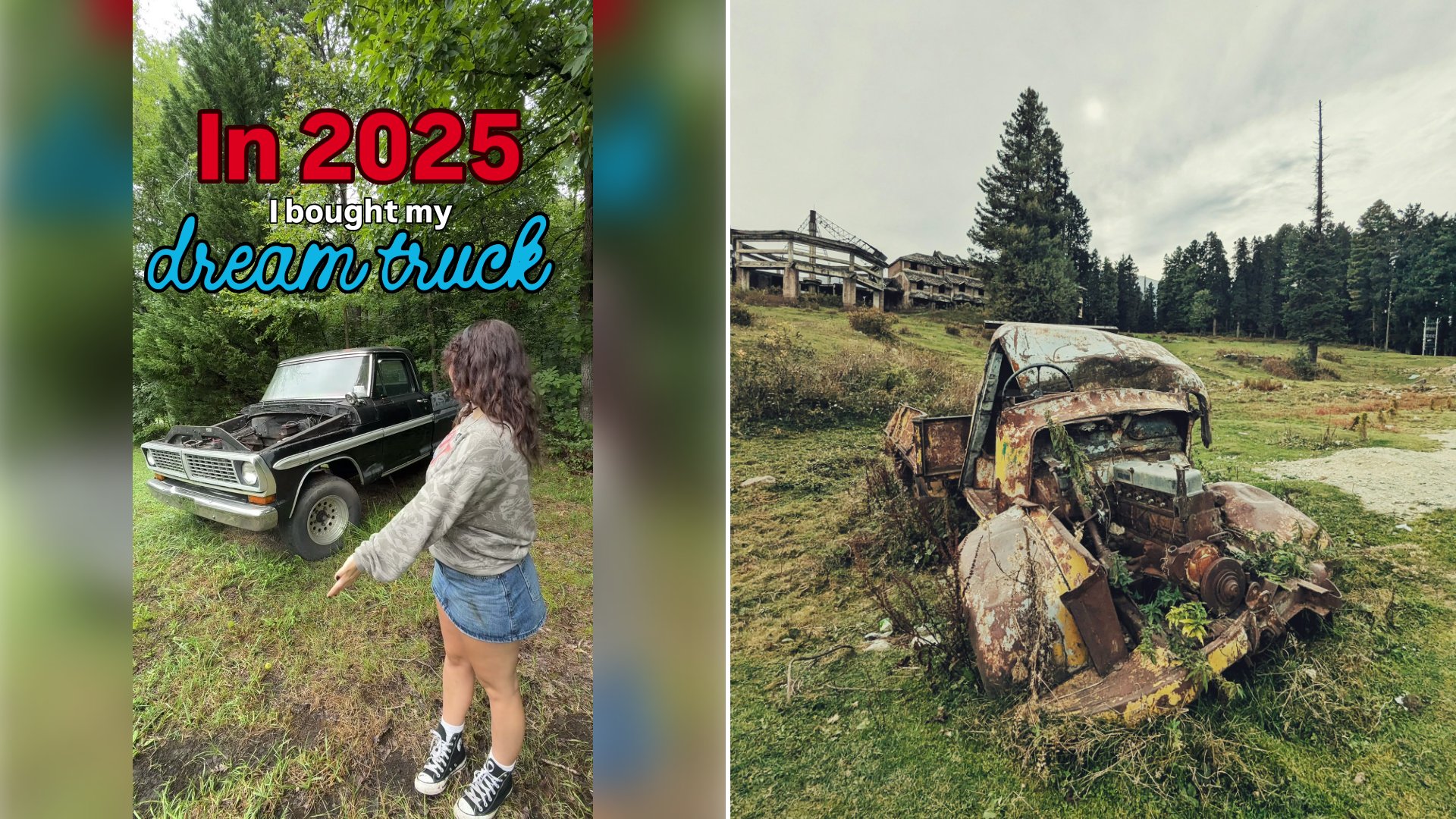
Plenty of people dream about owning an old Ford pickup. Far fewer decide to take theirs completely apart as a first project. In a year end recap posted at the start of 2026, @juliabrookee looked back on exactly that. She says she bought her dream truck in 2025, a short bed Ford F100, and then made a choice she calls crazy: a full frame off restoration with no experience at all.
@juliabrookee
From Clean Up To Complete Teardown
By her account, the truck first got cleaned up and moved into the shop. That might have been the end of the easy part. Rather than patch it and drive it, she decided to take the entire truck apart. A frame off restoration means separating the body from the chassis so every part can be inspected, repaired and refinished. It is the most thorough way to restore an old truck, and also one of the most demanding.
She says she sanded the frame down and sealed it, so it will not be rusting anytime soon. The frame is the foundation of the whole project, so spending time on it early is a smart move. Once the metal is bare and protected, you know exactly what you are building on, and every later step becomes easier to trust.
Rust, Bondo And A Very Sore Back
Next she turned to the cab, and the news was not great. She says it was rusted out, the kind of damage she jokes comes from a rough Pennsylvania truck. The repairs looked bigger than she felt comfortable with as a beginner, so she paused and thought about her options. While she pondered, she moved on to the bed and began sanding it for new paint.
That is when she discovered how much Bondo was on it. Body filler is not a villain in small amounts, but heavy layers can hide rust and old damage. Her solution was to strip the bed all the way down to bare metal. She says the effort absolutely killed her back. Anyone who has spent hours sanding large panels will understand that complaint, and it is a good reminder to use a proper respirator, eye protection and breaks when working with sanders and strippers.
An Engine Found Online For Eight Hundred Dollars
The drivetrain turned out to be one of the happier parts of her story. She says she found an engine and a C4 automatic transmission on an online marketplace for $800, and that it was running fine. The automatic caption on her post renders the engine size as 3:02, which most likely means a 302, so we will leave it to her to confirm. Even though it ran, she gave it a tune up, replacing the oil pan, gasket, spark plugs, wires and fuel pump, and she painted everything to clean it up.
That is solid thinking for any used engine. A running motor of unknown history deserves fresh basics before it goes into a project. New plugs and wires, a fresh fuel pump and a clean pan and gasket remove many common surprises. It also helps to change the fluids and inspect belts and hoses before the first long drive.
A Replacement Cab And A First Time Welder
The cab remained the big question. After browsing listings for more than a month, she says she found a replacement in good shape, with solid cab corners and cab mounts. It still needed a new driver side floor pan and cab braces, which meant welding, and she had never welded anything before. She calls the project a huge learning curve.
She also admits she messed up pretty badly by cutting the floor pan too small. Many beginners make that mistake, because replacement metal has to be trimmed with care. The silver lining, as she tells it, is that the error forced her to learn how to fix it. Today, she says, she has a rust free cab. With the hardest work behind her, the plan is to start putting things back together and finish in 2026.
Lessons For Anyone Planning A Frame Off Build
Her story offers several useful lessons for beginners. Start with a realistic plan and a budget, and then add a cushion, because restorations almost always uncover surprises. Bag and label every fastener during disassembly, and take many photos of how parts fit. Store parts in a dry place. A teardown can look like chaos for months, and good records are the only thing that keeps it manageable.
Second, be honest about which jobs you can learn and which to hand off. Sanding, sealing, painting small parts and rebuilding a tune up are all excellent beginner tasks. Structural welding, especially on floors and cab supports, deserves practice on scrap steel first. Many community colleges and welding supply shops offer short classes, and a few hours of coaching can save you from cutting too small, as she did.
Third, rust is the real enemy of an old truck, and it often hides. Check the cab corners, floor, rocker areas and bed supports before you buy a donor part. Magnets, a flashlight and a small pick hammer tell you a lot. Be wary of thick filler, since it can cover damage that will come back later. Finally, protect your finished metal with a quality primer or seal coat soon after bare metal is exposed, because bare steel can start rusting again in a surprisingly short time.
Fourth, give yourself permission to take breaks. Her recap says she took a month away from the project, and that is a healthy approach. Long builds burn people out. Sharing progress with others who love the same trucks can keep motivation up, and it also gives you a place to ask for advice when you hit something new.
What Comes Next
The truck is not finished, and she is clear about that. The recap is a look back at a year of hard, dirty and sometimes humbling work, and a promise to keep going. She invites anyone who loves these old trucks to follow along as she works toward finishing it in 2026. If her pace so far is any hint, there will be plenty more lessons, a few more mistakes, and eventually a classic Ford that she brought back from rust with her own hands.
For anyone sitting on the fence about a first big project, the message from juliabrookee is encouraging. Experience matters less than patience, and every mistake can become a skill if you slow down and fix it properly. Start with the frame, keep your records, and learn one new thing at a time.