

A 1969 Mustang with a 428 Super Cobra Jet under the hood and a four speed in the floor is the kind of car that makes a muscle car fan’s heart skip. It is also the kind of car that can make a wallet nervous. A classic car buyer who posts as @bobevansclassics chased down one of these rarities, a black example, and quickly learned that the asking price and the condition did not match.
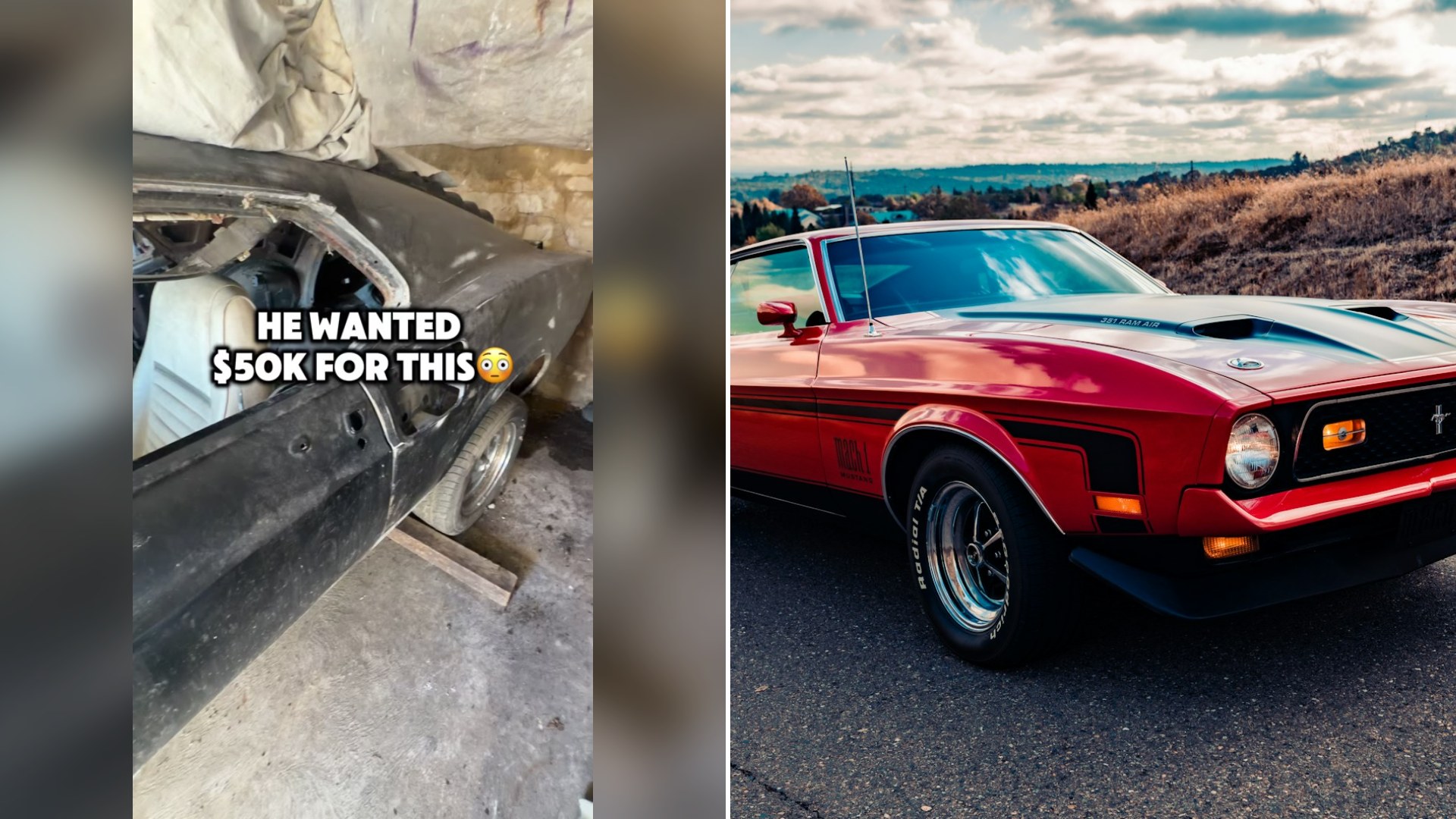
According to his caption, the owner wanted $50,000 for the car and claimed to have an offer of $35,000 from someone else. After looking the Mustang over, the buyer offered $5,000. He says he would have been willing to go higher, though not by much, because the car needed everything.
@bobevansclassics
The conversation between buyer and seller
The clip picks up in the middle of a friendly but firm back and forth. The buyer wants to know about the car’s numbers, and the owner talks about its pedigree. He insists it is a Super Cobra Jet with its original body that has never been wrecked. He admits there was rust, and he says the car was bad when he picked it up and is still bad now. He seems to say he has owned it since about 1975.
The owner also shares that every shop he took it to wanted a good amount of money to work on it. That is a detail anyone who has dealt with a restoration will recognize. Labor rates for classic car work are high, and a project that starts with rust and a worn engine can swallow money quickly.
When the buyer asks what he wants, the owner says he figured he would get 50, meaning $50,000. The buyer replies that the car is not worth that and that the two sides are too far apart. He points out the cost of parts and says the motor alone will cost around ten thousand dollars to do properly. A complete rebuild, he says, means time, labor and energy, and that is before replacing everything else on the car.
The owner asks for a number. The buyer says about ten percent of the asking price, or $5,000. The owner calls that way too far off and says other people want the car. When asked for how much, he says he needs to go and that someone is supposed to give him $35,000 tomorrow. The buyer encourages him to take it, calling it a great deal for the seller at that price.
Why this Mustang is such a big deal
It helps to know why people get so excited about this car. Ford introduced the 428 Cobra Jet engine in 1968 as a high performance option for the Mustang. The Super Cobra Jet was a more extreme version, usually paired with drag racing equipment such as a stronger engine setup and an oil cooler. Cars with this combination were built in small numbers compared with the overall Mustang production, and they are highly sought after by collectors today.
Originality matters a great deal. Collectors pay a premium for cars that still wear their original body and have never been in a major accident. A matching numbers engine, which means the engine is the one the car left the factory with, adds even more value. The owner pointed to some of these features as selling points.
The big question, when does the cost outweigh the value?
The creator ended his post with a question for his audience. Was his $5,000 offer insulting, or was the seller dreaming at $50,000? He acknowledges how rare and desirable these cars are, yet he wonders at what point the cost of restoration outweighs the finished value.
That is the central question for anyone buying a project car. The price of a car in poor shape is only the starting line. Bodywork, paint, engine, transmission, suspension, brakes, interior, chrome and wiring can each cost thousands of dollars. A full restoration of a car that needs everything can easily exceed what a finished example sells for.
Lessons for anyone shopping for a classic
Separate the sentimental value from the market value. An owner who has lived with a car for decades often prices it based on memories and effort. Buyers must price it based on what it costs to make it right.
Get an honest estimate for the work. Before you buy a project, ask restoration shops what the job will cost, and be prepared for the number to grow.
Verify the car. For valuable muscle cars, documentation such as the original build paperwork, the VIN decoding and the data plate help prove what the car is. A real Super Cobra Jet is worth much more than a clone, so verification protects you.
Check the seller’s story against the car. Claims about offers from other buyers, ownership history and original parts are worth confirming. Ask for photos, receipts and any paperwork that shows how long the owner has had the car and what work has been done. Asking for proof is a normal part of buying an expensive classic, and an honest seller will understand.
Set a firm budget before you negotiate, including a cushion for surprises, so a heated conversation does not push you past the number you can afford.
Be willing to walk away. The buyer’s calm attitude shows that sometimes the best deal is the one you do not make. Another car will come along.
The video from @bobevansclassics is a good example of old fashioned haggling, and it shows why the price on a rare classic can depend on whether you are looking at a finished car or a pile of potential. What would you have offered?