

Shopping for a project vehicle is part research, part gut feeling and part willingness to walk away. A father and son duo who post as @tireslayerhq did all three on a trip to Florida, and the truck they ended up with was not the one they expected to bring home.
@tireslayerhq
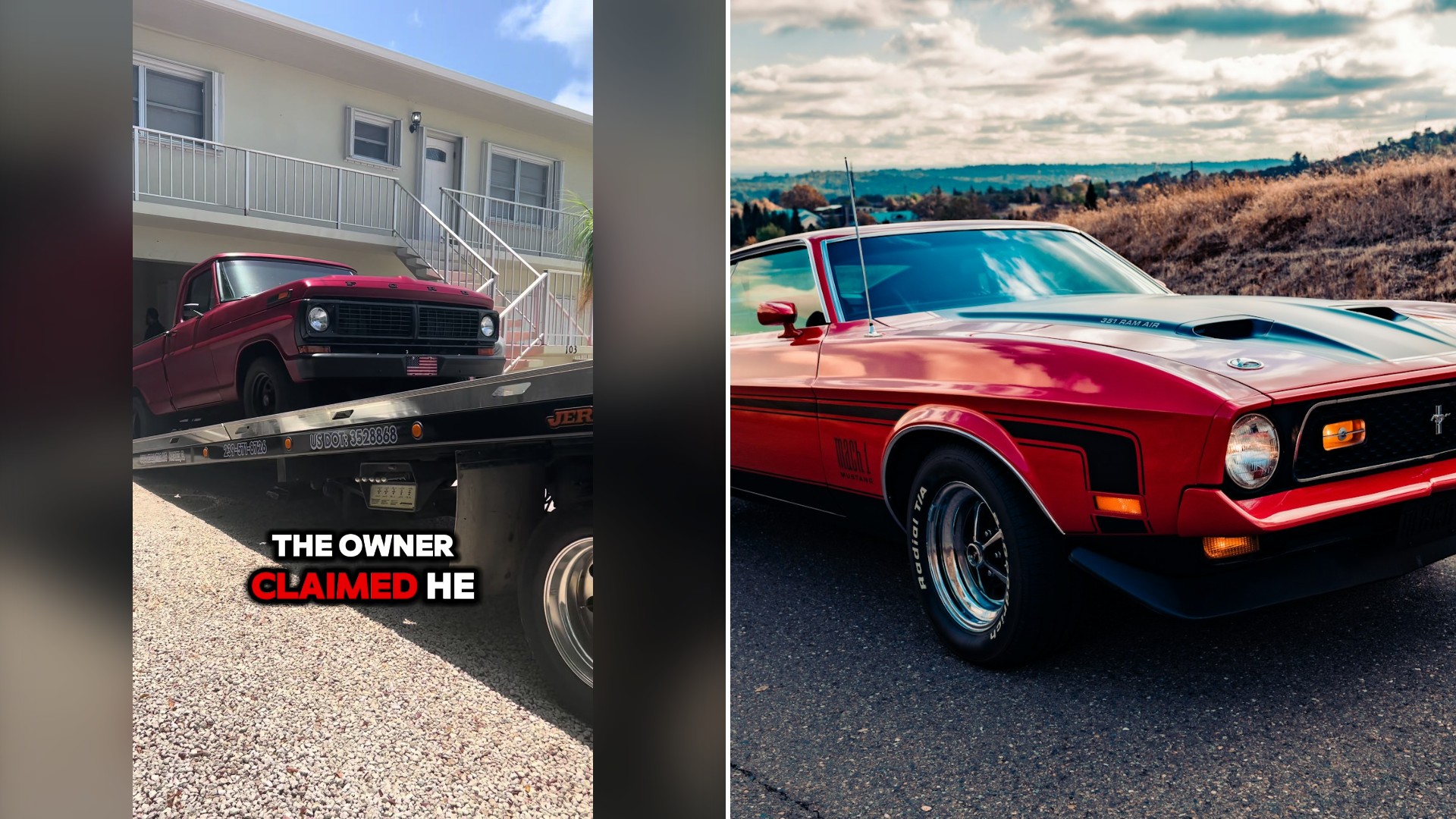
The creator says he and his dad were hunting for a project car in Florida. The town name is hard to pin down from the audio, so it is safest to say simply that the search took place in the Sunshine State. Their first stop was a 1969 Mach 1, one of the most desirable muscle cars Ford ever built. They looked it over and decided it was just too much to work on. That is a mature call. Plenty of buyers fall for a famous badge and then spend years buried in rust repair and missing parts.
Then they stumbled across a 1972 Ford F-100. The price was $10,000, and the truck came with a long list of upgrades already done. He says it has a brand new interior from TMI, a 347 stroker engine built by Blueprint Engines that makes about 430 horsepower, and a manual transmission already installed and ready to go. He describes minimal rust, and says it runs great.
They decided to buy it and put it on a tow truck, scheduling delivery to their home. He admits the transport was not without a little bit of danger, and says they almost got hit. It is a good reminder that moving a vehicle is one of the riskier parts of any purchase.
The seller, he says, claimed he was letting the truck go so cheaply because of a noise. The creator mentions the sound by name but the audio is unclear, so the exact complaint remains a mystery. He invites people to guess what the noise could be. He also says this is part one of a father and son project, and that he recorded the full build over the course of a year with his dad.
Why they were smart to pass on the Mach 1
A 1969 Mach 1 is a dream for many enthusiasts, but dream cars can be money pits. Values for good examples are high, and the cost of correcting poor work can exceed the cost of the car itself. Unibody cars like Mustangs rely on solid floor pans, frame rails and cowl structure, and rust in those areas is expensive to repair properly.
Trucks from the early seventies, by contrast, sit on a separate frame with a bolt on body, which makes many repairs simpler. The F-100 is also a friendlier first project for a father and son team. Parts are widely available, the engine bay is roomy, and the mechanical layout is simple enough to learn on.
What a 347 stroker means
The number 347 refers to cubic inches. Ford’s classic small block started at 302 cubic inches, and a stroker kit uses a longer stroke crankshaft to push displacement up to 347. That extra displacement brings more torque and power, and with a quality build the engine can still be driven daily. A figure around 430 horsepower is strong for a truck of this size, but, as with any claim from a seller or builder, a dyno sheet or build record is the best proof.
Pairing that engine with a manual transmission makes for a lively, engaging drive. It also means the rest of the truck should be checked. Brakes, steering, suspension and rear axle from the seventies were designed for far less power, so upgrades in those areas often become the next step.
How to inspect a project truck before buying
If you are shopping for something similar, bring a checklist and a friend with good eyes. Look for rust at the cab corners, rocker panels, floors, bed and the bottoms of the doors. Check the frame for cracks, repairs or bends. Crouch down and look for fluid leaks. Ask whether the work was done by a professional shop, and request receipts.
Start the engine cold if possible. A cold start reveals noises, smoke and hard starting that a warm engine can hide. Listen for knocks, ticks and rumbling. This is where the seller’s mystery noise would have been the first thing to investigate. Any sound that the owner points out in advance deserves a careful look, since sellers often use a known flaw to justify a low price. Sometimes the cause is minor, like a loose heat shield or a worn exhaust hanger. Sometimes it points to something serious, like a bad bearing. Ask a mechanic to take a listen before you commit.
Test drive it if the situation allows. Check that the clutch engages smoothly, the gears shift cleanly and the truck tracks straight under braking. Pay attention to gauges, lights and the overall feel.
Safe transport tips
Hauling a purchase home is easy to overlook. Use a reputable carrier with insurance, confirm the pickup and delivery details in writing, and take plenty of photos before loading. Make sure the truck is secured at several points and that the straps do not rub against brake lines or suspension parts. If you tow it yourself, check the trailer lights, tires and hitch.
Working on a build with family
The most appealing part of this story may be the plan. A year of weekends in the garage with his dad is a real gift, regardless of how the truck turns out. Project builds teach patience, planning and problem solving, and they build trust between generations. Keep a simple log of what you do, take pictures at each stage and set small milestones so progress feels steady.
Part one ends with a purchase, a tow and a question about a strange noise. There is a lot left to learn, and plenty of people who follow along will be waiting to see how it turns out.