

Most of us walk into a repair shop trusting that the person behind the counter is telling the truth. We do not know what a wheel bearing looks like, so when someone says ours is bad, we nod and reach for our wallet. A mechanic who goes by @mainly_mechanics says that trust is exactly what some shops take advantage of, and he walks through a simple trick he says was used on one of his own customers.
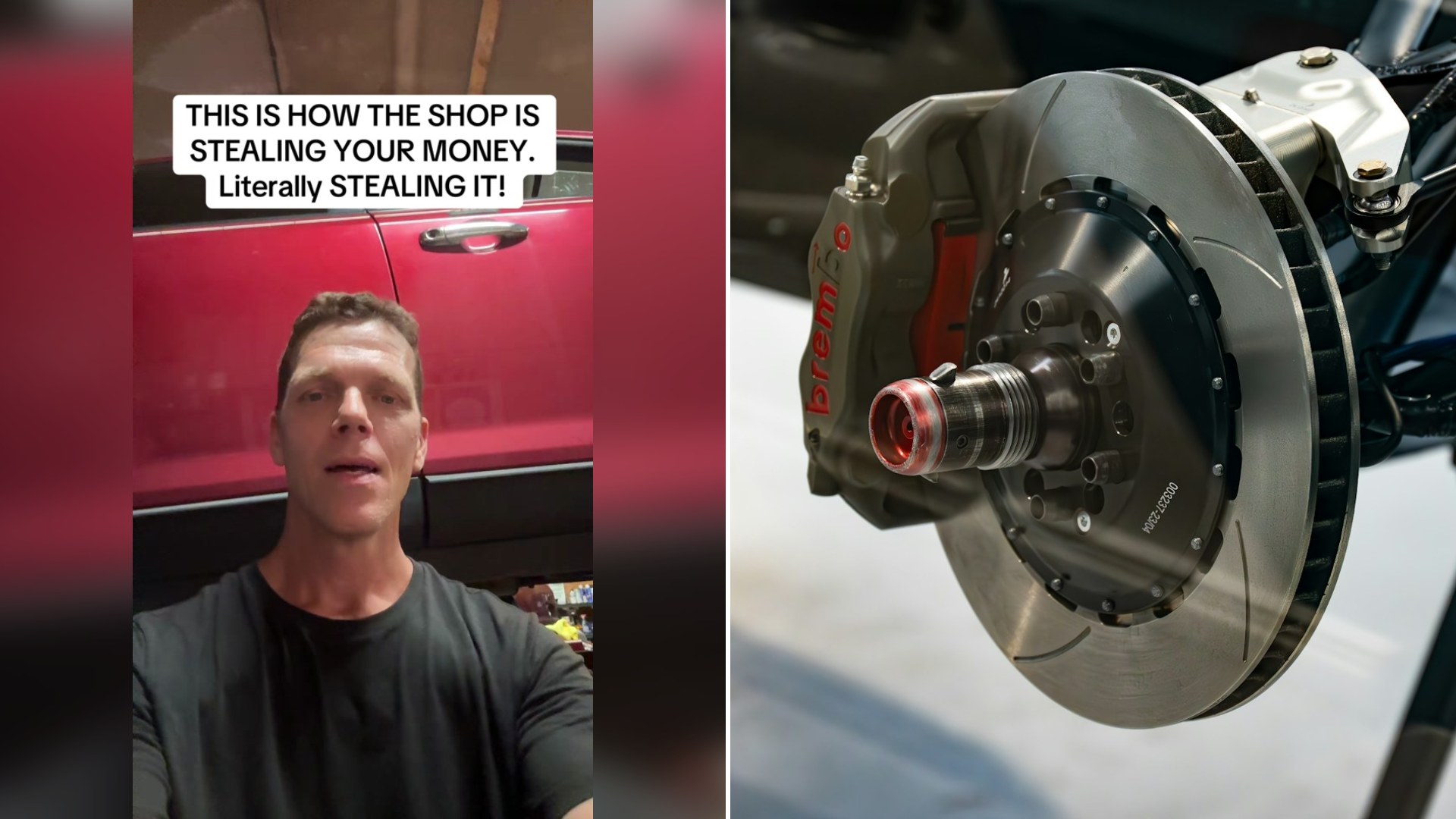
His caption is direct. He says a shop lied to his customer, claiming he needed a new wheel bearing and a control arm, and that it was evident the shop loosened the axle nut to create play in the wheel. He ends with a warning to be careful where you take your vehicle.
@mainly_mechanics
The demonstration
He starts with a wheel that has no play in it. He puts his arm in there and taps and pushes, and nothing moves. Then he removes the center cap, which hides the axle nut, puts a socket on the nut and loosens it. Suddenly the same wheel that felt solid now wobbles. He explains how a dishonest shop could use the change: show the customer the wobbling wheel, say the bearing is shot, and quote an expensive repair.
The wheel did not actually change. The only difference is a nut that was left loose. In his words, all it takes is removing the center cap, using an impact gun to loosen the axle nut, putting the cap back on and then showing the customer how much play the wheel has.
The real customer story
He says this is a true story that happened to a customer of his. The customer called him and asked, didn’t you just replace my control arm? He had, and he said so. The customer explained that another shop was now telling him he needed not only a wheel bearing, but also a control arm, because there was an excessive amount of play.
The mechanic asked him to bring the vehicle back so he could look. When it arrived, he saw a brand new control arm, just as he expected. He also noticed that the other shop had quoted a wheel bearing and hub assembly, but the vehicle did not even have a bolt on hub assembly. It has a hub and a spindle, so the quote did not seem to match the car.
So he did a little investigating before quoting anything. He put a socket on the axle nut and found right away that it was extremely loose. These nuts must be tightened to a specific torque. He used an impact gun to snug it up, and the play disappeared. Then he used a torque wrench to bring the nut to the proper specification, and the wheel had no play whatsoever. The bearing was fine. The control arm was fine. The customer needed none of it.
He says the other shop quoted the customer almost six or seven hundred dollars for a wheel bearing, when all that had been done was loosening the CV axle nut. He adds that the shop did not even notice that the control arm was brand new, which, to him, suggests they are so comfortable selling parts people do not need that they do not bother to look first.
The scare tactic
He also describes the pitch he says these shops use. They tell you your vehicle is in a lot of danger, that you could lose a wheel on the interstate, and that your family might get a phone call that you did not make it home. That kind of language is designed to make you say yes on the spot. An honest shop will explain a safety concern clearly and calmly, show you the actual worn part, and give you time to think or get a second opinion.
It is important to note that this is one mechanic’s account of one case, and he does not name the other shop in the video. Still, the technique he shows is a well understood one, and the advice that follows applies to anyone.
How to protect yourself
- Get a second opinion on big repairs. If a shop quotes hundreds of dollars for a surprise repair, call another shop before you agree. A second look costs little compared with a repair you do not need.
- Ask to see the problem. A good mechanic will show you the worn part and explain how they tested it. Ask what test proved the bearing was bad.
- Know your recent repairs. Keep receipts. If a shop recommends replacing something you just had fixed, speak up. In the story above, that was a major clue.
- Find a shop you trust. He advises building a relationship with a shop before you have a problem. Ask friends and neighbors, and check local reviews.
- Ask for the quote in writing. A written, itemized estimate makes it harder for the price to change.
- Do not be pressured. Fear based sales pitches are a warning sign. A real safety issue will still be real tomorrow after you get a second opinion, and an honest shop will understand.
- Ask for the old parts. Requesting your old parts back lets you see what was replaced.
Signs of a genuine bad wheel bearing
A worn wheel bearing is a real and common repair, so do not ignore the signs just because dishonest shops exist. Typical symptoms include a humming or growling noise that changes with speed or gets louder when you turn, a vibration through the steering wheel or floor, and uneven tire wear. A proper diagnosis involves lifting the vehicle and checking for play in the wheel and listening or feeling for roughness when it spins, with the axle nut at the correct tightness. That last part is the key. A loose nut can mimic a bad bearing, so a careful technician always confirms the nut is tight before blaming anything else.
The mechanic closes the way he began, with a warning and a kind wish for his audience. Be careful if you go to a new shop, he says, and do not always go with your first instinct. A little caution, and one extra phone call, can keep hundreds of dollars in your pocket.