

Some cars carry a whole family’s history in their seats. That was the case with a 1971 Plymouth Valiant that sat in a field for 27 years before it finally changed hands. Detailer @detaildane bought the old Plymouth for $500 in cash, took the title and the keys, and then gave the car its first cleaning in nearly three decades.
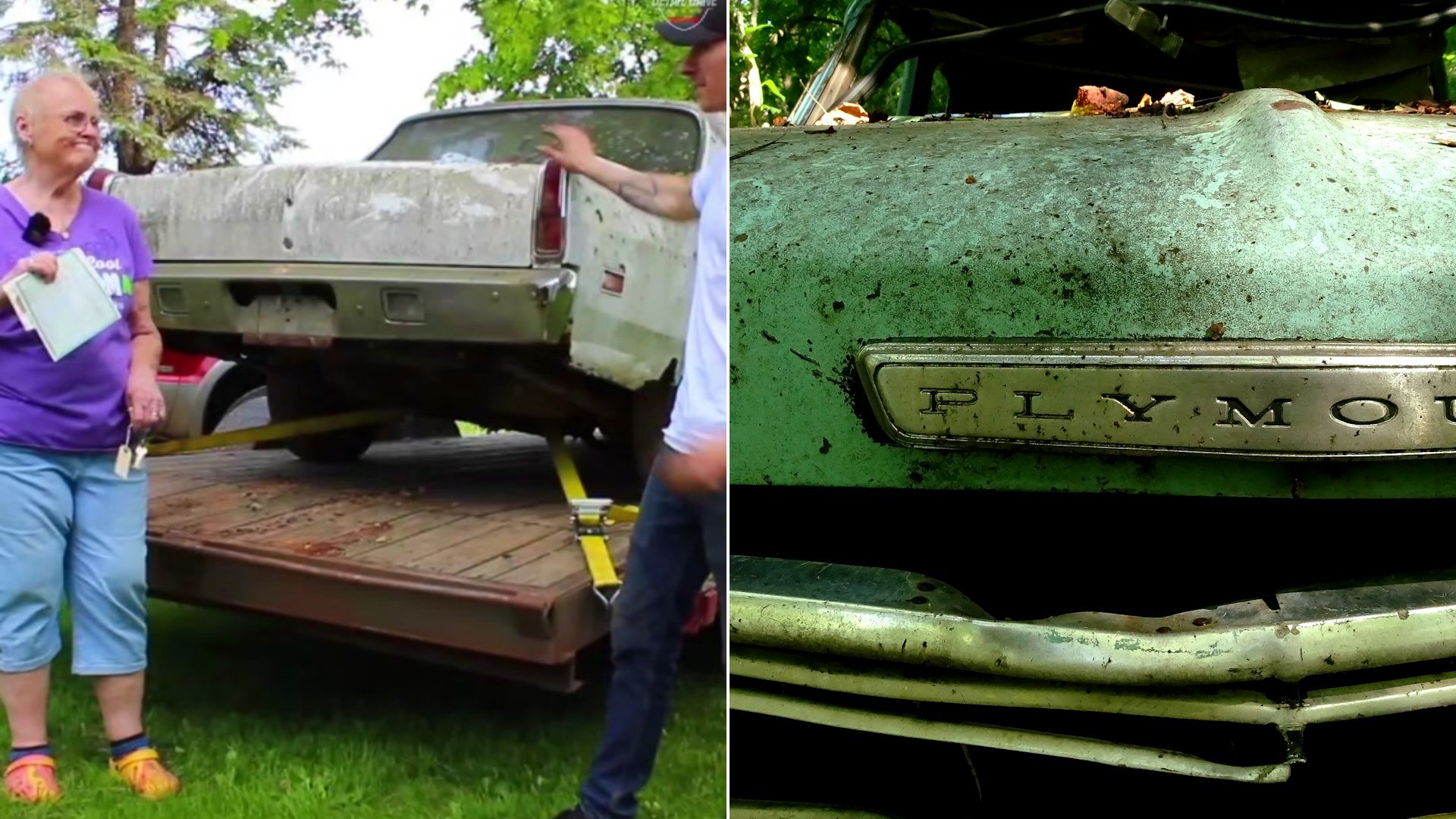
The woman who sold it explained that the Valiant had belonged to her mother-in-law, and that the family always called the car Margaret, after the woman who bought it new. Her goodbye to the car before handing over the keys was short and sweet.
@detaildane
How the family came to own Margaret
The detailer asked the question any buyer would ask: how long has the car been sitting here, and why did you park it? The seller said the Valiant belonged to her mother-in-law. When her father-in-law died in July of 1970, the mother-in-law was left with nine children. Her oldest son took her to the local dealership, and they bought the Valiant brand new. She had been driving a little Ford Falcon, and the family wanted her to have something dependable.
She kept the Plymouth until she passed away in 2000, although the seller thought she stopped driving it around 1996 or 1997. After that, the car stayed in the family. The seller said her mother-in-law wanted her husband and her to have it, and the two of them hoped to restore it someday.
Life got in the way, as it often does. They had kids, money was tight, and the Valiant sat. Now, she said, restoring it would cost too much, and she was hoping at least one of the grandchildren would take an interest. None did. The family called the car Margaret in honor of the woman who owned it, and she mentioned that some people jokingly called it the refrigerator.
What the detailer plans to do
The detailer was clear about his goal. He said he would clean the car up, do what he could to get it back on the road, and then sell it again to someone who will carry out a thorough restoration. When the job was finished, he said Margaret was finally shining again after 27 years in that field, and that he had done the best he could. He repeated that he plans to flip the car to a buyer who will actually put in the time to restore it, in hopes that one day it will be painted and polished again.
That is a respectful plan for a car with so much history. Not every old car needs a full restoration right away, and sometimes the kindest thing is to wash away the years, get it safe and running, and let the next owner decide what comes next.
A little history on the Valiant
The Valiant has an interesting backstory. According to Wikipedia’s history of the car, it debuted in late 1959 and was sold as a 1960 model. Chrysler’s design chief, Virgil Exner, originally wanted to call it the Falcon, after one of his own concept cars. But Ford already had a Falcon in the works, and Henry Ford II asked Chrysler to choose a different name, so it became the Valiant. It is a fun twist that the woman in this story said her mother-in-law had come from a little Falcon before buying her Valiant.
By 1971, the Valiant was virtually unchanged from the year before. The center grille emblem was gone, and the grille surround was finished in black instead of silver. Under the hood, the base engine was a Slant Six, an engine with a reputation for toughness. The same source describes the Valiant as having excellent durability and reliability, and says 1971 was a sales record year, with 256,930 calendar-year deliveries. A dependable compact like this is exactly what a widow with nine children would have been shopping for.
What a car like this needs after decades in a field
If you ever find yourself with a car that has sat that long, the first wash is just the beginning. Classic Motorsports’ guide to reviving a long-stored car suggests this order of attack.
- Clean and look for critters. Wash the outside, the engine bay and the underside, then vacuum the interior and check for rodent nests.
- Brakes first. Inspect the lines, hoses and master cylinder. Old rubber hoses should be replaced, and the whole system should be bled before the car moves.
- Fuel next. Old gas can turn to varnish, so drain the tank, replace the fuel hoses and clean the carburetor.
- Cooling and electrical. Replace old hoses, belts and the thermostat, and clean the battery posts and grounds.
- Tires. After decades, expect them to be rotted. Plan to replace them before any real driving.
- Oil and first start. Change the oil, start the car outdoors with a fire extinguisher nearby, and keep the first drives short.
Tips for selling a car that has been in the family
Selling a family car is as much an emotional decision as a practical one. A few ideas can help it go smoothly.
- Get the paperwork in order. A clear title is the most important document. If the original owner has passed away, check with your state motor vehicle office about what is needed to transfer ownership.
- Write up a bill of sale. Even for a cash deal like this one, a simple bill of sale protects both sides.
- Pass along the history. The story behind a car, such as who bought it new and why, makes it more meaningful to the next owner. Keep any receipts, manuals or photos.
- Think about who will care for it. The seller here said she wished a grandchild had wanted the car. A detailer who promises to pass it to a restorer can be a fine second choice.
It is a gentle story about family and old cars. A mother bought a dependable Plymouth after losing her husband, kept it for decades, and her family held on to it long after she was gone. Now Margaret has a fresh coat of shine and a new chapter ahead.