

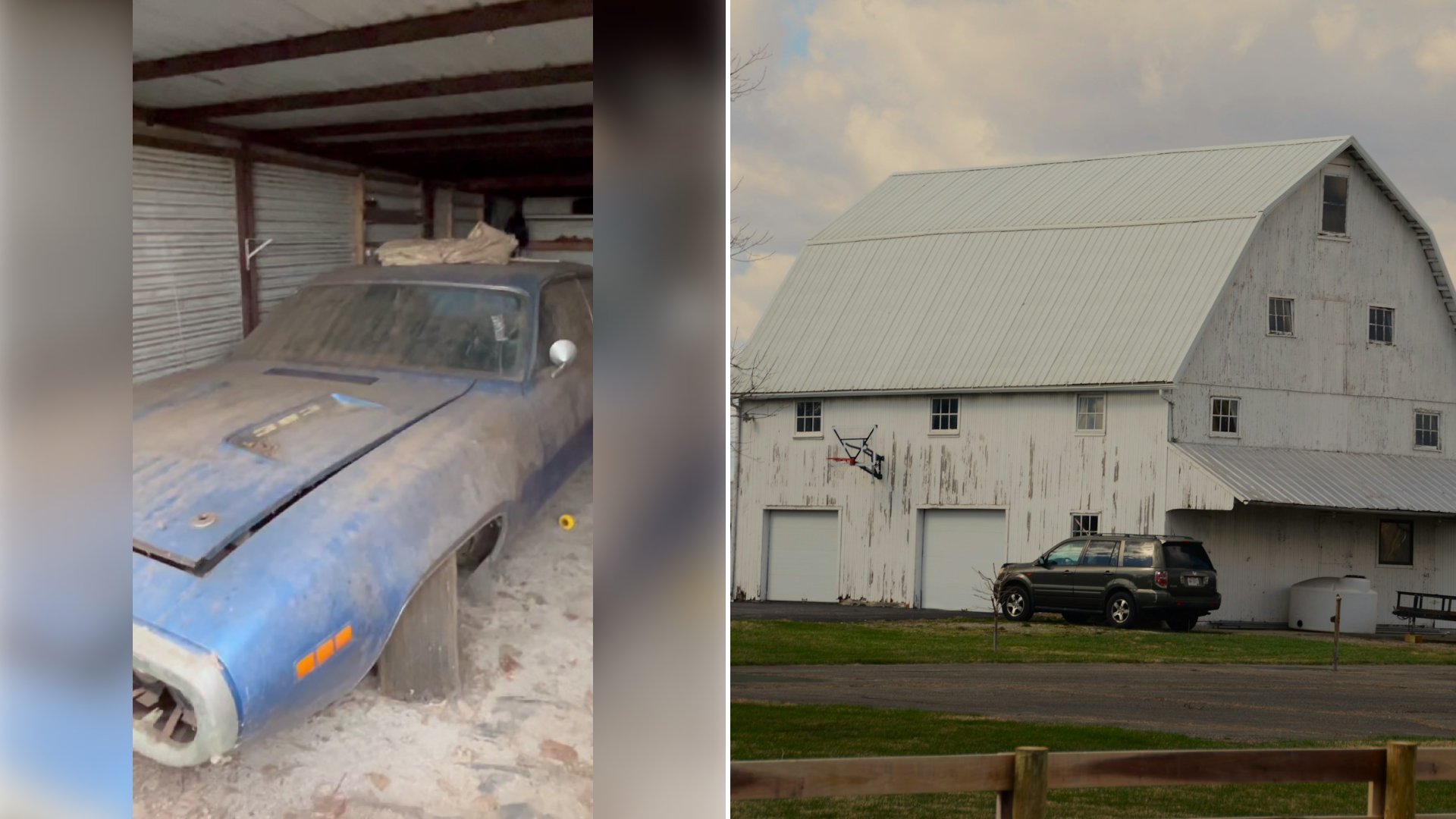
Some cars wait in the dark for decades, and the most fascinating ones come with a person who remembers every year of the wait. A short conversation shared by @backyardbarnfinds introduces Don, the original owner of a 1971 Plymouth Road Runner that has been parked since the middle of the 1970s, and his answers are as plain and honest as the car itself.
@backyardbarnfinds
Brand New In 1971
The conversation opens with a simple question about whether this is one of his first cars or something he picked up recently. Don answers that he bought it back in 1971, brand new. That makes him the original owner, which is a big deal in the collector world, because a car with one owner from day one tends to carry a clear story and a clean line of history.
Asked how long it has been sitting, Don says since 1975. He thinks the odometer shows about 50,000 miles. The engine is a 383. He points out a few details too: a bench seat, which he notes you do not see in too many of them, and the pistol grip shifter. When the host asks if they can open the hood, there it is, the 383, and they point out the emblem and the graphic on the car.
The Six Month Mechanic Story
Then comes the part that explains how a car ends up parked for so long. Don says the plan all those years was to get to it, and he just never got around to it. Along the way, the story goes, he took the car over to get it repaired, and the mechanic had it for six months and did nothing to it.
Anyone who has dealt with a slow shop will wince at that. Six months is a very long time to hold a car without touching it, and it is easy to see how that experience might sour an owner on the whole idea of a repair. Don does not say more than that, so we should not guess how it ended. What we do know is that the car has been parked since 1975, and that it is still with him.
For Sale, Maybe
The host asks the obvious question: is it for sale? Don says he does not know at first, then admits that it could be for the right price. And what is the right price? He does not know that either. He mentions that someone offered him 3,000, but somebody else acts like the car is worth a lot more.
That is the heart of the story, and a very common dilemma for owners of old cars. One person sees a project that needs everything and offers a low number. Another sees an original one owner survivor and thinks of the rare thing it could become. Both can be right depending on the condition, the options and the paperwork, and the gap between them can be huge.
There is no resolution in this conversation. We do not learn whether Don sold the car, kept it, or got it running. That is part of the charm. For now, the car sits where it has sat, and the story is still being written.
What Makes A 1971 Road Runner Special
Plymouth introduced the Road Runner in 1968 as a no frills, budget friendly muscle car, and even licensed the cartoon character’s name and the beep beep horn. By 1971 the car had been redesigned with a rounded, fuselage style body, and it carried on as an affordable way to get serious performance. The 383 in Don’s car is a big block V8, and it was a classic choice for the model in those years.
Details like the bench seat and the pistol grip shifter fit the nature of the car. The pistol grip is the style of handle many muscle cars used with four speed manual gearboxes, and the seat reflects the car’s roots as a stripped down performer. Fancier options existed, including bigger engines, but a simple original car has its own appeal to collectors who want the real thing.
Why Documentation Matters
A car like this is worth more with proof. If you own an old muscle car, or you are looking at one, start with the paperwork. Original window sticker, build sheet, dealer invoice and old titles can confirm what the car left the factory with. The vehicle identification number and the fender tag can help show the engine, trim and paint codes, and whether the car still wears them. Matching numbers on the engine and transmission add to value, so check them before anyone talks price.
The offer of 3,000 tells us the buyer was probably looking at the car as a project. Condition, rust, missing parts and engine health all shape that kind of number. A car that has been parked since 1975 will almost certainly need work, including fuel system cleaning, new brake components, fresh tires and a careful look at the engine before it ever runs.
If You Own A Long Parked Car
If you are in Don’s shoes, there are smart steps to take before you make any big decision.
Get opinions from more than one source. A marque club member, a reputable restorer or a professional appraiser can give you a realistic range, and that range is more useful than any single offer. Look at recent sales of similar cars, and note that condition and originality often matter more than the badge.
Do not rush to clean it up. Collectors often prize untouched survivors, and a heavy cleaning or a quick repaint can erase value. Take photos, document everything, and protect the car from further damage. A dry space, a breathable cover and closed up windows go a long way.
If you want it running, go slowly. Change the fluids, remove the old fuel, check the brakes and tires, and turn the engine by hand before starting. A good mechanic who actually works on your car, unlike the one in this story, is worth a lot.
And if you do hand it to a shop, set expectations in writing. Ask for a start date, an estimate, and regular updates, and visit in person. Six months of silence is something nobody should have to accept.
Final Thoughts
We do not know what Don will decide. We know he has held onto this Road Runner since the year he bought it, and that he has two very different opinions on what it is worth. That is a good reminder that a car is never just metal. It is a stretch of someone’s life, parked for a while and waiting for its next chapter.