

You press the brake pedal at a red light and it feels a little softer than it did last month. Or the car drifts toward the shoulder when you let go of the wheel on a flat, straight road. Or the steering wheel starts to shake in your hands at highway speed. Most of us shrug and think, “I will deal with it later.” That is one of the most expensive habits a driver can have.
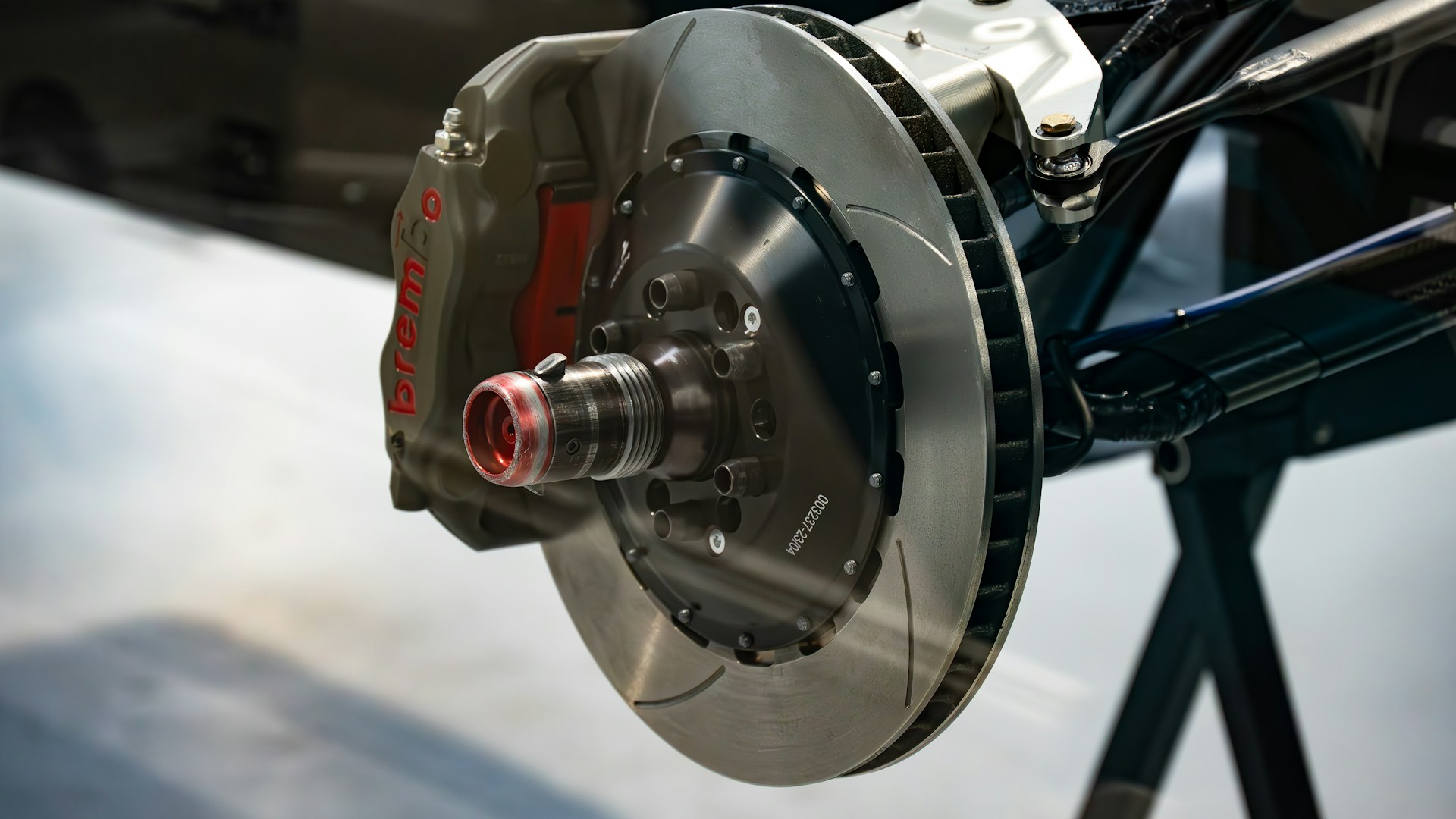
Your brakes, steering and suspension are the systems that keep the car where you point it and stop it when you ask. They rarely fail without warning. They whisper first, and the whisper is usually inexpensive to answer. Ignore it, and the problem tends to spread to other parts, which is how a small fix turns into a big bill and, worse, a safety risk for you and everyone around you.
The Spongy Brake Pedal
A healthy brake pedal feels firm and predictable. A spongy or soft pedal that sinks further than usual is telling you the hydraulic system is not holding pressure the way it should. Common causes include air in the brake lines, old brake fluid, a leak somewhere in the system, or a worn brake hose that swells under pressure. Brake fluid also absorbs moisture over time, which is one reason manufacturers list a service interval for it in the owner’s manual.
A pedal that slowly sinks to the floor while you hold it down, a brake warning light on the dash, or a puddle of thin fluid near a wheel are all signals to stop driving and get the car checked right away. Do not wait for a convenient weekend. Having a car towed is far cheaper than finding out your brakes quit on a downhill road.
Pulling To One Side
If the car drifts left or right on a level road, there are several possible reasons, and some are minor. Uneven tire pressure is the easiest one to check, so start there with a gauge. A pull can also come from wheel alignment that has drifted out of specification, uneven tire wear, or a worn suspension part.
A pull that happens only when you brake is a different clue. It can point to a brake caliper that is sticking, a brake hose that is collapsing inside, or brakes that are wearing unevenly from side to side. In that case the car is trying to tell you one side is working harder than the other. That is hard on pads and rotors and can make emergency stops unpredictable.
The Steering Shimmy
Steering wheel shake is worth sorting by when it happens. A shimmy that shows up at certain speeds often points to tires that are out of balance, bent wheels, or a tire with a damaged internal belt. A shake that appears mostly when you press the brakes can point to rotors that have developed uneven surfaces. A looseness or vague feeling in the steering, along with clunking over bumps, can mean worn tie rod ends, ball joints, bushings or other suspension parts.
Those worn parts matter because they hold your wheels in position. When they get sloppy, tires wear unevenly and quickly, and in a worst case a joint can separate. A mechanic can lift the car and check for play in minutes, and that kind of inspection is an inexpensive way to catch a problem early.
Why Early Is Cheaper
Think of a brake pad as a wear item designed to be replaced. If you replace it when the wear indicator squeals, you generally get away with the pad alone. If you run it down to bare metal, it can score the rotor and damage the caliper, and now you are buying much more than pads. A loose suspension part works the same way: it makes tires wear faster, strains neighboring parts and can throw the alignment off again and again.
The pattern holds almost everywhere on a car. Small, early repairs protect the expensive parts around them.
What To Do This Week
- Check your tire pressures with a reliable gauge, including the spare if you have one.
- Look at your brake fluid reservoir level and color. Low fluid or very dark fluid deserves a professional look.
- Write down exactly when the symptom happens, such as speed, braking, turning or bumps, and tell the shop. It saves diagnostic time.
- Ask the shop to show you the worn part and explain why it needs replacing.
- Check your manual for inspection and brake fluid service intervals for your specific vehicle.
You can also look up safety recalls for your vehicle on the National Highway Traffic Safety Administration website, since some brake and steering problems have been the subject of recalls over the years.
Your car is always talking. A soft pedal, a steady pull or a shaking wheel is the car politely asking for attention before it has to shout. Listen early, fix it while it is small, and keep your money and your safety where they belong.
More Stories You May Like
- Barn Find 1967 Shelby GT350 That Sat For More Than 37 Years Sells For $135,000 At A South Dakota Auction, And The Story Behind The Car Is Even Better Than The Price
- Barn Find 1977 Ford F250 Sat Untouched For Thirty Five Years With Only Seventeen Thousand Miles And The Detailer Says The Dirt Is The Thickest He Has Ever Seen
- Toyota V6 Twin Turbo Problems and a New Recall Have a Mechanic Warning Owners About What to Watch For