

She did what every careful car shopper is told to do. She researched, picked out used vehicles she liked, and picked up the phone to negotiate. Three dealerships later, @sunshineandabbiness was left staring at the camera in disbelief. Not one of them would come down even $500, even on cars she says had been sitting on their lots for months.
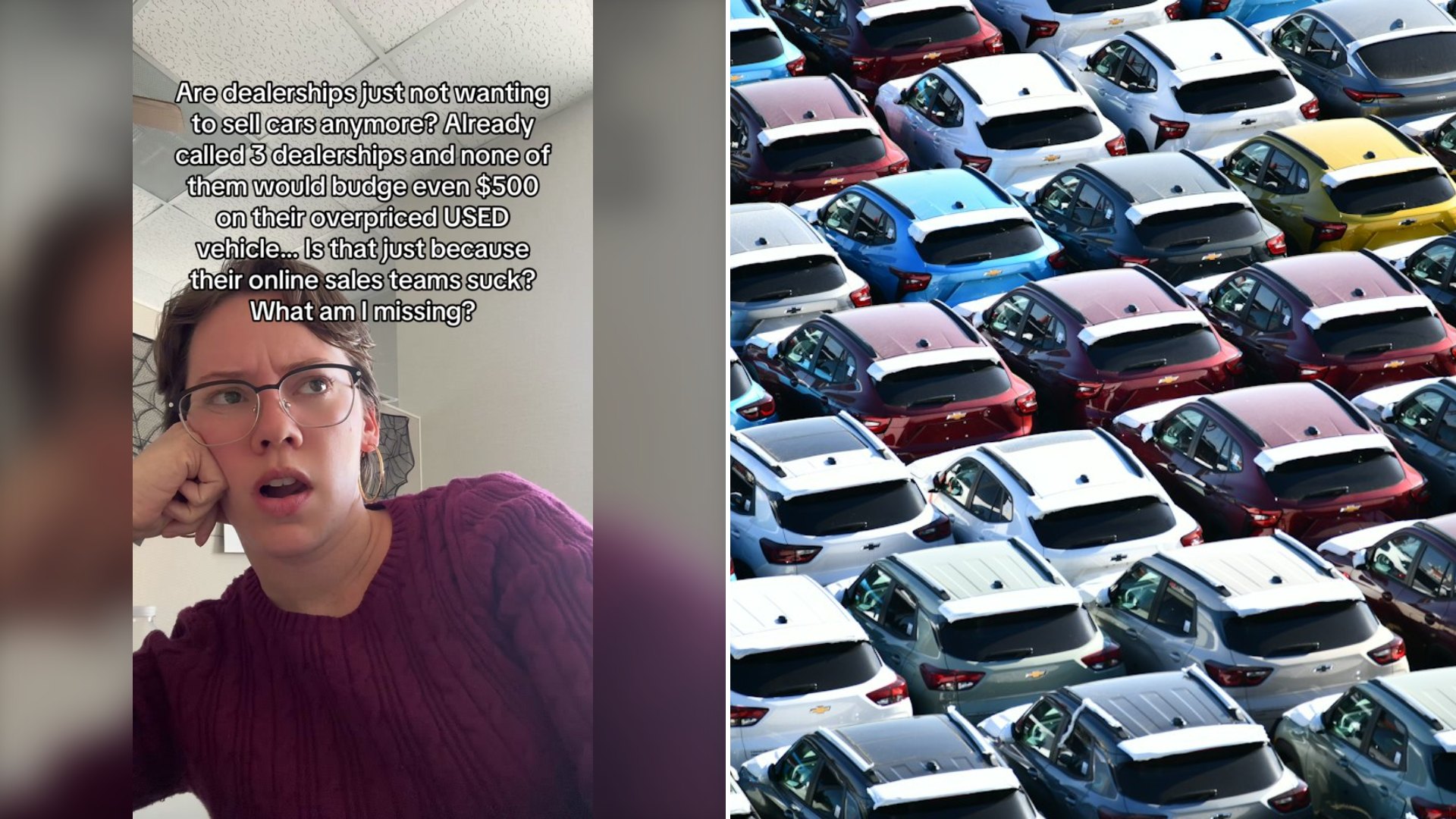
Her short video says it all with one long, unimpressed look and a few lines of text on the screen. “Are dealerships just not wanting to sell cars anymore?” she asks. “Already called 3 dealerships and none of them would budge even $500 on their overpriced USED vehicle.”
She wonders out loud whether the problem is the dealerships’ online sales teams, the staff who answer online inquiries and phone calls, rather than the stores themselves. Then she asks the question that so many buyers have been asking lately: “What am I missing?”
No Wiggle Room on a Car Nobody Is Buying
In her caption she lays out exactly why she is so confused. “They’re already overpricing their cars and yet say that they ‘don’t have ANY wiggle room,’” she writes. She understands that a dealer cannot accept every offer. “I understand if you go too low that there are some deals they can’t make work,” she adds, “but to not move an inch is baffling to me.”
What makes it harder to swallow is how long some of those cars have been waiting for a buyer. “Some of these cars have been sitting on the lot for some months too,” she writes. “Make it make sense.”
@sunshineandabbiness
She is far from the only shopper to run into this wall. For generations, haggling was simply part of buying a car. Today, many buyers are discovering that the rules have changed. Some dealerships now advertise no-haggle pricing outright, while others simply hold firm without saying so. For shoppers who budgeted with a little negotiating room in mind, that can turn a fair deal into one that no longer fits.
Why Dealers Often Refuse to Budge
There is no single answer that fits every dealership, but several real factors help explain what she ran into.
Pricing software sets the number. Many dealers now use computer tools that compare their prices to similar cars in the area and set what they consider a market price. Salespeople may have little or no authority to change it, especially over the phone.
Used cars cost dealers more than they used to. Used vehicle prices climbed sharply in recent years. If a dealer paid a high price at auction or on a trade-in and then spent money on reconditioning, there may truly be little room left.
Profit has moved to the back office. Dealers often make a large share of their money on financing, extended warranties, service contracts and add-on products. A store may hold firm on the sticker price while still being flexible on those extras.
Phone and online teams are gatekeepers. Online sales staff are usually focused on getting you into the showroom. Some will not negotiate until you are sitting at a desk, ready to buy that day.
Old inventory is a pressure point. Here she may be onto something. Cars that sit too long cost dealers money in financing and lost value, and many stores eventually lower prices or send aging vehicles to auction. Persistence can pay off, just not always on the first phone call.
How to Negotiate When the Price Seems Fixed
Negotiate the out-the-door price. Ask for the total cost including taxes, title, registration and every dealer fee. A car with a firm sticker price can still come with documentation fees, protection packages or other add-ons you can question or decline.
Get it in writing. Ask for an itemized quote by email. It lets you compare dealers side by side and keeps numbers from changing once you arrive.
Know the car’s history on the lot. Some listing sites show how long a vehicle has been for sale or whether its price has dropped. A car listed for 90 days or more is a fair thing to point out politely. You can also simply ask the salesperson how long it has been in stock.
Bring your own financing. A pre-approval from your bank or credit union removes one place the dealer can make money and makes your offer clean and simple.
Ask for value instead of a discount. If the price truly will not move, ask for new tires, a full tank, a second key, or included maintenance. Some dealers will add value even when they will not cut the price.
Time your visit. Dealers and salespeople often work toward monthly and quarterly sales targets. Shopping in the last few days of the month, on a slow weekday, or when new model-year inventory is arriving can make a manager more willing to approve a deal that was impossible a week earlier.
Widen the search. Look at dealers farther away, private sellers, and credit union buying services. A short drive can save more than a long argument.
Be ready to walk. The strongest thing any buyer can say is, “Thank you, but I’ll keep looking.” Leave your name and number. If that car is still sitting there in a few weeks, you may get a call back.
More From Steel Horse Rides
- Dealers Use Lowball Trade In Offers And Bundled Deals To Hide What You Really Pay, So Negotiate Your Trade And Your Purchase Price Separately
- Volkswagen Tells ID.4 Owners To Stop Charging Past 80 Percent While A Battery Fire Recall Waits On A Fix For More Than 22,000 Vehicles
- That Cheap Classic Car Project Can Turn Into A Rust Bucket That Costs More To Restore Than It Will Ever Be Worth, So Budget The Real Cost Of Bodywork Before You Buy