

Few things are as satisfying in a home garage as unboxing a heavy new floor jack. Few things are as frustrating as watching it leak. That is the eight-second story from @cubby_catai, who shows a brand-new three-ton floor jack that is already losing oil. “Brand new three ton jack, used it once and is losing oil,” the caption reads, followed by a wide-eyed emoji.
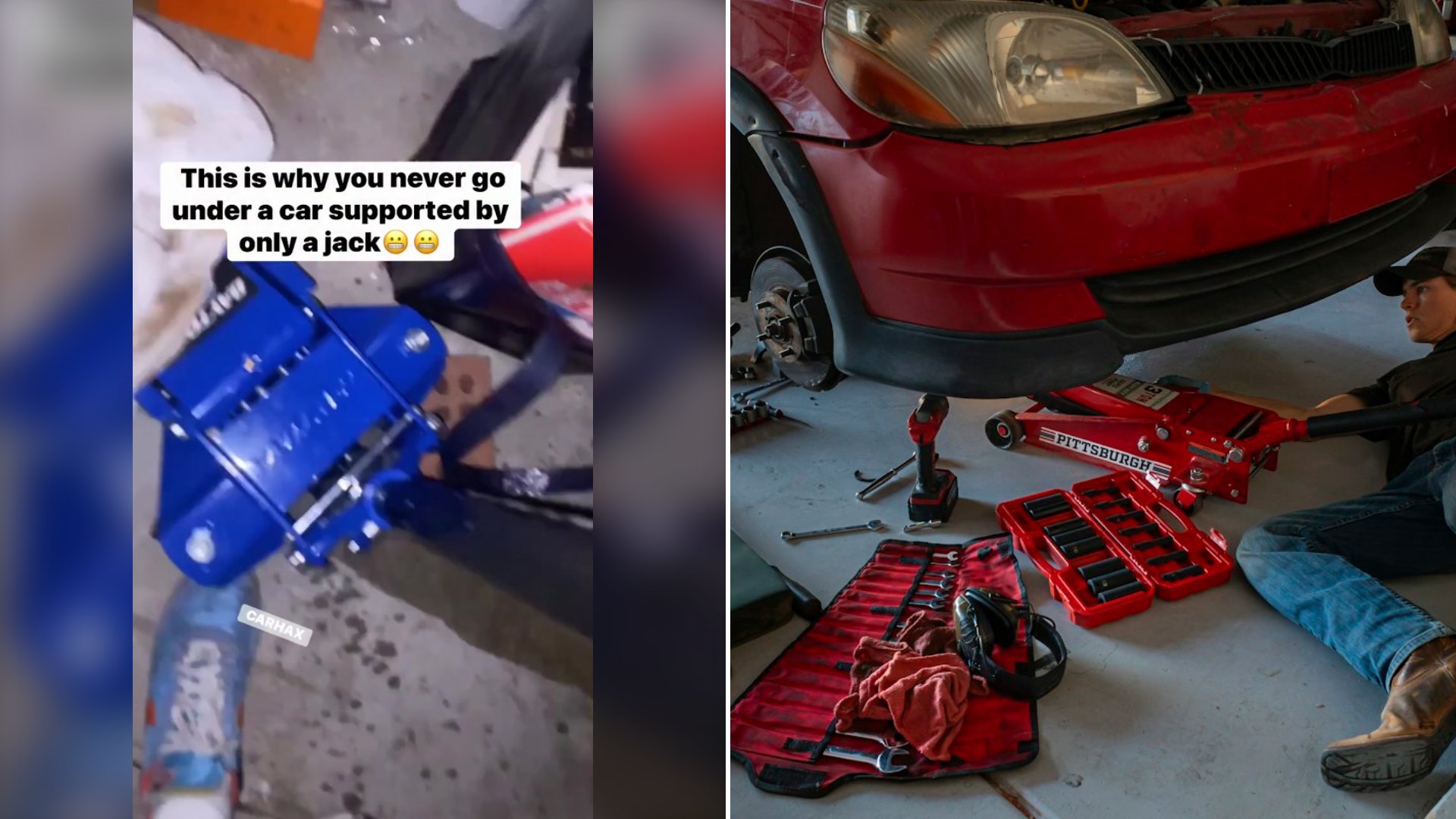
There is no long explanation and no rant in the clip, just the jack and the oil. But the short video struck a nerve with anyone who has ever paid good money for a tool, only to have it fail before the new smell wore off.
The caption is tagged with words like “mechanic” and “fails,” and it trails off with “And this is exactly…” Whatever the end of that thought was, most people who work on their own cars can fill in the blank.
@cubby_catai
Why a New Floor Jack Might Leak
A floor jack is a simple hydraulic machine. When you pump the handle, a small piston pushes hydraulic oil from a reservoir into a larger cylinder, and that pressure raises the lifting arm. Turning the release valve lets the oil flow back and lowers the load. Everything depends on seals and O-rings keeping that oil where it belongs.
When a jack leaks right out of the box, a handful of causes are common.
Overfilling at the factory. If the reservoir was filled too high, the extra oil can push out of the fill plug or vent when the ram is lowered and the oil returns to the reservoir. This kind of seepage often stops once the level settles.
A loose fill plug. The rubber or threaded plug on the reservoir can work loose in shipping. Snugging it up or reseating it sometimes ends the leak.
Shipping and storage position. A jack that spent days on its side or upside down in a box or delivery truck can weep oil past seals or out of the vent until it is stood upright for a while.
A bad seal. If oil is coming from around the ram, the pump piston or the release valve, a seal may be damaged or defective. That is a real failure, and on a new jack it is a warranty issue.
What to Do If Your New Jack Leaks
Stop using it for lifting. A jack that is losing oil can lose pressure, and a jack that loses pressure can drop a load. Set it aside until you know what is going on.
Find the source. Wipe the jack completely clean, set it on a piece of cardboard, raise and lower it a few times with no load, and see where fresh oil appears. Note whether it comes from the fill plug, the ram, the pump area or the release valve.
Take photos and keep the receipt. Pictures of the leak and its location help with any return or warranty claim.
Return or exchange it. If it is a seal leak on a brand-new tool, do not settle for living with it. Most retailers will exchange a defective jack within their return window, and most jack makers offer a warranty. Call the manufacturer’s customer service line if the store will not help.
Check for recalls. Jacks and jack stands are recalled from time to time. You can search for your brand and model on the Consumer Product Safety Commission’s website at cpsc.gov.
If you top it off, use the right fluid. Once a leak is fixed, or for an older jack that has lost some oil over time, refill only with hydraulic jack oil. Brake fluid and motor oil can damage seals. Check the manual for the correct fill level, which is usually measured with the ram fully lowered.
Bleed out the air. A jack that feels spongy or will not lift all the way may have air in the system. On many models, you open the release valve and pump the handle several times to purge it, but follow the instructions for your jack.
Lift Safely Every Single Time
A leak is a good reminder that a floor jack is a lifting tool, not a holding tool. Even a perfect jack can fail without warning. These rules are worth following on every job.
Never put any part of your body under a vehicle that is supported only by a jack. Once the car is up, place properly rated jack stands at the manufacturer’s recommended support points, then lower the car onto the stands and give it a firm shake before you crawl under.
Work on a flat, hard surface such as concrete. Jacks and stands can sink into asphalt on a hot day or tip on gravel.
Chock the wheels that stay on the ground, put the car in park or in gear, and set the parking brake.
Stay within the jack’s rated capacity, and remember that a three-ton rating refers to the jack’s maximum, not a comfortable everyday load. Lift only at the points listed in your owner’s manual so you do not damage the car’s underside.
Store the jack with the arm fully lowered. Leaving it raised exposes the polished ram to rust and moisture, which can wear out seals and cause, you guessed it, leaks.
A good jack should last for years of oil changes and tire swaps. If yours starts leaking after one use, the best move is to take it back.
More From Steel Horse Rides
- That Cheap Classic Car Project Can Turn Into A Rust Bucket That Costs More To Restore Than It Will Ever Be Worth, So Budget The Real Cost Of Bodywork Before You Buy
- Mechanic Says a Chevy 5.3 Owner Was Already Pricing a Cam Actuator Job When Five Minutes of Diagnosis and One Cheap Part Had the Truck Starting on the First Try
- Project Car Builder Hauls A Rare Jeep Wagoneer Out Of A Junkyard On A Two Hundred Dollar Craigslist Trailer And Calls It The Stupidest Thing He Has Done In A While