

The message came in with a request that makes any experienced car dealer nervous: “I need a wire today.” @georgejsaliba decided to call the seller on FaceTime to find out more, and filmed the conversation. What followed was a 2020 Porsche 911 offered at a price that seemed almost too good to be true, a seller sitting at a poker table in Las Vegas, and a car sitting in a garage back home in Minnesota.
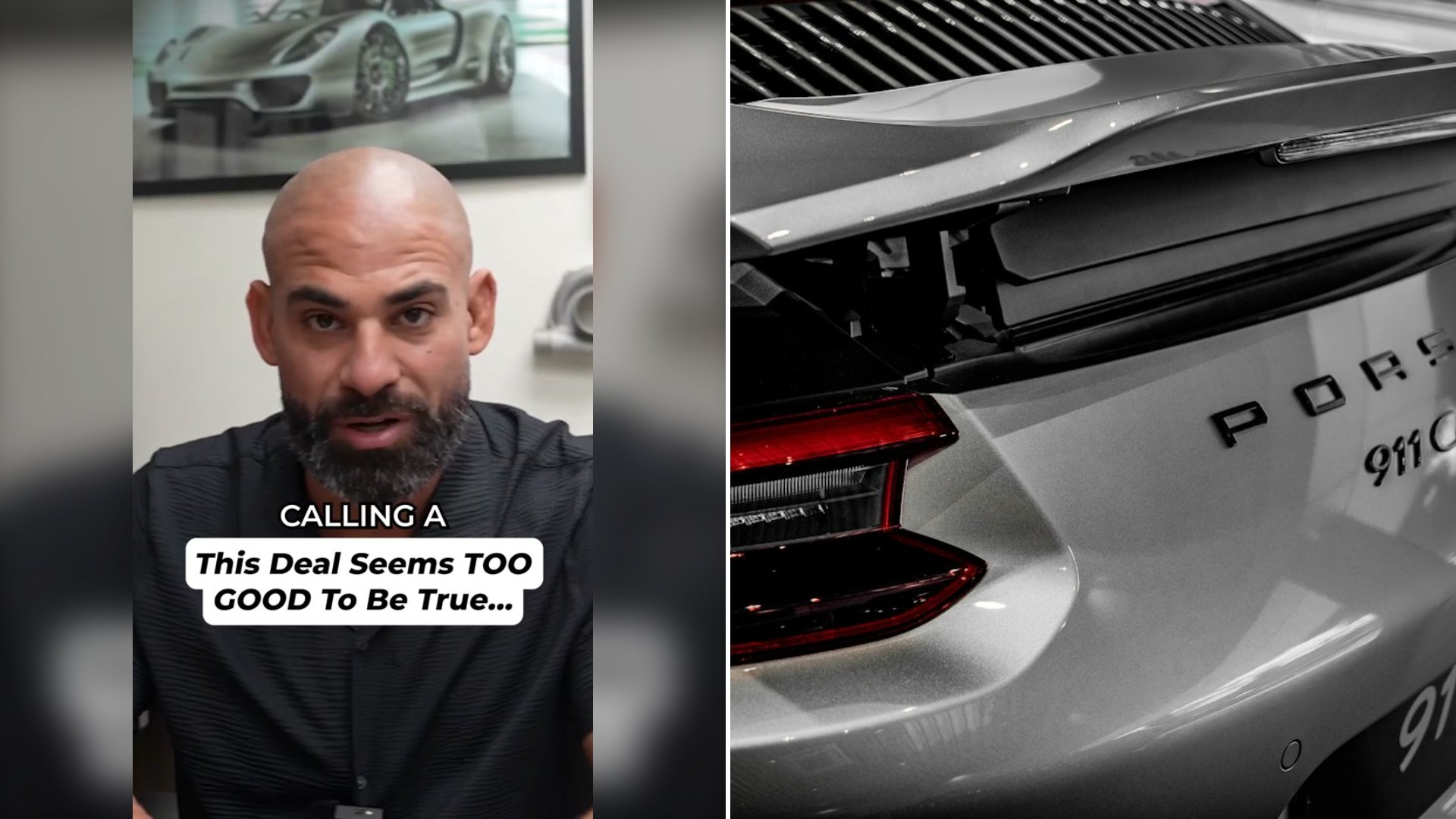
Before the call even connects, the dealer shares his first impression. A seller who needs a wire the same day, he says, is “not the best sign.” When the seller picks up, he apologizes for the delay and explains he is in the middle of a poker game and had to step away from the table. The dealer asks, half joking, if he is a professional. The seller says he is decent, but by no means a pro.
A Porsche at a Poker Table Price
The car, the seller confirms, is a 2020 Porsche 911 S with about 38,000 miles. He says another broker offered him $64,000, which he calls ridiculous. He countered at $75,000, which he says is still a little less than he wanted. The car has aftermarket wheels, and he says the original wheels come with it.
Then the dealer asks about the catalytic converters. The seller says they are not on the car right now, but he has them, along with the other stock parts.
When the dealer asks for more photos, things get more complicated. The seller is not near the car. He is in Vegas. The car, he says, is in his garage in Minnesota.
The dealer makes a sensible proposal. He will arrange a transport company to pick up the car, bring it to him for an inspection, and pay once it arrives. The seller agrees, but adds that he was really hoping to have money by Friday, since it is already Thursday. He asks whether the dealer could send something once the car is picked up.
The dealer holds firm. He wants the car in his hands first. He agrees that $75,000 would work, but reminds the seller that so far he has seen just one picture of the car. He asks for a photo of the seller’s driver’s license and promises to set up a group chat with his transporter.
@georgejsaliba
After hanging up, he shares his honest reaction. “I feel like this deal isn’t real,” he says. “It’s too cheap. Like, really cheap.” His advice for anyone in a similar spot: if it turns out to be real, great, but “tread lightly” and “ask all the right questions.”
The Red Flags in This Kind of Deal
Nobody knows yet whether this particular seller was honest or not. But this call contained several warning signs that show up again and again in vehicle sale scams, and they are worth recognizing whether you are buying or selling.
Urgency. A need for money today, or by Friday, pushes the other person to skip steps. Scammers rely on that pressure.
Wire transfers. Wired money is very hard to recover once it is sent. That is why fraudsters ask for it, along with gift cards, cryptocurrency and payment apps.
A seller who is far from the car. Stories about being out of town, deployed or traveling are common in scams, because they explain why you cannot see the car in person.
A price well below market. A bargain that seems impossible usually is. A low price is bait designed to make buyers rush.
Few photos and little proof. A legitimate seller can usually produce plenty of pictures, the title and service records quickly.
How to Buy or Sell a Car Long Distance Safely
Inspect before you pay. Do exactly what this dealer insisted on. Either see the car in person or hire an independent inspection service in the car’s city. Never send money for a vehicle you have not had verified.
Verify ownership. Ask for a photo of the title and compare the name with the seller’s identification. Check that the vehicle identification number on the title matches the car, and run a vehicle history report.
Use a licensed escrow service. A legitimate escrow company holds the money until the buyer receives and approves the car. Be careful, because scammers also create fake escrow websites. Look up the company yourself instead of clicking a link the seller sends.
Arrange your own transport. Choose and book the shipping company yourself so you know it is real.
Ask about modifications. Missing parts, like the catalytic converters on this car, matter. Removing emissions equipment from a road vehicle generally violates federal law, and putting it back can be costly. Factor that into any offer.
Sellers, protect yourselves too. Do not release a title or let a car leave until the payment has fully cleared with your bank. Fake cashier’s checks and overpayment schemes target sellers every day.
Report suspected fraud. If you run into a scam, report it to the FBI’s online complaint center at IC3.gov and to the Federal Trade Commission at ReportFraud.ftc.gov.
Whether this Porsche turns out to be a real bargain or a trap, the dealer’s approach was the right one. Slow down, get the car inspected, and never let someone else’s deadline become your emergency.
More From Steel Horse Rides
- Car Expert Explains California’s New CARS Act Requiring Dealerships To Disclose Full Vehicle Prices Upfront and Offer a Three Day Cancellation Window
- 7 Things Car Dealers Love That Buyers Should Look at Carefully
- One Subaru Shopper Filmed the Entire Final Stretch of Her Own Car Buying Negotiation, and the Dealership’s Reaction the Moment She Turned Down One Specific Add On Says a Lot