

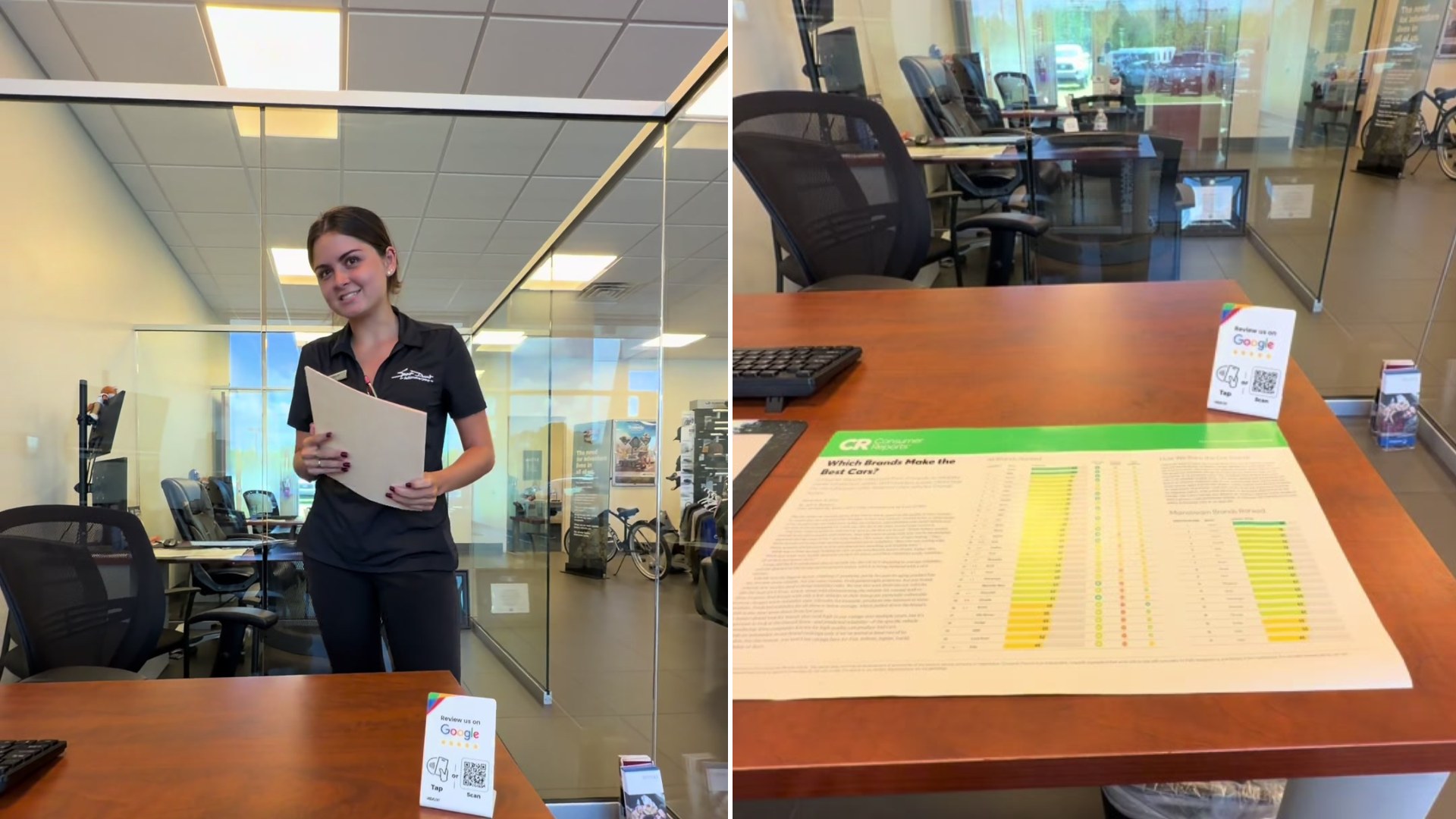
You’ve probably scrolled past a dozen car-buying horror stories online, but most of them start the moment a customer realizes too late what they signed. TikTok creator Kailey, who posts as @ask4kailey, did something different. She filmed the closing stretch of her own negotiation at a Subaru store, camera rolling as the paperwork shifted and a member of the sales team circled back with one more offer before the deal was final.
@ask4kailey Don’t want the discount?😢💔 #fyp #sportdurst #subaru #carsales @John Graham
♬ original sound – ask4kailey
What the Video Actually Shows
Kailey’s clip is captioned simply, “Subaru car sale without discount: what happened?” and it picks up near the end of her visit, right at the point where the deal gets finalized. The footage shows the kind of moment that rarely makes it onto camera because it usually happens fast and quietly: a rep presenting one more item as part of the price she’d already agreed to, and Kailey declining it on the spot. What follows is a visible shift in tone from the dealership side, the kind of reaction that suggests the “discount” she’d been quoted was never entirely separate from the add-on she just said no to.
The Add-On Playbook Dealerships Still Run
The scenario Kailey captured lines up with tactics regulators have been tracking for years. According to the Federal Trade Commission’s own consumer alert on dealer add-ons, dealerships routinely pitch buyers on service contracts, paint and fabric protection packages, nitrogen-filled tires, VIN etching, and theft-deterrent systems at the signing table. The agency’s own enforcement case against a group of Texas dealerships found that as many as 75% of that dealer group’s buyers reported add-ons had been tacked onto their contracts, either without their knowledge or after being told the charges were mandatory.
Is There Still a Federal Rule Backing This Up?
The FTC’s Combating Auto Retail Scams Rule, written specifically to ban junk fees and force dealers to get consent before charging for add-ons, was vacated by the Fifth Circuit Court of Appeals in January 2025 after dealer trade groups challenged it, and the agency formally withdrew the rule this past February, according to its own notice in the Federal Register. The court didn’t rule that the underlying practices were fine, it found the FTC skipped a required procedural step when writing the rule. The FTC’s broader authority to police unfair and deceptive practices under Section 5 of the FTC Act still stands, and most states have their own dealer-conduct statutes.
What You Can Actually Decline at the Finance Desk
Regardless of which specific rule is active in a given month, the FTC’s consumer guidance is consistent on what buyers can do. You have the right to decline optional add-ons outright, refuse to pay for anything that wasn’t part of your agreed price, and demand a printed, itemized copy of the contract before you sign anything electronically. That covers VIN etching, nitrogen tire fills, paint sealant, extended service contracts, and theft-deterrent decals, none of which are required to drive the car off the lot.
Why This Clip Resonates
What makes Kailey’s video useful isn’t that something dramatic happened, it’s that nothing did. She just said no, and the moment was uncomfortable enough to be worth posting. A legitimate discount shouldn’t evaporate the second you decline an unrelated product, and if it does, that’s information about how the number was built in the first place.
Kailey’s video also touches on a broader shift in how car shoppers approach the negotiation process itself. Where buyers once relied almost entirely on a salesperson’s framing of what was standard, optional or non-negotiable, a growing number now walk into a dealership having already researched exactly which fees and add-ons are legally required versus simply customary. That preparation doesn’t eliminate the pressure tactics some finance offices still lean on, but it does shift the leverage meaningfully toward buyers willing to ask direct questions and, when necessary, decline politely and walk the deal back to just the car itself.
Consumer advocates who track dealership complaints say video documentation like Kailey’s has become one of the more effective tools buyers have for holding sales staff accountable in the moment, rather than filing a complaint after the fact that a dealership can more easily dismiss or contextualize away. A recorded negotiation captures tone and specific wording in a way that a customer’s memory, however accurate, simply can’t replicate days or weeks later when a formal complaint finally gets filed. That immediacy is part of why more shoppers are choosing to record at least the final stages of a purchase, even when nothing goes wrong, treating it as a routine precaution rather than an accusation aimed at any particular dealership.