

Few things ruin a morning faster than turning the key and getting nothing. The engine turns over, you can hear it trying, but it will not catch. A mechanic and instructor named Angelina, who hosts Real Mechanic Stories, walked through exactly this problem on a car that cranked but would not start. Her approach is worth stealing, because she solved it by skipping the hard tests and starting with the easy ones.
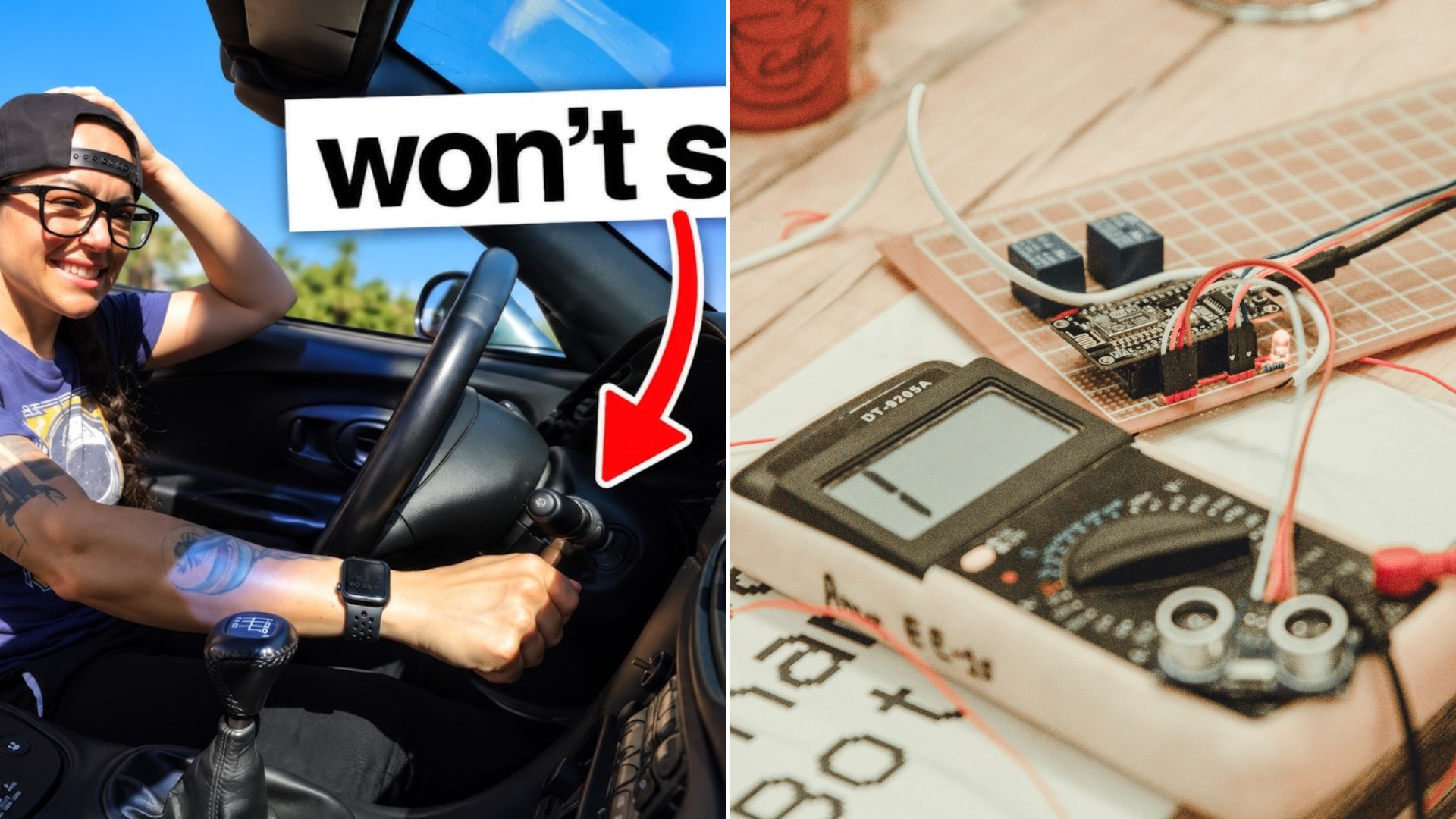
The culprit turned out to be a small, cheap part, and she proved it with a number: a relay coil that read 672 ohms when it should have been far lower. Here is how she got there.
Listen to How It Fails
The first clue is how the car fails to start. A rapid clicking usually means the starter is not getting enough voltage from the battery, so you are probably dealing with a low battery. Total silence, with no crank and no click, can point to a serious electrical problem. But this car was cranking, which told Angelina the battery and starting system were fine and the engine was not locked up. Something else was missing.
Air, Fuel and Spark
Every gasoline engine runs on the same four-stroke cycle, which she put as suck, squeeze, bang, blow, or intake, compression, power and exhaust. It needs air, fuel and spark, much like a campfire, plus the right timing. If any of them is missing, it will not start. But she thinks about probability too. Some failures happen all the time and some are rare, so she works from the easiest and most likely causes down, because time is money.
In her experience, fuel and spark are the most likely causes of a crank-no-start. So rather than jumping to the hardest test, she goes to the easiest.
- Check the battery. She hooked up a power probe and read 12.2 volts, not fully charged but plenty to crank the car, so the battery came off her list.
- Rule out air. A clogged intake would have to be almost completely blocked to stop the engine, so she called it one of the least likely causes.
- Check the security system. Many vehicles have a chip in the key or fob, and if the computer does not see it, the engine may not start. On many Chevys, the engine will crank, might even start, and then die right away. She saw no security light on the dash while cranking, so that was out.
A Safer Way to Check for Spark
Older mechanics like to pull a plug wire, ground it on the engine and watch for a spark. Angelina warns against that on modern cars. If the spark has nowhere to go, you could burn up an ignition control module, which can be expensive. Instead she used a spark tester, which she says is available at most auto parts stores for under 20 dollars. It works like a fake spark plug, and you watch for the spark to jump from the center to the edge while cranking. Her helper cranked the engine and there was a strong spark. That took the problem from could be anything to most likely fuel in just a few minutes.
Proving It Is a Fuel Problem
To test the theory, she removed the intake ducting from the throttle body and sprayed a little brake cleaner into it, which is highly flammable and something she warned not to try at home. The engine fired and wanted to run, so fuel was the missing piece.
She then listened for the fuel pump. When you turn the key on, you should hear a little hum for about three seconds. She heard nothing. That meant either the pump was bad or the electrical supply to it was not working. She headed to the fuse box.
Fuse, Then Relay
The fuse box key showed the 20-amp fuel pump fuse. With the power probe she checked both test points and found about 11.5 volts, which showed power on both sides of the fuse, so it was good. She noted that you can also pull the fuse and look at it, or use a multimeter. Many fuse boxes include a handy puller, or you can use pliers.
Next came the relay. She explained that the computer cannot handle the power a fuel pump needs, so it sends a small signal to a relay, which closes a switch and lets a larger current flow. A four-pin relay has a switch on one side and a coil on the other. The coil creates a magnetic field that pulls the switch closed, which is why you hear a click. When she powered the relay, she heard no click. When she measured across the coil, she got 672 ohms, and she said the spec for most relays is about 60 to 160 ohms. This relay has a protective resistor inside, which is why it read a number and not open circuit.
For extra proof, she powered the relay socket directly with a small probe, using a T-pin or paperclip, and the pump came on. So the wiring and pump were fine. She dropped in a fresh relay and the car started. It ran out of gas, since it had been running on fumes, but it ran.
What You Can Do
- Pay attention to how the car fails. Clicking, silence and cranking mean different things.
- Listen for the fuel pump hum when you turn the key to on.
- Check the fuse first, then swap in a known good relay. Many relays in a box are identical, so you can trade one for a test.
- Use a spark tester, not a bare plug wire.
- Keep a basic meter in the glove box and learn to use it.
Her advice comes down to a sensible rule: start with the cheap, easy, likely stuff before you call a tow truck or buy a part. That is the sort of thinking that saves money.
More Stories You May Like
- Ignoring The Check Engine Light Is Risky, But Paying For A Diagnostic You Could Skip Is Not Smart Either, So Here Is How Free Code Reading Works And When To Worry
- New Truck Would Not Start And Even After A Jump The Owner Heard Only A Click Until A Mobile Mechanic Tested The Battery And Pinned It On The Starter
- Project Car Builder Hauls A Rare Jeep Wagoneer Out Of A Junkyard On A Two Hundred Dollar Craigslist Trailer And Calls It The Stupidest Thing He Has Done In A While