

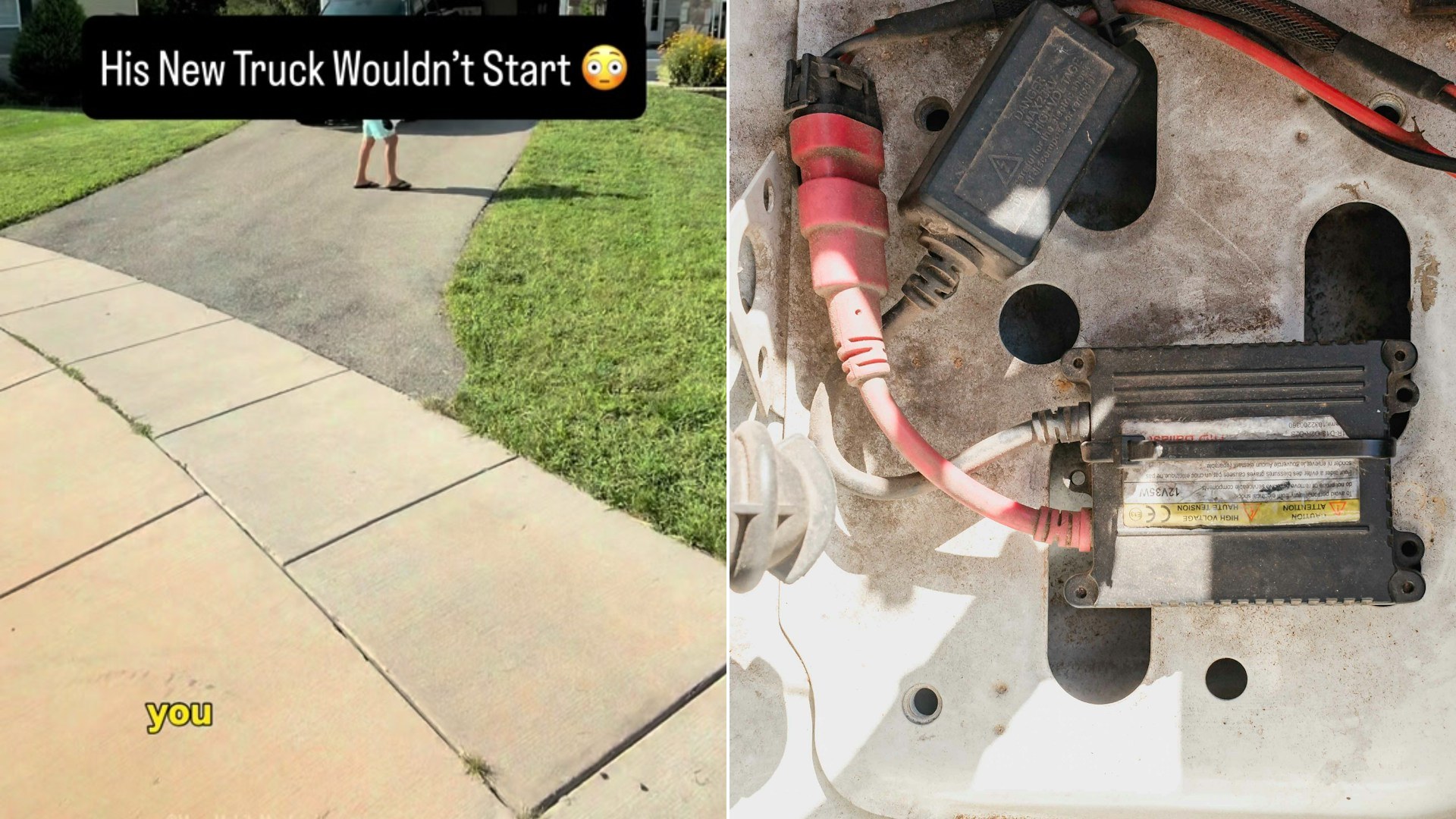
You turn the key, and instead of the engine roaring to life, you hear a single click. It is one of the most frustrating sounds a driver can hear, and it is usually followed by a quick guess that the battery is dead. A mobile mechanic who posts as @macsmobilemechanic shows why that guess is not always right. His caption reads simply, “His new truck wouldn’t start,” and the story is a good lesson in testing before replacing parts.
@macsmobilemechanic
The click that would not go away
The owner explained that he had just walked out and the truck would not start. He managed to get it jumped, and it started. But when he tried again later, all he heard was a click. Another jump did not fix it either. By the time the mechanic arrived, the owner had gone through the usual routine and was stuck with a vehicle that seemed healthy otherwise.
The owner mentioned that the truck was a newer one, which made the whole thing more surprising. He had thought a brand new truck would not have this kind of trouble. The mechanic did not guess. He started with the simplest check, the battery. A test showed the battery was good, and the truck actually has two of them, so he could rule out the power source and move on to the next suspect.
Testing the starter
Next the mechanic tested the starter. He asked the owner to crank the key as though he were trying to start the truck while he checked the readings. The test confirmed his suspicion: it was definitely the starter. He installed a new one, and the engine fired right up. The owner thanked him, and the mechanic acknowledged his hands were dirty, so a handshake had to wait.
The mechanic was surprised by the truck’s age relative to the part. He noted that a starter is an electric motor that wears out over time, and said manufacturers do not always build them to last as long as the rest of the vehicle. He mentioned that the original factory starter was still on the truck, which means it had likely done its job for a long time before finally giving up.
Why a jump start can fool you
It is natural to assume a no-start means a dead battery, especially when a jump seems to fix things. A starter motor draws a very large amount of current, and a worn one can work on some days and not on others. When the electrical contacts or windings inside are failing, the starter may suddenly demand even more power, and a jump pack can sometimes push it through for one more start. That can make a failing starter look like a battery problem.
Here are signs that point toward the starter instead of the battery:
- A single loud click when you turn the key. The starter solenoid is engaging, but the motor does not turn.
- Bright dash lights and a working radio. If the battery were weak, these usually dim or flicker when you try to crank.
- Intermittent starting. The truck starts fine one morning and refuses the next, with no pattern.
- A grinding or whirring noise. This can mean the starter gear is not engaging the flywheel properly.
On the other hand, signs that point toward the battery include slow cranking, dim lights, a rapid clicking sound, and a battery that is several years old. It can also be a loose or corroded cable connection, which is worth checking before spending any money.
How to check before you call for help
- Look at the battery terminals. White or green crust means corrosion, which can block current. Clean it with a wire brush and make sure the clamps are tight.
- Turn on the headlights and try to start. If the lights stay bright and you only hear a click, the battery is probably holding up.
- Have the battery tested. Many auto parts stores will test a battery for free. A load test tells you much more than a simple voltage reading.
- Ask a professional to test the starter circuit. A mechanic can check voltage at the starter while it is being cranked, which separates a bad starter from a bad cable or relay.
If you try to diagnose a starter yourself, be careful. Disconnect the negative battery cable before working near the starter, since it has a heavy cable that is always live. Tapping on a starter to get it to work is an old trick, but it is only a temporary fix, and a failing starter can leave you stranded again at any time.
The takeaway
The big lesson here is to test before you replace. Many people buy a new battery for a starter problem and end up paying twice. A good mechanic will test the battery first, then the starter, then the wiring. In this case, the battery tested fine, the starter was the issue, and replacing it solved everything on the spot.
It also helps to remember that age is not the only factor. A starter can wear out sooner on vehicles that make a lot of short trips or get started many times a day. Stop-and-go driving and extreme heat can both shorten its life. If your starter starts acting up, replacing it before it fails completely can save you a tow and a very inconvenient morning.