

Is it ruined, or is it just that much better? That is the question car creator @supersportstevie asks about a 1955 Chevy Bel Air, and the answer is sure to start an argument at any cruise night in America.
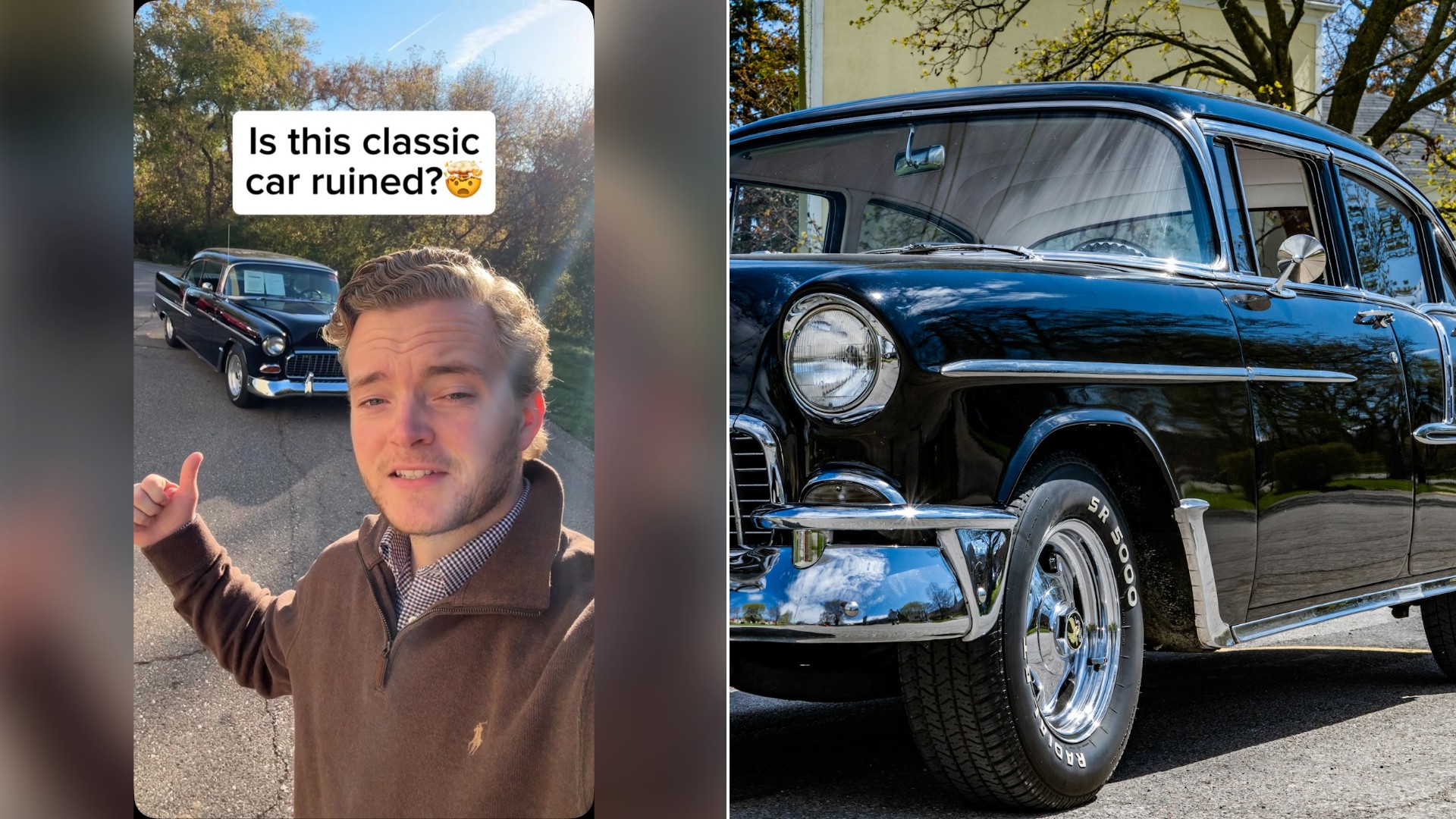
He calls the Bel Air one of the most loved and recognizable American classics ever made, and says these cars have a cult following. But he also points out that it shares a complaint with a lot of classics from its era: the way it drives. According to him, the owner of this particular car planned to really drive it once the restoration was done, so he threw in a 5-speed Tremec transmission.
That one choice is what has people talking. The creator admits that plenty of folks love originality, but in his opinion a 5-speed is one of the best modifications you can make to an old car.
View this post on Instagram
What Went Under The Hood And Inside
The transmission is not the only upgrade. The creator says the engine bay is dressed up with a polished Edelbrock intake, plus a chrome Chevrolet air cleaner and chrome valve covers. His verdict on the owner is that he did not take any shortcuts and used all the right parts.
Step inside and the story continues. The creator points to vintage air conditioning, a retro-style sound system and all-new gauges from Classic Instruments. He sums up the cabin as a drop-dead gorgeous interior. In other words, the car looks like something from 1955 but is built to be comfortable on a hot afternoon.
Why The 1955 Bel Air Is Such A Big Deal
The 1955 model year holds a special place in Chevrolet history. It was the year Chevy introduced its first modern V8 in its passenger cars, and the 1955, 1956 and 1957 models are now known together as the Tri-Five Chevys. They are among the most collected and most copied cars of the postwar era, and the Bel Air was the fancy trim level of the lineup, the one with the extra chrome and the stylish two-tone paint.
Because so many people love these cars, any change to one gets noticed. A mod that one owner calls a smart upgrade can look like a sin to another.
The Great Originality Debate
The creator frames his post around a simple question: do modifications hurt the value of classic cars? It is one of the oldest arguments in the hobby, and honest people land on both sides.
The purist argument is easy to understand. A car with its original drivetrain and factory parts is a rolling piece of history, and collectors who chase that kind of authenticity often pay the most for it. Once original parts are swapped out, they can be hard to replace, and a lot of serious buyers want to see the car as it left the factory.
The other side points to the reason many of us fell in love with old cars to begin with: driving them. Cars from the 1950s were built for a different time. Many came with three-speed manual transmissions or early automatics, and the brakes, steering and gearing were designed for roads and speeds that look nothing like today’s highways. A five-speed manual adds an overdrive gear, which generally means the engine turns slower at highway speed, so the car can cruise with less noise and less strain.
That is exactly the owner’s reasoning in this story. He wanted to actually use the car after the restoration, not just park it under a cover. For a lot of owners, a classic that gets driven and enjoyed is worth more to them than one that sits in a garage.
Restomod Or Original: How To Decide
If you are thinking about buying or building a classic, a few plain questions can help you sort out which camp you belong in.
- How do you plan to use it? If it is a weekend show car, originality may matter more. If you want to take it on road trips, comfort upgrades like air conditioning and a modern gearbox make a lot of sense.
- Are the changes reversible? Parts that bolt on and bolt off are easier to live with than cutting or welding. Many owners keep the original parts on a shelf in case a future owner wants them.
- Is the work quality? Well-chosen parts installed carefully, the kind the creator praises here, are a very different thing from a rushed job.
- Who will you sell to? A buyer who wants a driver will see a modern transmission as a bonus. A buyer who wants a museum piece will not.
Whatever you decide, keep good records. Receipts, photos and a list of what was changed help any future buyer understand the car and trust the work.
So, Ruined Or Better?
The creator leaves it to the crowd, asking viewers to say in the comments whether they would throw a five-speed in their classic or keep it original. He also makes clear where he stands: for him, the 5-speed is one of the best upgrades there is, and this Bel Air, with its polished Edelbrock intake, chrome Chevrolet dress-up pieces, vintage air, retro sound and new Classic Instruments gauges, is a car that was built to be driven.
It is a fair fight, and there is no wrong answer. A classic car is, at the end of the day, a very personal purchase. Some people want to preserve the past exactly as it was. Others want to enjoy it on the open road with the air conditioning running and a gear to spare. This 1955 Bel Air belongs firmly to the second group, and its owner is not apologizing for it.
So where do you land? If a 1955 Chevy Bel Air were sitting in your garage, would you leave the original gearbox alone, or would you go with a Tremec 5-speed and hit the road?
More Stories You May Like
- Truck Owner Finally Gets Wheels And Tires Onto His Fifth Gen Cummins After A Very Long Wait And Bolts On Spiked Studs For A Wild Tow Rig Look
- Mechanic Gets Called To A 2011 Ram 1500 That Will Not Start After Another Shop Already Tried And Warns A Part From A Chrysler Minivan Is A No Go
- The 3,000 Mile Oil Change Rule Is Costing Drivers Money On Cars That May Not Need It, But Stretching The Interval Too Far Can Backfire, So Check Your Owner’s Manual First