

Here is a story every truck owner dreads. The pickup will not start, a mechanic has already had a go at it, and now you are no closer to a fix than you were the day it quit. That is the situation a mechanic from @OnlineMechanicTips walks into with a 2011 Ram 1500.
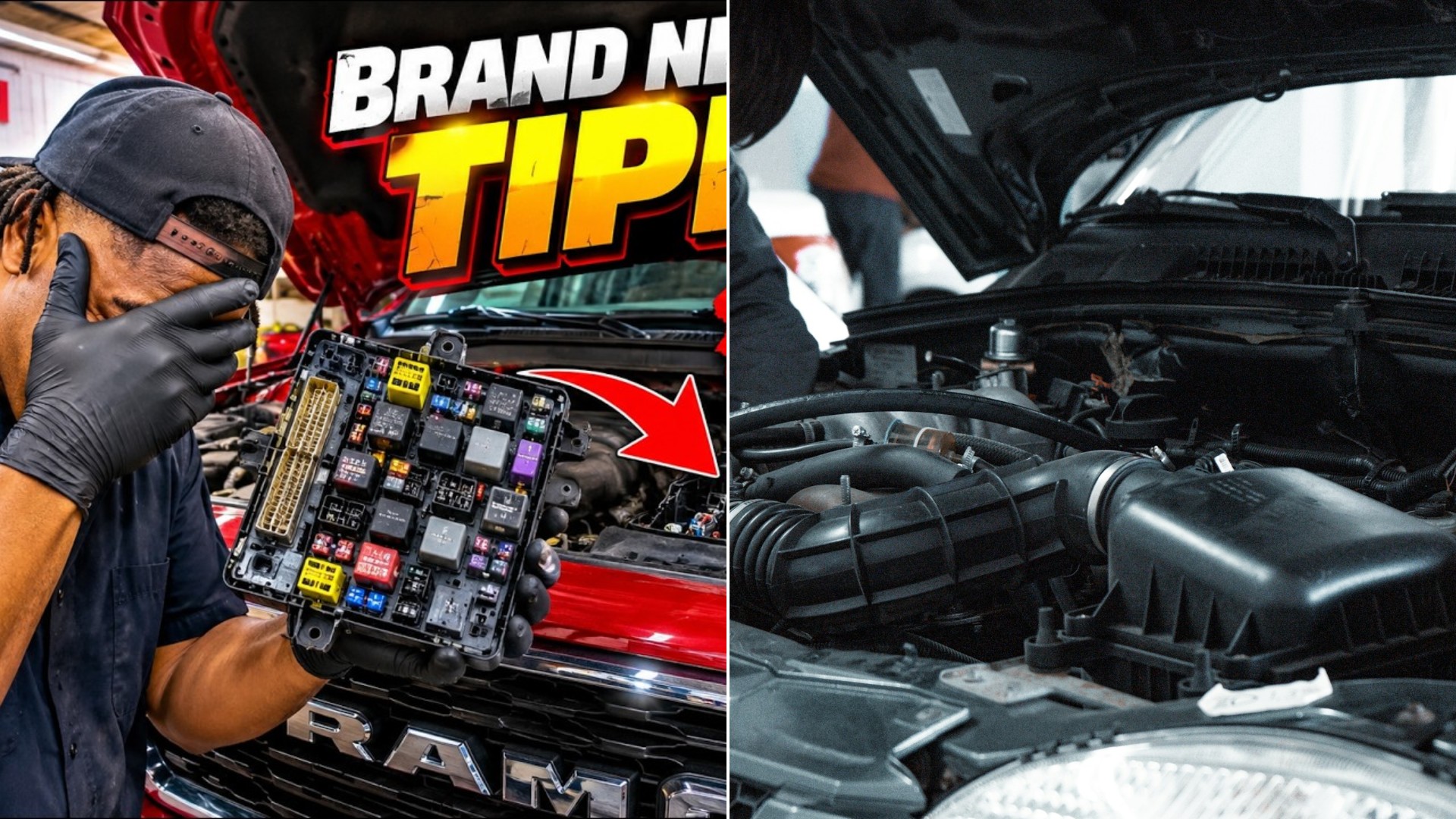
A buddy called him over, he explains. The truck will not start, and the owner went to another mechanic first. He jokes about cousin Pookey striking again, and he admits he is a little disappointed in the buddy, though he cuts him some slack since he did call. The work of the first shop is now part of the puzzle, and a lot of the lights on the truck are not working.
He points to a box under the hood and tells viewers that on a 2011 model this is not a plain fuse box anymore. It is a module, a totally integrated power module, usually called the TIPM. When you are dealing with a module, he says, you need to be able to talk to it, and that takes the right scan tool.
Do Not Jump to the Usual Suspect
His first lesson is about how mechanics think. The other shop had replaced the TIPM, probably because of a complaint that sounded like a TIPM problem. He admits he is guilty of that same habit, since a Ram with a certain symptom sends many techs straight to the module. But he says every vehicle is unique, and you should treat each one like a new problem instead of leaning on what you fixed on a previous truck.
He also notes that the 2011 to 2013 models have no external fuel pump relay. That circuit is built right onto the circuit board, so if it is damaged, you may stall out, fail to start or have other problems. That might be why someone replaced the module, he says, but he does not know what the original complaint was.
Start With the Computer
Before he condemns anything, he goes to the scan tool. Trouble codes will not tell you what is wrong with a car, he says, but they point you in the right direction, and the first stage of any diagnosis is finding out what codes are stored in each module. His scan tool can talk to every module on the truck, including the TIPM.
The only codes he finds are in the TIPM itself, including a low beam circuit code that is active. That could be a driver issue inside the module, he says, but then he takes the next step. He pulls up the detailed information and compares the current vehicle identification number stored in the TIPM to the original one. They do not match.
The Part From a Minivan
A mismatch is not automatically a problem, he explains, because a used module can come from another vehicle. But it has to come from a vehicle with the same features, or things will not work. So he runs the number stored in the module to see where it came from. The answer makes him laugh. The TIPM came off a 2012 Chrysler Grand Voyager, the Town and Country minivan.
His warning is blunt: you cannot just plug this in a truck. The lighting system on a minivan is totally different from the one on a Ram 1500, so the truck’s lights do not work properly. These parts are interchangeable on paper, he says, but the features have to match or things on your vehicle will not work.
Can the Module Be Reconfigured?
He decides to try a fix. Using a scan tool function, he looks for a way to restore the vehicle configuration so the van module could be converted into one for a 2011 Ram 1500. He starts the procedure, but it will not work, because the number is already burned into the module and cannot be changed.
That means a little bad news and a little good news. The bad news is the truck needs another module. The good news is that a module like this will likely fit any model year between 2011 and 2013, since the bus network those trucks use showed up in 2011, and it works across Rams, Jeep Grand Cherokees and the Caravans. He says it is okay to grab a used module, but you have to make sure you get one that matches. It is all about features.
A Radiator and a Coolant Reminder
Before the video wraps up, he points out something simple. The radiator is streaked with leaking coolant. He cautions that showing a customer one leak is not the end of it, because there may be more, and you have to start somewhere and keep going. Then he talks about the coolant itself. The coolant you use matters for the life of your cooling system, he says, because it carries rust inhibitors and other additives. He warns against one-size-fits-all coolant and recommends the correct kind for the vehicle.
What to Do When a Truck Will Not Start
A no-start can come from a handful of basic causes, and a methodical approach saves time and money. Start with the simple stuff.
- Check the battery and terminals. A weak battery or a loose, corroded cable causes a surprising number of no-starts.
- Listen. A click, a slow crank, a fast crank with no fire and total silence each point in a different direction.
- Check for fuel. Listen for the fuel pump to prime when you turn the key on.
- Scan for codes. An inexpensive scan tool can reveal trouble codes that point to the issue.
- Check fuses and relays. A blown fuse or a failed relay can shut down a system in an instant.
If you reach the end of that list and the truck still will not run, it may be time to have a qualified technician look at it. A good one will test before replacing and will not simply throw parts at the problem.
A Warning for Do It Yourselfers
Do-it-yourselfers can learn a lot from this story. Online parts sites and salvage yards are great for saving money, but they work best when you verify compatibility first. Take photos of the original part, write down every number on it, and compare against what you plan to buy. Ask the seller whether the part is programmed or needs to be matched, and whether it can be returned if it does not work.
It also helps to keep a record of everything done to your truck. A simple folder or phone note with dates, mileage and receipts makes it easier for any technician to understand the history. The lesson from this Ram 1500 is clear: a part that looks the same is not always the same. To see how the diagnosis unfolds, follow @OnlineMechanicTips.
More Stories You May Like
- New Truck Would Not Start And Even After A Jump The Owner Heard Only A Click Until A Mobile Mechanic Tested The Battery And Pinned It On The Starter
- Toyota Told a RAV4 Owner the Burned Out Taillight Could Not Be Fixed for Under $300 but a Mechanic Found the $40 Part That Solves It
- That Cheap Classic Car Project Can Turn Into A Rust Bucket That Costs More To Restore Than It Will Ever Be Worth, So Budget The Real Cost Of Bodywork Before You Buy