

Somewhere in your garage, there may be a dusty box that looks like junk. An old oil can. A cracked glass globe. A sign your dad pulled off the wall when the corner station closed. Before it goes to the curb or a yard sale for a few dollars, take a closer look.
Collectors of old service station items, sometimes called petroliana, have long been willing to pay real money for the right pieces. Carl Bomstead’s Art of the service station, published by Hagerty Media in March 2011, walks through what collectors hunt for. It is an older article, so treat its numbers as a guide to what was reported then, not as today’s prices. Here are 8 things to check before you sell.
1. Die-Cut Figural Porcelain Signs
These are porcelain signs cut into a shape, such as a figure or logo, rather than a plain rectangle. Hagerty’s article says they “can sell for as much as $20,000.”
That is the top end, of course. Condition and originality drive the price, and a faded or chipped example will not bring the same money as a clean one.
Porcelain signs were made to survive the weather, which is part of why so many have lasted. Look for chips in the enamel and rust at the edges, since those affect value.
2. Signs And Items From Early Brands Like Sunset, Mohawk, Paragon And Ace High
The article calls items from these early brands “extremely desirable.” If you see one of these names on a can or a sign, do not toss it.
No price is given, so research recent sales before you set a number. Collectors love a name they cannot find every day.
3. Roxana Shell Facility Items From Illinois
Hagerty says items tied to the Roxana Shell facility in Illinois draw strong bidding interest because of their logo.
If you have anything with that name on it, show it to a specialist or check auction results before you decide what it is worth.
4. Mobil “Flying Red Horse” Items
Mobil’s Flying Red Horse is one of the best-known symbols in motoring. The article says Mobil items have a committed following.
That kind of loyal fan base can keep demand strong. Check for the winged horse logo on signs, cans and advertising pieces.
Brand loyalty matters in this hobby. Many collectors chase one company’s items, so a piece with the right logo can attract several eager bidders.
5. Early Gas Pumps Like The Art Deco Wayne 50
Hagerty mentions early gas pumps such as the Art Deco Wayne 50 with its display cabinet, saying prices are “around $10,000.”
The article also notes that pumps are often over-restored. A pump in honest original condition is generally what serious collectors prefer, so think twice before you repaint or polish one.
6. Glass Globes For Gas Pumps
The glass globes that once sat on top of pumps are collectible. Hagerty says a Musco globe with an Indian in full headdress “can easily push five figures.”
Most are far more modest. Common examples sell for a few hundred dollars, and the article warns that reproductions are common, so be careful about what you buy or sell.
Spotting these takes patience, because they rarely look like treasure at first glance.
7. Glassware, Playing Cards, Name Badges And Mechanical Pencils
You do not need a giant pump to have a valuable find. Hagerty lists glassware, playing cards, name badges and mechanical pencils as collectible, especially when a collector focuses on one brand.
These small items are easy to overlook in a box. Sort them by brand and keep sets together, since a collection can be worth more than loose pieces.
Think of how much work went into the artwork on a simple can. Collectors notice that kind of detail.
8. Oil Cans
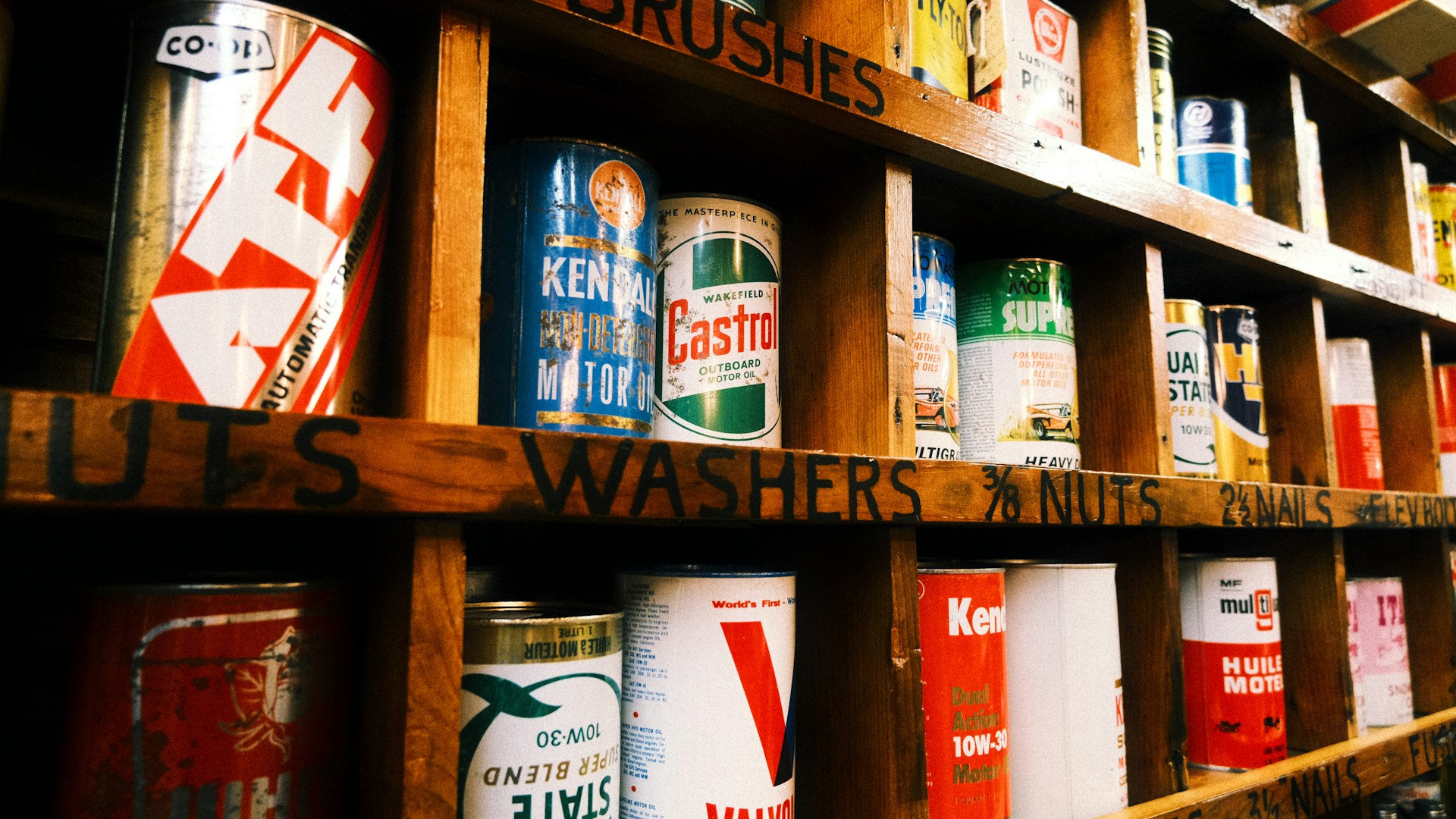
Hagerty mentions oil cans as striking and graphic pieces. They are the kind of item that fills a garage shelf, which makes them easy to underestimate.
The article does not put a price on them. Look at the artwork, the brand and the condition, and compare with recent sales of similar cans.
Even if only one item in your box turns out to be special, that is a good day. Many people find that the hunt is half the fun.
If you decide to sell, consider a reputable auction house or a collector club rather than a quick garage sale, and ask what fees apply.
How To Check Before You Sell
Start by sorting what you have by brand and type. Photograph every piece, front and back, and look for makers’ marks or dates.
Then look for recent sold prices on comparable items, not asking prices. Auction results, collector clubs and appraisers can help, and a pump or globe may be worth a professional opinion.
Avoid cleaning, repainting or restoring anything until you know what it is. As Hagerty’s article suggests with pumps, over-restoration can hurt. And remember reproductions exist, so make sure what you are holding is original.
Many of these items are worth only a modest amount, and a few may be worth a lot. The only way to find out is to look before you let that old box go.
More Stories You May Like
- Buyer Spends Three Days Convincing The Owner To Sell An Abandoned Mitsubishi 3000GT Then Pumps The Clutch For 20 Minutes To Get It Home
- Collector Who Sold His Family Salvage Yard Was Told It Could Be Worth 3 Million Dollars And Now Says Most Of What Is In His Garage Is Not For Sale
- Skipping Alignment And Tire Rotation Lets Uneven Wear Eat A Set Of Tires Early, So Check Your Owner’s Manual Because The Right Schedule Varies