

When Ford’s Mustang hit showrooms in 1964, it did more than sell like crazy. It created a whole new kind of car.
The long-hood, short-deck sporty coupe with a price young buyers could stretch to afford became known as the pony car, and every other automaker wanted a piece of it. Wikipedia’s pony car entry and its pages on each model tell the story of seven true challengers.
Some became legends. Others are barely remembered. All of them went after the Mustang’s customers.
1. Plymouth Barracuda Beat The Mustang To The Showroom By Two Weeks
According to Wikipedia, the Barracuda debuted in fastback form on April 1, 1964, two weeks before the Mustang. It was the first pony car, and it ran through 1974.
Here is the twist. Wikipedia’s Barracuda page gives first-season sales of 126,538 for the Mustang against 23,443 for the Barracuda, so being first did not make it the winner.
The first generation rode on Chrysler’s A-body with the Valiant’s 106-inch wheelbase. Engines ranged from a 101-horsepower slant-six to a 273-cubic-inch V8, rated at 180 horsepower in 1964 and 235 in the 1965 and 1966 Commando form.
The Barracuda kept evolving. The ‘Cuda trim arrived for 1969, and Wikipedia says the 1970 and 1971 Hemi ‘Cuda was rated at 425 horsepower.
2. Chevrolet Camaro Was Built To Eat Mustangs For Lunch
Wikipedia says the Camaro went on sale September 29, 1966, as a 1967 model. Chevrolet’s Corvair-based Monza could not match the Mustang’s sales, so the Camaro used the conventional front-engine, rear-drive layout instead.
The page reports that Chevrolet’s sales staff reportedly described it as “a small, vicious animal that eats Mustangs.” Production stopped in 2002 and resumed with the fifth generation in 2010.
The Z/28, sold from December 1966, came with a special 302-cubic-inch V8 developed for Trans-Am racing. The base engine was a 230-cubic-inch six, and V8 options reached 396 cubic inches.
3. Pontiac Firebird Arrived Months Later Wearing A Different Badge
The Firebird was Camaro-based and introduced a few months after the Camaro. Wikipedia lists its introduction as February 23, 1967.
The 1967 lineup started with a 165-horsepower 230-cubic-inch six and went up to a 325-horsepower 400-cubic-inch V8. The Trans Am package followed in 1969, and the Firebird ended on August 30, 2002.
4. AMC Javelin Gave Little American Motors A Seat At The Table
Wikipedia says the Javelin was AMC’s first pony car, debuting August 22, 1967, as a 1968 model with prices starting at $2,743. It was sold only as a two-door hardtop.
Under the hood, the 1968 and 1969 lineup started with a 232-cubic-inch six. A 390-cubic-inch V8 rated at 315 horsepower came with the Go package, which also added disc brakes and heavy-duty suspension.
It also had racing credentials. The Javelin won the Trans-Am title in 1971, 1972 and 1976, per the page.
The Javelin also took an odd job. Wikipedia says Alabama bought 132 of them in 1971 and 1972, the first pony cars used as regular highway patrol cars by a U.S. law-enforcement agency.
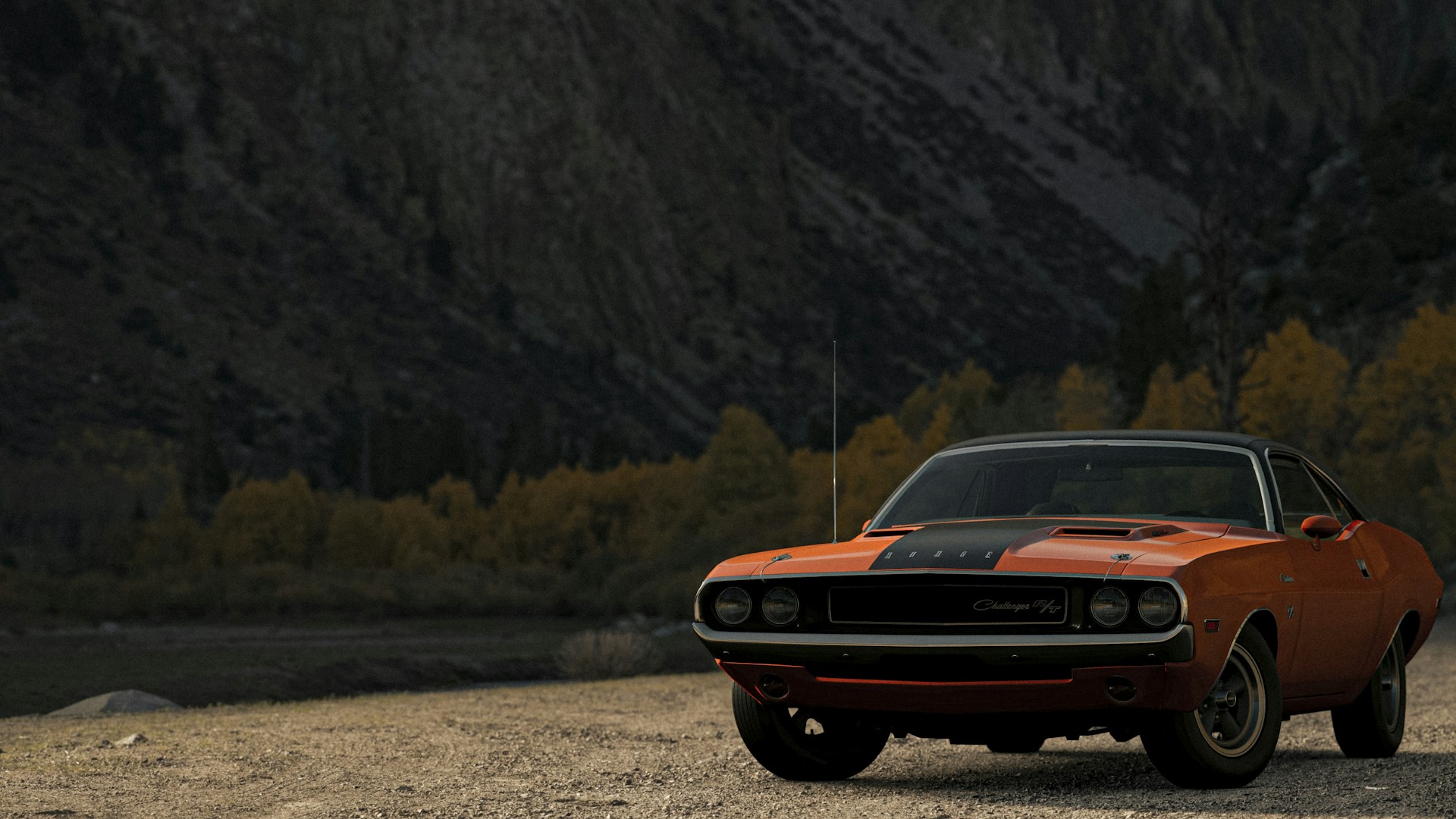
5. Dodge Challenger Was The Enlarged Barracuda That Came Late
The Challenger arrived for 1970, built on Chrysler’s E platform and shared with the third-generation Barracuda. Wikipedia says virtually every engine in Chrysler’s inventory, including the famed 426 Hemi, was made available.
The first run sold 165,437 cars in total, with 76,925 of them in the 1970 debut year. A Trans Am Series Challenger T/A was entered in 1970, with Sam Posey and Tony Adamowicz driving two factory-backed cars. The name returned in 1978 to 1983 and again from 2008 to 2023.
6. Chevrolet Monza Went After The Mustang II In 1975
The Mustang changed in the 1970s, and so did its rivals. Wikipedia says the Chevrolet Monza of 1975 was a sporty subcompact that competed with the Mustang II and other small sporty cars.
It reflected the times. Buyers wanted smaller, lighter cars, and GM answered with a sporty small car of its own.
7. AMC Spirit Was Marketed Against Mustang Hatchbacks
For 1979, Wikipedia says, American Motors marketed its subcompact Spirit against the Mustang hatchbacks. It was a different kind of challenger than the big-engine cars of the sixties.
Then came a notable first. In 1982, according to the entry, the Spirit GT became America’s first pony car with a five-speed manual.
The same entry lists other cars in the Mustang’s orbit. The Mercury Cougar, a Mustang-based, upscale version on a longer wheelbase, ran from 1967 to 1973, and the Ford Capri was a European car directly inspired by the Mustang.
Those cars lived inside or beside the Ford family, so they were not rivals in the same sense as the seven above. Wikipedia also notes that no Japanese maker produced a true pony car, though the Toyota Celica of 1970 was inspired by the Mustang’s success.
Barracuda production ended on April 1, 1974, ten years to the day after it began, according to its page. The pony car war made for some of the most colorful cars Detroit ever built, and it all started with one car that showed everyone what young buyers wanted.
More Stories You May Like
- Mustang Lifestyle Tackles Its First Self Done Coyote Swap On The Very Mustang That Started The Whole Operation Then Weighs Going Procharger
- Guy Hunting For Van Parts At A Wrecking Yard Stumbles On A 1959 Willys Overland Truck Showing 93,000 Miles That Looks Like It Sat In A Backyard For Decades
- Ford Recalls 10,001 Brand New 2026 Explorers, Broncos, Mustangs And Rangers Over Piston Domes That Could Cause Engine Failure, With The Fix Not Expected Until December