

Ask any parts hunter and they will tell you the same thing: you never find what you went in for, but you always find something. That is exactly how it played out for @1020autorebuild, who was at a wrecking yard looking for some van parts when he ran across a 1959 Willys Overland truck.
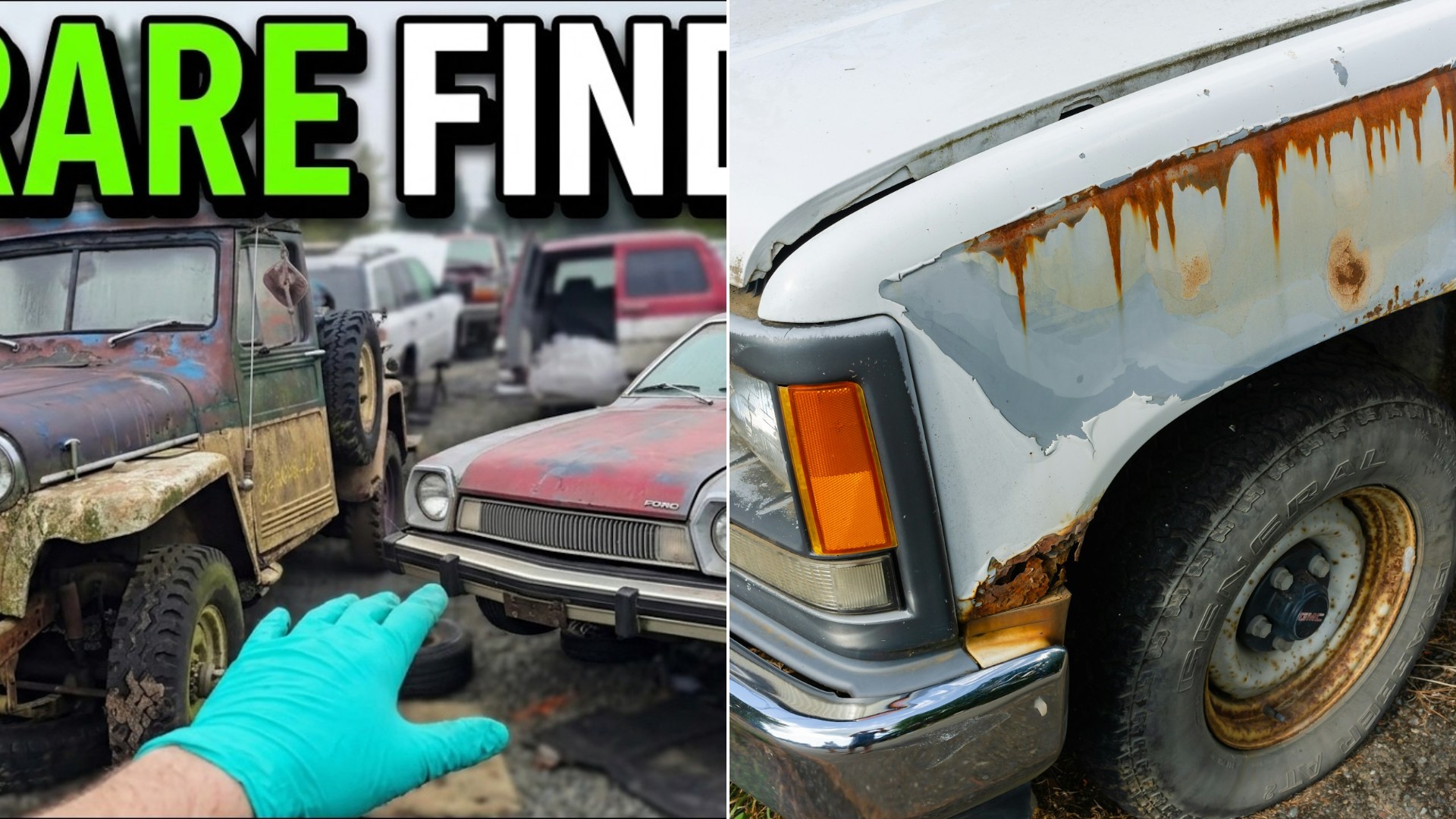
The dash says it has 93,000 miles, but the rest of the story is written all over the outside. He says it looks like it has been sitting in someone’s backyard for decades. Anyone who has stood in front of a forgotten pickup knows that look: faded paint, a tired stance and the feeling that the truck has been waiting patiently for somebody to notice.
His first impression is a good one. The truck looks pretty complete, with only a little bit of rust. It is probably too far gone for a major restoration, he figures, but it is still a really cool truck, and the little toolbox on the back would make great yard art.
A Look Under the Hood
The fun starts when he tries to open it up. You have to pull up on latches on both sides, which he says was impossible to do while holding the camera. Once it opens, he is impressed by a hood latch design he calls pretty ingenious, and he points out a lot of safety equipment for a vehicle from 1959.
Inside the engine bay and around the cab he finds a small HVAC motor, a battery box and what he takes to be the generator. The truck used to have a manual transmission, and he notes that it even has seat belts, which is rare in a truck this old. His reaction every few seconds is the same: that is really cool.
A Little Willys History
Willys is a name that goes deep into American vehicle history. The company is best known for building the Jeep during the Second World War and for its civilian utility vehicles and pickups in the years afterward. Trucks from that era were simple, rugged workhorses designed for farms, job sites and small businesses, and they were built to keep running with basic tools and basic know-how.
That simplicity is a big part of the appeal today. An old truck like this has no computer to confuse you and not much in the way of electronics, so a patient owner with a decent set of hand tools can often figure out the whole thing. Parts can be a challenge, though, and finding trim, glass and body pieces for a vehicle of this age takes patience and a good network of fellow enthusiasts.
Can You Trust 93,000 Miles?
The reading on the dash is a fun detail, but it deserves a grain of salt. Odometers on vehicles this old may have rolled over, been replaced or stopped working years ago, and an old truck that sat for decades gives no guarantee the number reflects its true life. Still, the mileage is an interesting clue, and a buyer should treat it as a starting point for questions rather than an answer.
Look at the wear on the pedals, the seat and the steering wheel, and check the condition of the engine and drivetrain for signs of how hard it has really worked. A truck that shows a lot more wear than its odometer admits tells its own story.
The Rest of the Yard
This is a place with some pretty cool old-school vehicles, he says, and he keeps wandering while he looks for his van parts. There is an old Chevy Suburban that is pretty torn apart, a 1991 Eagle Summit with a little Mitsubishi four-cylinder and a five-speed, and he loves its old-school seat belts that wrap around you when you close the door and lock behind you.
Then comes a 1984 Pinto, which gets a laugh. He has not seen one of those in forever, and he repeats the old reputation that they were death traps that could catch fire in a rear-end accident. Between the 1959 truck and the Pinto, he says, it has been a fun little trip to the wrecking yard.
On the way out he checks the cars the yard has for sale, and finds an old Toyota with a mid-engine layout and a manual transmission, where the driver sits right over the engine. There is also a blue 1979 Chevy LUV pickup, a 4×4 with a four-speed that has a little too much rust and body damage, and a 1989 Isuzu Trooper with a manual. He guesses the Trooper came from the same collection as the old truck, and that it sat in some old-timer’s yard forever.
Tips for Shopping a Junkyard
If this story has you itching to wander a salvage yard yourself, some practical advice will help.
- Call ahead. Many yards have rules about tools, fees, closed-toe shoes and which areas are open to the public.
- Bring the basics: sockets, wrenches, screwdrivers, pry bar, gloves, a flashlight and penetrating oil.
- Take photos of the part in place before removing it, and bring the old part along for comparison.
- Check parts carefully before you pull them. Look for cracks, rust, leaks and wear.
- Ask about return or exchange policies, since some yards offer a short window.
- Stay aware. Vehicles can be unstable on stands or stacked, so never crawl underneath one that is not secure.
Is a Backyard Truck Worth Saving?
That depends on the goals. A vintage truck that has sat outside for years may have serious rust in the floors, cab corners and bed, and mechanical systems may be stuck or seized. Before spending a dime, inspect the frame, since a rotted frame can turn a simple project into an expensive one. Check the title situation too, because paperwork problems can sink a deal, and be honest about the cost of parts and labor compared with the finished value.
On the other hand, saving old trucks is one of the most rewarding things a hobbyist can do. Every one rescued is a piece of working history kept off the scrap pile. Even if a truck like this never leaves the yard, photographing and sharing it keeps its story alive. For the full wander through the wrecking yard, follow @1020autorebuild.
More Stories You May Like
- Toyota Told a RAV4 Owner the Burned Out Taillight Could Not Be Fixed for Under $300 but a Mechanic Found the $40 Part That Solves It
- Roots Grew Under The Wheel Of A Forgotten 1964 Impala SS 409 And Grandpa Got Emotional When It Fired Up Again After Eighteen Years Of Silence
- Car Shopper Found Cars That Had Sat on the Dealer’s Lot for Months Already Overpriced and Then the Dealer Said There Was No Wiggle Room at All