

Imagine a 1956 Ford F-100 pickup that looks like it rolled out of your grandfather’s farm, then imagine it making 800 horsepower. That is the Fat Fender Garage GT/FX, and according to Hagerty, it is a truck that does not apologize for itself.
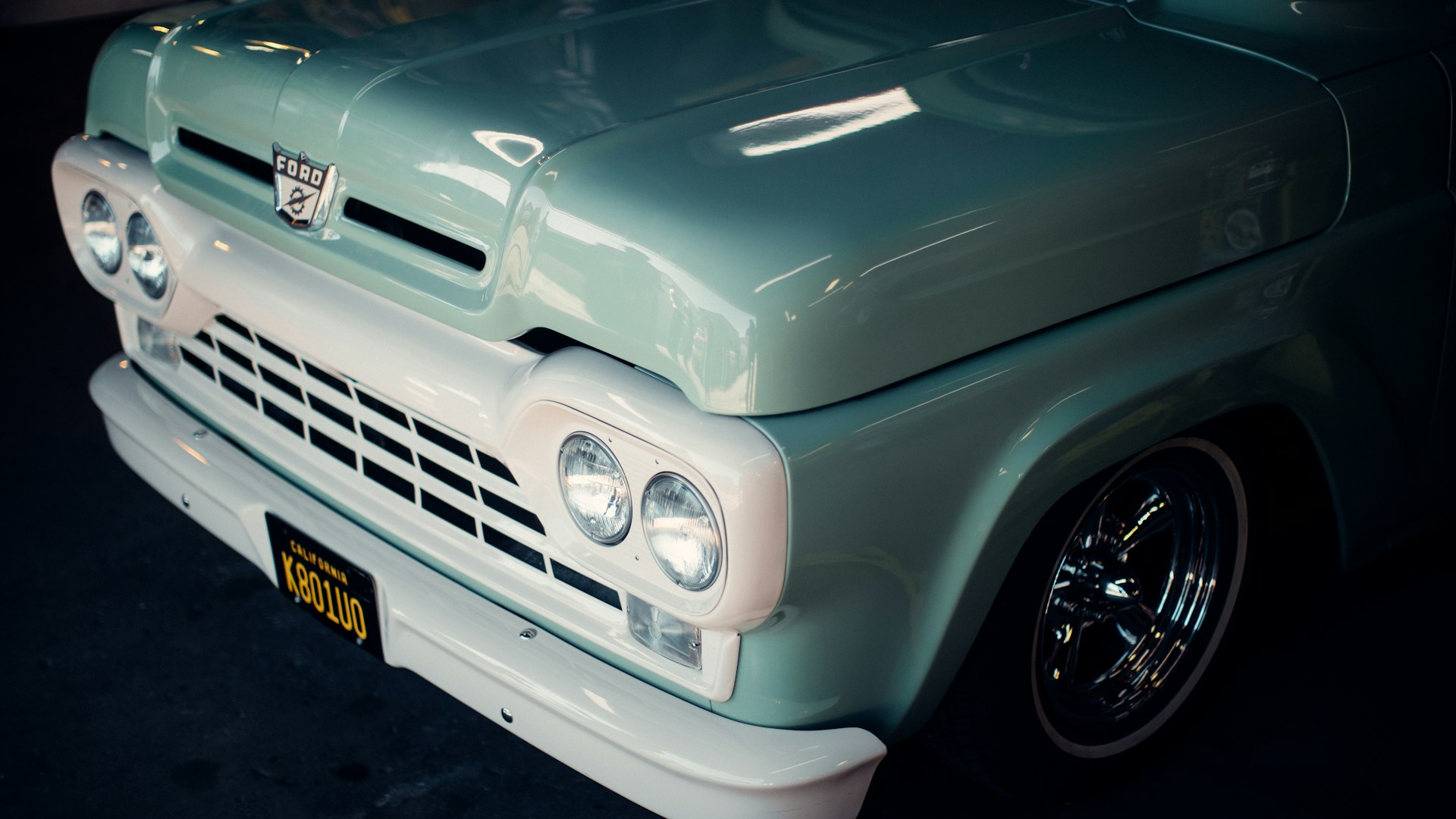
The build debuted as SEMA got underway in Las Vegas, where aftermarket companies roll out their heavy hitters to show off parts, skills and vision.
An Arizona Shop Put More Than 15,000 Hours Into One Pickup
Fat Fender Garage is based in Gilbert, Arizona. It specializes in aftermarket support for classic Ford and Chevrolet pickups, from off-the-shelf engine upgrades to custom chassis swaps.
The GT/FX is meant to show the breadth and depth of the shop’s full arsenal. The company says there are more than 15,000 hours of design, engineering and fabrication in this one truck. Hagerty’s reaction was a simple “Yeesh.”
To put 15,000 hours in perspective, a person working a standard 40-hour week would need more than seven years to log that much time. This was a team effort, but the number still shows how much labor went into a single pickup.
The truck is not alone at the show. The day before, Hagerty introduced two other vehicles from Ford Performance: a Mustang celebrating 125 years of Ford Racing, and a modest but lovely 1985 Ford F-250 built by an Oregon mechanical engineer. Against that backdrop, the writers said, the Fat Fender truck is decidedly more extreme.
Hagerty called it an absolutely nutty street truck, and said it is hard not to fall in love with an 800-horsepower F-100 that mixes classic Ford truck styling with startling modern performance.
A Whipple-Supercharged Coyote Makes A Claimed 800 Horsepower
The real showstopper is under the hood. It is a third-generation Ford 5.0-liter Coyote V-8 topped with a massive 3.0-liter Whipple supercharger.
Fat Fender says the engine produces 800 horsepower and 750 lb-ft of torque. It is paired with a Ford 10R80 10-speed automatic and drives the rear wheels.
The exhaust is a custom three-inch system with Borla XR-1 Raceline mufflers, JMD resonators and electric cutouts, so the driver can let the engine shout when the mood strikes.
“The Only Remaining Piece Of Bodywork From The Ford Factory Is The Grille”
That powertrain sits on a custom FF1 Performance coilover chassis, which the company says sharpens body control, stability and cornering.
The steel body was fabricated entirely by hand, which allowed for a lot of tweaks to give the truck a more menacing look. The hood and roof were both flattened, and the cab was sectioned by two inches. Front and rear fenders were widened to fit custom 20-inch HRE wheels.
The only piece of bodywork left from the Ford factory is the grille. In other words, the one part that says “Ford 1956” is the nose, and everything behind it is new.
Think about what it takes to hand-fabricate a steel body. Every panel has to be shaped, trimmed and fitted by someone who knows how metal behaves. Flattening a hood and roof and sectioning a cab by two inches is delicate work, because changing one line changes how every other line looks.
That kind of craftsmanship is a big part of why a one-off build costs so much time. It is also why shops like this exist: to do what a bolt-on kit simply cannot.
A Leather Cabin With Hidden Air Conditioning
Inside, Fat Fender built a fully bespoke interior with custom upholstered leather seats and a leather dashpad. A concealed HVAC system with a single one-piece custom vent provides at least a modicum of comfort.
Modern gauges and an upgraded audio system round things out. Hagerty says they almost make you think this thing could be a pleasant place to spend hours on end.
The company describes the truck as combining “classic F-Series styling with the presence and performance of the modern-era Ford GT.” Hagerty was not entirely convinced. To the writers, the performance side is more like the recently released Mustang Dark Horse SC, which they called “still a pretty pony to hitch to one’s wagon.”
What A Build Like This Tells Everyday Truck Fans
Most of us will never own a shop-built, 800-horsepower F-100. Still, builds like this are valuable because they show where the hobby is headed.
The classic pickup scene has grown for years, and the appeal is easy to see. Old trucks have simple, honest lines, and owners often want modern power, brakes and comfort underneath. A build like the GT/FX pushes that idea about as far as it can go.
- Know what is original. If you buy a classic truck, find out whether the body, frame and drivetrain are factory or modified. Value and insurance can depend on it.
- Start with the chassis. A modern suspension and brakes make an old truck far safer, even with modest power.
- Match power to the rest of the truck. More horsepower demands better brakes, tires and cooling.
- Keep records. If you modify a classic, save receipts and photos so the next owner can see the work.
- Shop for a good fit. A reputable builder will talk plainly about cost and time before work begins.
The GT/FX is a showpiece rather than a bargain, and it is meant to be admired. But it does make you wonder what your own old pickup could become with the right ideas.
Whether you prefer a stock restoration or a wild resto-mod, the best classic truck is the one that makes you grin every time you walk out to the driveway.
More Stories You May Like
- Ford Recalls 223,472 F150 Pickups Because The Fuel Tank May Not Be Secured Properly And Could Leak Fuel Or Detach With Free Dealer Inspections
- Only 66% Of Drivers Believe Their State Law Requires Action Near A Stopped Police Car, And Move Over Fines Run From $30 In Florida To $2,500 In Virginia
- Work Vans And Heavy Duty Pickups Trail Passenger Vehicles In Crash Prevention Tests, With The Chevrolet Express 2500 And GMC Savana 2500 Rated Poor For Having No Automatic Emergency Braking