

Muscle car prices rarely sit still for long, and the newest numbers from the collector-car world prove it. In its quarterly update, Hagerty reported that a Hemi-powered Dodge Charger got a whole lot pricier, while some of the best-loved names in the hobby slipped backward.
The details come from the October refresh of the Hagerty Price Guide, which the company published at the start of the month. The overall American Muscle Car Index held flat, but underneath that calm surface, plenty of individual cars moved. The changes below are averages for condition #2, the grade Hagerty uses for an excellent car.
The Hemi Charger Jumped 15% And Now Tops $189,000 In Top Shape
Dodge gave the Charger a sharp new look for 1968, and buyers loved it. The second-generation car came in base, R/T and 500 versions and rolled through pop culture as both the villain’s ride in Bullitt and the hero’s ride in The Dukes of Hazzard.
For several years, most versions of the 1968 to 1972 Charger have been flat or close to it. This quarter, though, the 426-cubic-inch, 425-horsepower Hemi leaped 15% after some huge summer sales. Excellent-condition values now run from $160,000 to $189,000, while the rest of the Charger lineup mostly sits in the mid-five-figure range.
That gap tells you something. A Hemi badge is not a small upgrade on the order sheet; to the market, it is practically a different car.
Early Mustang GTs Slid As Much As 8% Even Though Everybody Loves Them
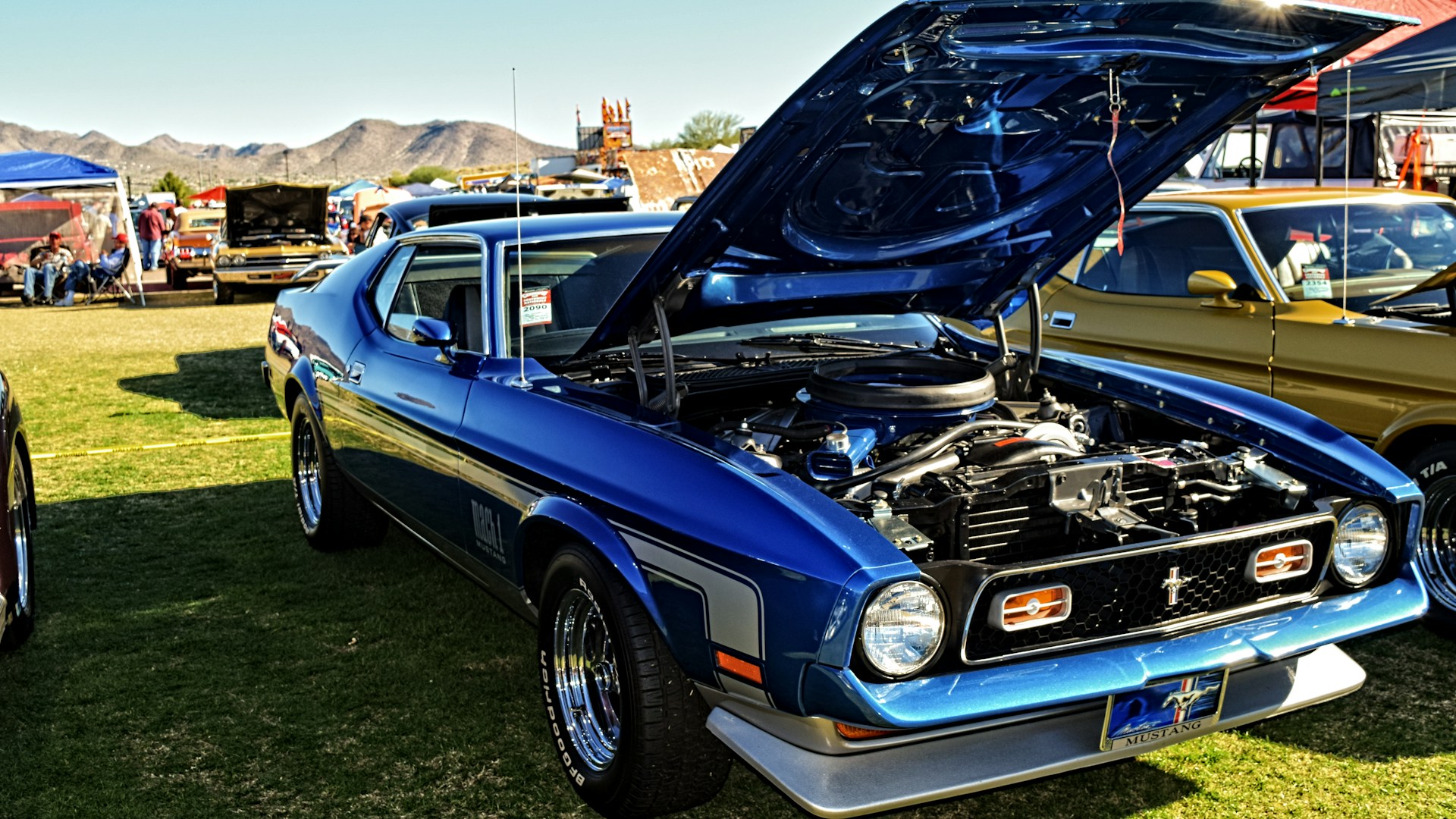
Here is the twist. The first-generation Mustangs, especially the 1965 to 1968 cars, are among the most popular classics in the country by almost any measure, from sales volume to insurance quote requests.
Even so, most early Mustang GTs lost value this quarter, with drops ranging from 2% to 8%. Excellent-condition prices now run from $20,300 to well into six figures, depending on the exact car. Hagerty called it a bit surprising to see such a hobby stalwart get cheaper while so much else climbs.
The company does not expect a severe long-term slide. Early Mustangs are popular enough, with appeal across so many age groups, that Hagerty describes this as a correction rather than a trend.
The Pontiac GTO Slid 4% And The Brand Behind It Is Long Gone
The GTO got its first big redesign for 1968, and Motor Trend named it Car of the Year. Buyers faced a dizzying menu that included 400 and 455 engines, four Ram Air packages, hardtops, convertibles, Judge trims and, in some years, more than 20 paint colors.
Prices for the 1968 to 1971 cars fell 4% nearly across the board. Excellent-condition values now start around the $40,000 range for lower-output coupes and climb to six figures for certain Judge convertibles.
The one exception was the rare Ram Air IV. Those cars live in a much higher price bracket, and with no reliable sales data this quarter, their values stayed flat.
Hagerty also pointed out something owners already feel in their bones. Unlike the Mustang, there is no GTO to tie today’s buyers to the past, and there is not even a Pontiac anymore. As the brand fades into history, the question is how much staying power the Goat will keep.
Buick’s Gran Sport And The Newer S197 Mustang Went The Other Way
Not everything went down. Buick’s Gran Sport, built from 1965 through 1972, was the company’s last truly sporty offering until the Grand National showed up a decade later. After several quarters of decreases, most 400 and 455 cars bounced back with a small but meaningful gain in October.
Values run from $27,700 for a 1972 GS 455 Sport Coupe up to $129,000 for a 1970 GS 455 Stage I convertible. The flashy GSX can still command six figures in excellent shape.
Then there is the 2000s retro Mustang, known as the S197. It was the last live-axle Mustang and the first to get the Coyote V-8, in 2011. S197 GTs have risen every quarter this year and are up 34% since January.
Even so, they remain one of the cheaper ways to enjoy a V-8 car built this century. Excellent-condition values run from the mid-$20,000s to the high $30,000s, and good-condition cars (condition #3) run from the mid-teens to the mid-$20,000s.
What To Take From The Numbers Before You Buy Or Sell
A price guide is a snapshot, not a promise. Here are a few practical ways to use this kind of report.
- Check the condition grade. A condition #2 number is for an excellent car, so a driver-quality car will bring less, and a rough one far less.
- Look at your exact model. As this report shows, one nameplate can rise while a cousin with a different engine or trim falls.
- Do not panic over a single quarter. A 4% dip on a $45,000 car is a few thousand dollars, and values can swing back.
- Paperwork matters. For any car with a famous engine option, build sheets and documentation are what separate a real Hemi from a clone.
If you are shopping, a softening market can be your opening. A first-generation Mustang GT or a 1968 to 1971 GTO is a little easier on the wallet than it was three months ago, and the buyer who does the homework often wins.
If you are sitting on a Hemi Charger, congratulations. Just remember that the sales behind that 15% jump were this summer’s, and the market will keep writing new chapters.
The figures above come from the Hagerty Price Guide update reported by Hagerty.
More Stories You May Like
- 10 Mistakes Drivers Make At The Gas Pump, Including Habits Safety Experts Say Can Spark Static Fires
- 7 Japanese Cars Whose Newer Builds Cannot Yet Be Imported To America Under The 25 Year Rule, And The Year Each One Becomes Eligible
- 10 Dealer Add Ons Consumer Reports And Other Experts Say Buyers Should Think Twice About, And How Each One Can Quietly Inflate The Final Price