


He showed up expecting the usual used-car dance: a handshake, a quick lap around the car, maybe a little negotiation over a scratch or two. The seller had the car parked in the driveway like it was on display, angled just right, hood down, keys already in hand. It was the kind of eagerness that can either mean “I’m motivated” or “I need this gone today.”
The buyer did what most careful people do—walked a slow circle, checked the tires, peered through the windows, tried the doors. The car looked clean for its age, like someone had recently taken a vacuum to it and wiped down the dash with that shiny interior spray. What stood out, though, was the pavement under the engine bay: dark and glossy, like someone had just spilled something and decided not to mention it.
The seller didn’t wait for questions. He kind of laughed and waved a hand at the wet spot, saying he’d just “freshened it up” and done an oil change, and that a little mess happened when he poured. Then he nudged the conversation forward—let’s drive it, you’ll see it runs great—before the buyer could kneel down and really look.
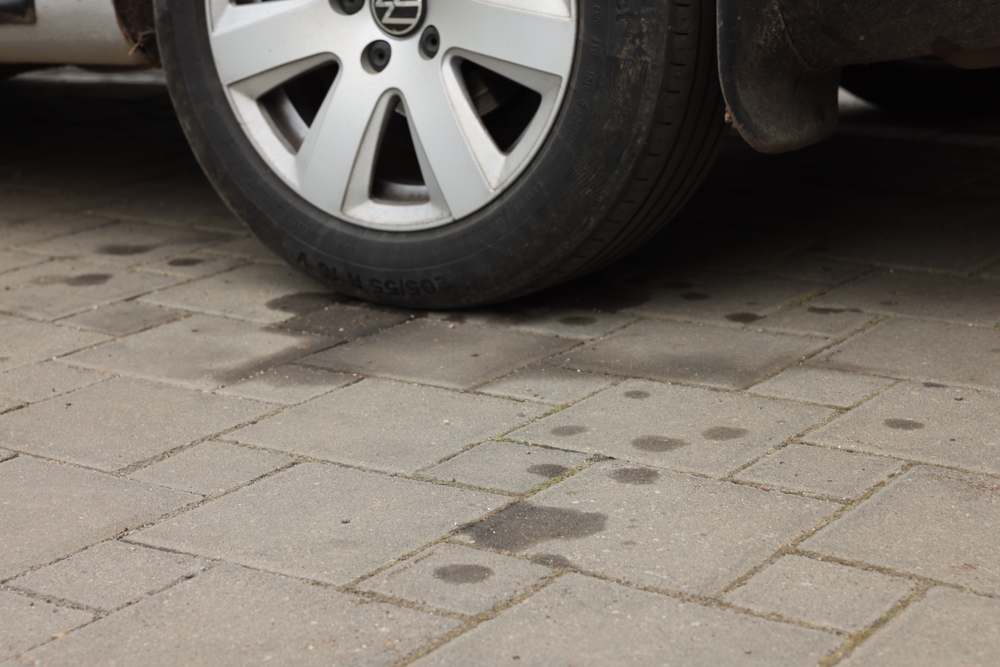
The driveway shine that didn’t feel right
In the moment, the buyer tried to be reasonable. People do spill oil during a change, especially if they’re working in a hurry or don’t have a proper funnel, and the seller had that casual confidence of someone who wanted the whole thing to feel normal. Still, the buyer’s brain kept snagging on how fresh it looked—like it hadn’t had time to collect dust or spread out naturally.
He asked if the car had ever leaked. The seller’s answer was too quick: “Nope, never had a problem.” Then he did that thing where he starts talking faster and louder, listing recent work like he was reading off a mental receipt—new brakes, newer tires, battery last winter, oil change today. It wasn’t outrageously suspicious on its own, but it had the vibe of someone trying to keep the conversation moving so nobody has time to think.
The buyer crouched anyway, more out of instinct than confidence, and what he saw didn’t settle him. The underside was damp around the front, but everything was so uniformly wet it was hard to tell where it was coming from. If anything, it looked like someone had sprayed oil across a wider area than a normal spill would reach.
The test drive that felt a little too curated
On the road, the car behaved. It started right away, idled without drama, and didn’t throw any immediate warning lights. The buyer listened for knocks and rattles, tested the brakes, and took it up to highway speed for a few minutes, waiting for the moment where the engine starts complaining.
The seller sat in the passenger seat, talking the entire time. Not in an overtly aggressive way, but in that constant-stream style that leaves no quiet moments for “Hey, can we pull over and check something?” He pointed out the smooth shifting, the cold A/C, the clean title, and he kept steering the route—literally and figuratively—toward the easiest roads close to his house.
When they got back, the buyer did another quick look under the car. The driveway was still shiny where it had been before, but he couldn’t tell if it was growing because it blended into the same slick patch. The seller was already talking numbers, leaning on the idea that “I’ve got another guy coming later,” and the buyer felt that familiar pressure: either walk or commit.
He committed. Cash changed hands, paperwork was signed, and the seller’s friendliness turned into that immediate post-sale lightness, like he’d just dropped a heavy bag at the door. The buyer drove off feeling cautious but not convinced he’d been played, telling himself he’d keep an eye on it.
The first night: the smell, the spot, the sinking feeling
It wasn’t even a full day before the first clue got loud. When the buyer parked at home and stepped out, he caught a hot, oily smell—faint at first, then stronger when he walked past the front end. He looked down and saw it: a fresh spot under the engine, darker than the driveway stain at the seller’s place and spreading in a way that didn’t look like a one-time accident.
He wiped a finger through it and felt that slick thickness that doesn’t belong on clean pavement. That’s when the “spilled during an oil change” story started collapsing. Spills don’t keep happening after the car’s been driven, parked, and cooled, and they definitely don’t repaint the ground beneath you overnight.
He checked the dipstick and felt his stomach tighten. The oil level was already lower than it should’ve been, and the oil itself looked fresh—like it had been replaced recently, exactly as the seller claimed. Fresh oil, low level, new puddle: it was lining up in the worst possible way.
The buyer did what people do when they don’t want to panic—he tried to rationalize. Maybe it was residual oil from the change that had pooled somewhere and finally dripped out. Maybe a filter wasn’t tightened. Easy fix, minor inconvenience. But the size of the spot made those explanations feel like wishful thinking.
The mechanic visit: “This isn’t a spill”
He took it to a local shop the next morning, the kind of place that doesn’t bother with fancy waiting-room coffee but will talk to you straight. The mechanic put it on a lift and didn’t even need long before his tone changed. He called the buyer under the raised car and pointed to the underside like he was showing him a magic trick gone wrong.
Oil was everywhere, not in a chaotic “oops” pattern but in a way that suggested it had been actively leaking while driving. The mechanic wiped along a seam, traced the wetness back, and then gestured toward an area that looked like it had been recently cleaned—or at least freshly coated. There was a difference between old grime and new slickness, and the new slickness was doing a great job hiding the old story.
The diagnosis wasn’t a simple loose filter. Depending on the exact car and engine, it was the kind of leak that lives in the expensive neighborhood: a rear main seal, an oil pan gasket, or something pressurized that was flinging oil farther back while the car moved. The mechanic explained it in plain terms: the engine was losing oil fast enough that the buyer could starve it without realizing, and then he’d be buying an engine instead of a gasket.
Then came the line that landed hardest: the mechanic said the oil coating underneath looked fresh enough that someone had either just spilled a lot and never cleaned it, or they’d intentionally masked the leak to get through a sale. He didn’t call it a scam outright, but he didn’t need to. The buyer heard it anyway.
The confrontation: polite denial with sharp edges
The buyer called the seller with the mechanic’s notes in front of him, trying to keep it calm. He explained the leak, the cost estimate, the risk of driving it, and he asked for a partial refund or to unwind the sale. He didn’t open with accusations, but the implication was there, hanging between them like smoke.
The seller’s response was a full pivot into innocence. He repeated the oil-change story and insisted the car “never leaked for him,” which immediately raised a different question: if it never leaked, why was the driveway already glossy before the test drive even started? When the buyer brought that up, the seller got prickly, saying he’d told him about the mess and that it wasn’t his problem now.
There was also the paperwork issue—depending on where they lived, a private sale might be “as-is,” which sellers love to throw around like it’s a shield against all responsibility. The buyer pushed back, arguing “as-is” doesn’t mean you get to hide a major defect and pretend it’s a harmless spill. The seller kept his voice controlled but edged it with irritation, like the buyer was being unreasonable for calling at all.
The conversation ended in that ugly middle ground where nobody feels satisfied. The seller refused to give money back, said the buyer should’ve had it inspected, and suggested he was trying to pull one over. The buyer hung up with the kind of anger that comes from realizing he’d been managed—kept talking to, rushed along, and nudged away from the one detail that mattered.
Now he was staring at a repair estimate that made the “good deal” feel like a joke. He could fix it and eat the cost, or he could try small-claims court and spend weeks organizing proof, hoping a judge cared about the difference between a spill and a cover-up. The most maddening part was how close he’d been to catching it—if he’d insisted on a pre-purchase inspection, if he’d asked to see it after a longer drive, if he’d trusted that first weird feeling about the shiny driveway instead of brushing it off.
And that’s where the tension sits: not with a clean resolution, but with the buyer stuck in that uniquely infuriating aftermath of a bad private sale. He’s got a car that technically runs, a leak that’s bleeding his wallet by the day, and a seller who’s already moved on like nothing happened. The oil under the car wasn’t just a mess—it was a prop, and realizing that after the fact is the part that keeps replaying in his head.
More from Steel Horse Rides: