
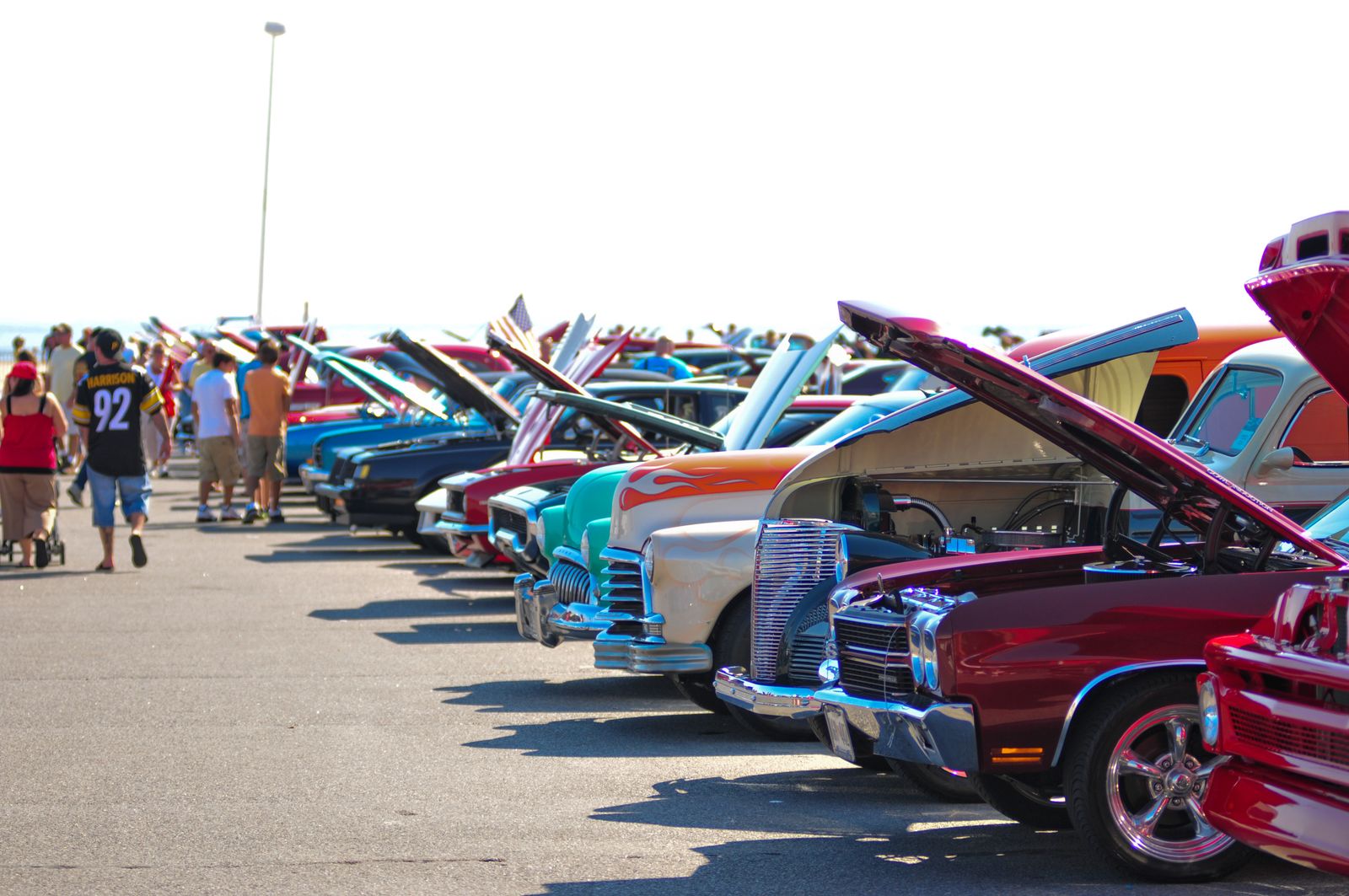

The meet was supposed to be an easy, low-stakes Saturday thing: coffee, a parking lot full of clean cars, and a few hours of people talking shop like they were solving world hunger with tire pressure and wax brands. He’d brought his pride and joy—one of those “nice but not insane” builds that still makes you check your reflection in the fender as you walk away. The kind of car you don’t park next to shopping carts if you can help it.
He wasn’t precious about it in a fragile, museum-piece way. He tracked it occasionally, he drove it, he didn’t freak out over a speck of dust. But the paint was fresh enough that it still had that deep, glassy look under direct sun, and he’d spent enough weekends polishing to know exactly what a random scratch looks like when it’s not supposed to be there.
The club had set up in a big lot behind a strip of restaurants, lines of cars angled in the usual “look how low I am” formation. People were milling around with iced coffees, kids were weaving between bumpers, and every five minutes someone would ask another person to rev it. It was friendly, social, and just chaotic enough that you had to keep half an eye on your own car even while you were talking.

The Photo Ops Started Like Normal
There was a guy from the club—someone he recognized but didn’t really know well—who’d clearly decided the meet was also a personal photo shoot. Not a photographer in the sense of “I’m getting rolling shots for the group,” more like “I’m going to pose next to anything shiny and post it like it’s mine.” He’d been bouncing from car to car, taking selfies, doing little videos with his arm stretched out and his voice doing that hype narration people do for their stories.
At first, it wasn’t a big deal. People pose next to cars all the time, and most owners are used to strangers taking pictures in public. The unspoken rule is just don’t touch, and if you really want to touch, you ask first.
The owner noticed him circling his car, doing the slow walk around it like he was appraising it. Then he saw the guy set his phone up and do that look-back grin at the camera, like, “check this out.” The owner was mid-conversation with someone else and figured he’d wander over if it got weird.
It got weird fast. The guy leaned in closer for a shot, then closer again, and before the owner could even process it, he saw the guy actually rest part of his weight against the car—hip and elbow—like it was a prop wall. Not a light hover. A full, casual lean.
The Sound That Changes the Mood
It wasn’t dramatic. It was just one of those tiny sounds you hear over everything else, because it’s the exact sound you didn’t want to hear: fabric dragging against paint. A zipper pull, a belt buckle, maybe even a button—something hard scraped across that glossy surface with a faint, gritty “tch” as the guy adjusted his pose.
The owner’s stomach dropped in real time. He didn’t yell, but the way he moved was quick and sharp, that “hey—hey, don’t do that” urgency you get when you’re trying not to escalate but also need someone to stop immediately. He walked over and said, as evenly as he could, “Man, please don’t lean on the car.”
The guy looked up like he’d been interrupted during something important. He didn’t apologize right away. He sort of blinked, checked his phone screen, and then gave the owner that half-laugh people do when they want you to feel like you’re overreacting.
“I’m just taking a picture,” the guy said, as if that explained the leaning. He stepped back, but not with the energy of someone who realized they’d crossed a line—more like he’d humorously complied with a weird request.
They Found the Damage Immediately
The owner didn’t even want to look, because looking makes it real. But of course he looked. In the sunlight, at the angle where the paint shows everything, there it was: a fresh, obvious scuff in the clear coat right where the guy had leaned and shifted.
It wasn’t a gouge down to primer, but it was the kind of mark you can’t unsee once you’ve seen it. A short streak, like a comma, and a couple of lighter trails next to it. Exactly the sort of thing that might buff out… or might not, depending on how deep whatever metal bit dragged across it.
He pointed it out, trying to keep his voice calm. “That’s new. You just did that.” He wasn’t calling the guy names. He wasn’t threatening him. He just stated the obvious and waited for the adult response: sorry, my bad, what can I do?
What he got instead was a shrug. Not an exaggerated shrug, just a casual one that landed like an insult because it carried the message: not my problem.
“Don’t Bring Nice Cars” Was the Line That Lit It Up
The guy tilted his head and said the sentence that turned the whole thing from awkward to confrontational: “If you’re worried about scratches, you shouldn’t bring nice cars out.” He said it like a proverb, like he was giving the owner a wisdom nugget, not like he’d just damaged someone’s property for a photo.
It hit extra hard because it wasn’t even logically consistent. The whole meet was literally people bringing their nice cars out to show them, take pictures, and talk about them. The entire culture is “look but don’t touch,” and this guy was acting like the owner had violated some rule by wanting his paint to remain intact.
The owner tried again, slower. “It’s not about being worried. You leaned on it. You scratched it.” He gestured at the scuff, then at the guy’s belt area, because it was obvious what happened. “That’s on you.”
The guy’s expression tightened, like he didn’t like being told “no” in public. He started talking louder, not shouting exactly, but projecting just enough that nearby people would hear and look over. “Dude, it’s a car. It’s gonna get scratches. If you can’t handle that, keep it in your garage.”
Now people were definitely watching. That’s the worst part of these meet arguments: there’s always that ring of half-interested onlookers pretending to check tire tread while listening. The owner could feel the pressure to either back down and look “chill,” or push it and become “the guy causing drama.”
The Club Vibe Shifted, and Nobody Wanted to Own It
A couple of members drifted closer, doing the peacemaker routine. One asked what happened, already wearing the face of someone who didn’t want the answer. The owner explained, pointed to the damage, and said he just wanted the guy to take responsibility—at minimum an apology, and realistically some help covering a professional polish if it needed one.
The guy kept playing it off. He didn’t deny leaning; he just minimized it. He made it sound like he’d brushed the car with air and the paint spontaneously combusted. He even did that thing where he compliments the car while insulting you, like, “It’s a clean build, but you’re acting like it’s a Ferrari.”
One of the club organizers—someone with a hoodie and a radio like he was security—finally stepped in and told the guy to cool it. The organizer didn’t exactly side with the owner out loud. He just said, “Don’t touch other people’s cars,” like he was reading a rule off a sign, and suggested they move on.
But “move on” is easy to say when it’s not your paint. The owner wasn’t satisfied, and the guy wasn’t embarrassed. The guy was annoyed, like he’d been inconvenienced by someone protecting their own property.
The owner asked for the guy’s info to handle the cost if it needed a correction. The guy laughed and said something about how the owner was being dramatic. Then he did the most infuriating part: he picked up his phone again, checked his camera roll, and started swiping through the shots like he was deciding which one to post.
That little action—acting like the pictures still belonged to him, like the car was still just a background—made the owner’s restraint wobble. He told the guy to delete the photos. The guy refused, saying they were taken in public and he could do what he wanted.
Aftermath: The Scratch Stayed, and So Did the Awkwardness
The owner ended up leaving early, not because he’d been “defeated,” but because the whole meet felt contaminated. Every time someone walked too close, he tensed. Every laugh from the group sounded like it might be about him, whether it was or not.
Later, he tried a quick detailer and microfiber just to see if it was superficial. It wasn’t. Under garage lighting it looked even worse, that telltale haze where the clear coat’s been disturbed. Not catastrophic, but enough that he’d either live with it, pay for paint correction, or chase it with his own tools and risk making it worse.
The club, meanwhile, did what groups like that often do: they got quiet. Nobody wanted to “take sides,” because sides come with obligations. The organizer messaged the owner something bland about “keeping the peace” and “sorry that happened,” but didn’t say the guy would be kicked out or made to pay.
The guy posted his photos anyway. In at least one, you could even see the owner’s car clearly, glowing in the sun like it was being showcased—while the owner knew there was a fresh scar right outside the frame. The most biting part wasn’t even the scratch; it was that smug little logic the guy left behind, the idea that if you care about what you built, you shouldn’t bring it around people who don’t respect it.
And that’s where it sat: a car still clean enough to turn heads, a mark still visible enough to ruin the owner’s mood every time he washed it, and a club that suddenly felt less like a community and more like a place where the loudest person gets to rewrite the rules. The owner didn’t stop going to meets entirely, but the next time someone drifted too close with a phone out, he caught himself stepping between them and the paint—because now he knew exactly how fast “just a picture” can turn into “why’d you bring something nice.”
More from Steel Horse Rides: