

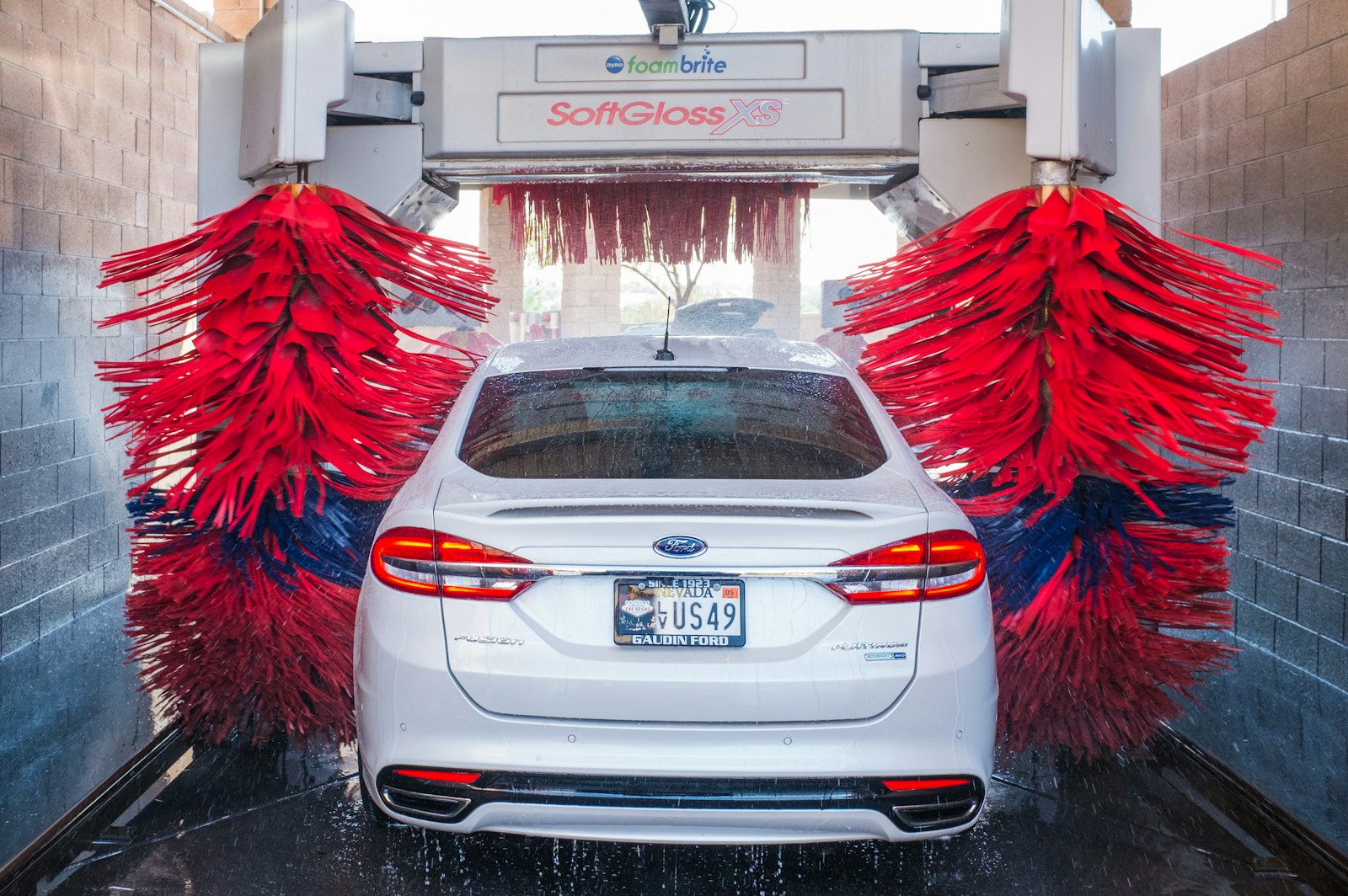
He picked the car wash because it was supposed to be the easy option: fifteen minutes, a receipt, and a clean car without thinking too hard about it. The kind of place wedged between a gas station and a strip mall, with bright signage promising “SPOT-FREE RINSE” and “FREE VACUUMS,” and a line of cars inching forward like everyone had the same idea after work.
The driver had done this a hundred times. He rolled his window down at the pay kiosk, chose a mid-tier wash, and got the green light to put the car in neutral. The attendant did the usual hand motions—straighten out, foot off the brake—and the conveyor grabbed his front tire with that clunky, undeniable tug.
He was already thinking about dinner when the first weird sound happened. Not the normal slap of foam and the hiss of jets, but a sharp little crack that made him sit up. The kind of noise that says “something just broke,” and that you’re about to find out what it was whether you want to or not.
The moment it stopped feeling routine
As the car moved into the first set of brushes, he heard another pop, louder this time, followed by a rhythmic tapping against the roof. It wasn’t subtle. It sounded like someone flicking a thick plastic rod over and over, fast and angry.
His eyes went straight to the rearview mirror, but the soap and spray turned everything into a blur. He craned his neck, trying to spot the back of the roof through the suds, and that’s when he remembered the antenna—one of those longer, older-style ones that sticks up and flexes. It had survived weather, parking garages, and the occasional lazy snow brush job.
The tapping got frantic as the spinning cloth strips slapped the roofline. He wanted to brake, to do something, but those tunnel signs are always yelling, in all caps, DO NOT BRAKE, DO NOT STEER, CAR IN NEUTRAL. So he did what everyone does: sat there, tense, listening to his car get handled by machinery he couldn’t control.
When he finally emerged into daylight, the conveyor spit him out like a toaster. The attendant waved him forward to the drying area, and he pulled into a spot, still hearing that crack in his head. He stepped out, walked around the car, and the first thing he saw was the antenna—except it wasn’t really an antenna anymore.
The damage, up close and undeniable
The mast was snapped clean off, leaving a jagged stub at the base. It wasn’t a “maybe it’s bent” situation. It was broken in the way that makes you automatically look on the ground for the missing piece, like it might be lying there and you can just put everything back the way it was.
Then he noticed the paint. Along the edge near the antenna mount—right where a brush would grab and whip something around—there were fresh-looking scratches. Not a tiny swirl mark you argue about under the right lighting, but thin, bright lines that caught the sun when he shifted his head.
He did the immediate sanity check everyone does in that moment. He ran his finger lightly over one of the scratches and felt the groove. He looked around for the snapped antenna piece and actually found it a few feet away near the exit lane, wet and stuck to the pavement like it had been flung there.
He went from annoyed to irritated to that specific kind of disbelief that makes you laugh once, humorless. This was supposed to be simple. He walked back toward the little office window and the attendant area, antenna piece in hand like evidence.
“It must have already been there”
The first employee he spoke to gave him the standard customer-service face: polite, blank, and slightly braced. The driver held up the snapped antenna and explained, as calmly as he could manage, that it had just happened in the wash. He pointed toward the roof and told him about the scratching.
The employee’s reaction wasn’t outrage or apology; it was caution. He said something along the lines of, “We don’t usually break antennas,” which is a statement that doesn’t help anyone. Then came the first version of the defense: the wash has signs about removing accessories, the wash isn’t responsible for pre-existing damage, and antennas are “kind of tricky.”
The driver stared at him because the antenna wasn’t an accessory he’d clipped on for fun. It was part of the car, and not the kind that pops off with a twist. He asked if the employee could at least look at the roof and tell him, with a straight face, that those scratches had been there before he entered.
That’s when the manager got involved, and the script got firmer. The manager looked at the roof for a few seconds, didn’t touch anything, and said the scratches “must have already been there.” He said it in that tone people use when they’re trying to close a conversation, like the matter is already settled and you’re just behind.
The awkward standoff in the parking lot
The driver pulled his phone out and started taking pictures from multiple angles, making sure to capture the snapped antenna base, the scratch lines, and the piece he’d found on the ground. He asked for the manager’s name and the company’s insurance information, which immediately changed the temperature of the interaction.
The manager’s body language tightened. He repeated that they can’t be responsible for “every little thing,” then pointed toward a sign listing disclaimers in small print. The driver didn’t even argue about the fine print—he just kept coming back to the same point: the antenna was intact when he entered, and it was snapped off when he exited.
Instead of meeting him halfway, they treated him like he was trying to scam them for a new paint job. The manager asked if the car was “older,” the way someone asks how long you’ve had a bruise when they’re implying you got it somewhere else. The driver said yes, it wasn’t brand new, but he knew what it looked like before he drove in.
Another employee wandered over, glanced at the roof, and shrugged in a way that felt almost insulting. It wasn’t a shrug that said “wow, that’s awful.” It was the shrug of “not my problem,” like he was being asked to mediate a dispute about a shopping cart scratch.
Receipts, cameras, and the line nobody wants to cross
The driver asked about security footage, because of course he did. There are cameras everywhere at these places—over the pay station, along the tunnel entrance, by the exit—mostly there to protect the business. The manager said the cameras “don’t really show that area,” which sounded suspiciously convenient.
When the driver pressed, the manager softened just enough to offer the classic stall: he could “file a claim,” someone from corporate would “review it,” and they’d “get back to him.” He handed the driver a form that looked like it was designed to absorb anger and produce silence, with boxes for date, time, and a short description that couldn’t possibly capture the actual fight happening in the parking lot.
The driver filled it out anyway, because what else do you do? He wrote down the time stamp from his receipt, took a photo of the disclaimer sign, and asked for a copy of the claim. That request seemed to annoy the manager the most, like it was a breach of etiquette for a customer to want proof that the complaint existed.
There was a moment—quiet, sharp—where the driver could’ve escalated into yelling, and you could tell both sides were aware of it. But he didn’t. He kept his voice controlled, just firm enough to be taken seriously, and that almost made it worse because the manager couldn’t dismiss him as “crazy.”
Before leaving, the driver looked back at the tunnel entrance where the brushes were still spinning and swallowing cars one by one. He imagined the same cloth strips slapping someone else’s roof, grabbing some other loose bit of trim, and the same conversation repeating itself later. The manager stood with his hands on his hips, watching the driver walk away like he was waiting for the problem to exit the property.
What stuck with the driver wasn’t even the snapped antenna—antennas can be replaced, paint can be corrected if you’re willing to spend the money. It was the nerve of being told, immediately and confidently, that what he could see with his own eyes “must have already been there.” He drove off with a wet antenna piece in his cupholder and the claim form on the passenger seat, knowing the next step was going to be more time, more arguing, and a long stretch of hoping someone, somewhere, would admit what everyone in that parking lot already understood.