
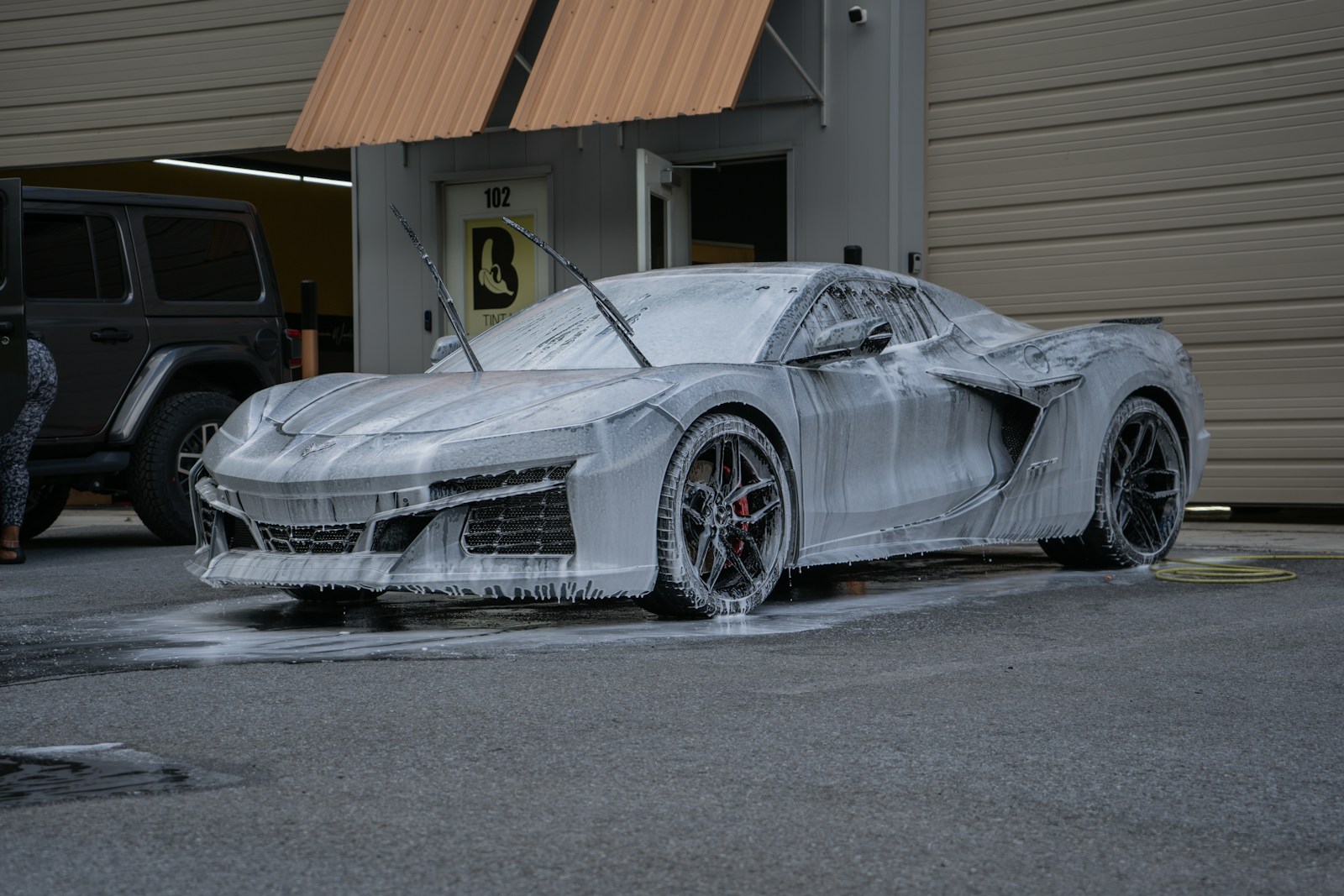

He didn’t roll up to the “luxury” car wash because he was bored or flush with cash. It was one of those weeks where everything already felt a half-step behind—pollen season, a long commute, and a dark-colored car that showed every speck of dust like it was spotlighted. So when he saw the place advertising “premium foam,” “paint-safe brushes,” and a concierge-style finish, it felt like the responsible splurge.
The parking lot looked the part: tidy concrete, bright signage, employees in matching shirts directing cars with little hand signals like they were on an aircraft carrier. He handed over the keys, pointed out a couple existing rock chips on the hood out of habit, and watched them tag the mirror with a number. The whole pitch of a luxury wash is that you can stop thinking about it—drop the car off, come back, and it’s better than you left it.
When he returned, the first thing he noticed wasn’t the shine. It was the way the paint looked… tired. Not dirty—wounded. Under the harsh overhead lights near the exit, the panels were covered in circular micro-scratches, those tight little halos that scream “bad wash technique,” except these weren’t subtle. It looked like someone had taken a Scotch-Brite pad to a car that was supposed to be babied.
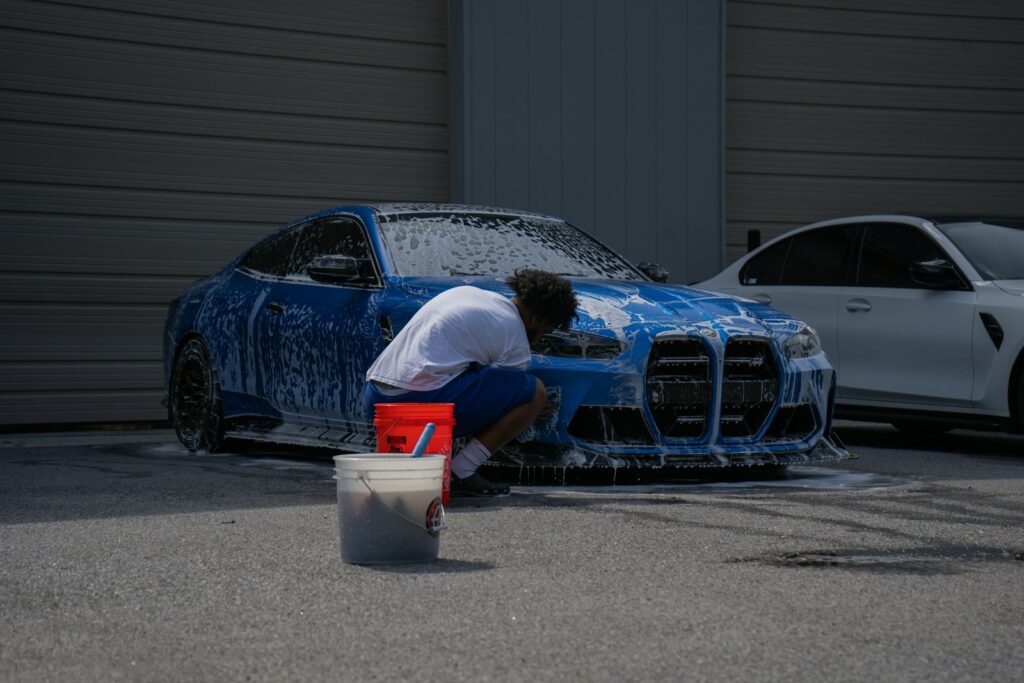
The “Are You Seeing This?” Moment
At first, he did what people do when something is too annoying to be true: he walked around it twice, hoping the light angle was playing tricks. He crouched near the front fender and held his phone flashlight against the paint. The swirls lit up like a map, and now he could see them everywhere—hood, doors, even the rear quarter panel.
He went back inside and tried to keep his voice even, the way you do when you’re asking for help and not trying to start a war. He told the person at the counter that the car wasn’t like that when he dropped it off. The employee gave the car a quick glance through the window and did that thing where they squint like they’re reading invisible text.
Someone called a manager, and the manager came over with the energy of a guy who’s already late for another problem. He walked out, ran his palm over the hood, then immediately stopped like he didn’t want his hand to be part of any evidence. He said something like, “Those are normal wash marks,” in a tone that suggested the conversation should end there.
The Slow Pivot From “We’ll Look Into It” to “Not Our Problem”
The driver didn’t take the bait. He pointed to a section of the hood where the scratches were so dense they made the paint look cloudy, like the clear coat had been sanded. He asked for a report, an incident form, anything that documented the condition right now, before anyone could claim it happened somewhere else.
The manager’s demeanor shifted from dismissive to procedural, like he’d found the script. He asked if the car was “ceramic coated” or had “soft paint,” which sounded less like troubleshooting and more like shopping for an excuse. When the driver said it was just factory paint and that he’d maintained it carefully, the manager nodded in a way that didn’t mean agreement—more like he was filing it under “customer thinks his car is special.”
Then came the first offer that wasn’t really an offer. The manager suggested the driver come back on a weekday when “the owner” was around, as if the laws of cause and effect only applied when upper management was present. The driver pushed back and asked why they couldn’t at least take pictures and open a claim now.
The manager finally agreed to take photos, but it was done half-heartedly: a couple quick snaps from standing height, in mediocre light, the kind that would never show fine scratches. The driver insisted on moving the car into direct light and filmed his own close-ups, narrating the date and time like he was making a low-budget documentary. That’s when the manager started getting tight around the mouth, because now there was a record that wasn’t under their control.
The Fine Print Comes Out Like a Shield
Inside, the manager pointed to a sign near the register that the driver had definitely not been reading when he walked in: a block of small text about “not responsible for pre-existing damage,” “no liability for surface imperfections,” and some line about “use at your own risk.” It wasn’t subtle. The entire wall of words basically boiled down to: if anything goes wrong, it’s your fault for trusting us.
The driver asked how that made sense when the damage clearly happened during the wash. The manager’s response was a slippery blend of denial and vagueness: they couldn’t prove it wasn’t already there, paint scratches can be hard to detect when the car is dirty, lighting changes everything. It was the kind of logic that makes you feel like you’re arguing about physics with someone holding a stapled policy sheet.
At one point, the driver asked a simple question: if their equipment is “paint safe,” why do they need a liability disclaimer that broad? The manager didn’t answer directly. He just tapped the sign again, like the sign itself was an employee with authority.
The driver didn’t explode, but you could tell he was moving into that cold, controlled frustration where every word gets sharper. He asked for the owner’s name, an email, a corporate contact—anything that wasn’t “come back later.” The manager gave him a generic customer service address and said the owner “doesn’t take calls about this stuff,” which is a wild statement to make about a business that claims to sell premium care.
Awkward Details That Made It Worse
The longer the conversation went on, the more little things came out that made the whole situation feel grimy. The driver noticed a stack of freshly laundered—or maybe not so freshly laundered—towels behind the counter, some of them folded, some of them looking suspiciously damp. He asked, casually at first, whether they used clean microfiber towels for each car or if they were reusing them throughout the day.
The manager’s answer was a non-answer: “We rotate them.” That was it. No explanation of how they prevented grit from one car turning into sandpaper for the next.
Then one employee, trying to be helpful or maybe just nervous, mentioned that the wash had been extra busy and they’d “run the tunnel” a little faster to keep the line moving. It wasn’t said like a confession, but it landed like one. The driver latched onto it immediately, because faster wash cycles and aggressive brushes are exactly how you turn a glossy finish into a scratched-up mess in five minutes.
The manager snapped at the employee to go back to work, which only made the scene feel more like damage control than customer service. The driver asked if the brushes had been inspected recently, if they’d had any incidents, if they kept maintenance logs. The manager told him, flatly, that they don’t share internal logs with customers.
What He Tried Next, and What They Tried to Avoid
With the fine print being waved around like a restraining order, the driver shifted to documentation mode. He took photos in different lighting, recorded a slow walk-around video, and asked for a copy of the receipt that showed the exact service purchased. He also asked for the manager’s full name—another request that got weirdly sticky, like it was optional information.
He then proposed something that sounded reasonable: have the car inspected by a reputable detailer or body shop, get a professional estimate, and let the wash either pay for paint correction or reimburse the cost. The manager didn’t agree or refuse outright. He just said they “can’t authorize anything” without the owner, and again suggested the driver return later, when the car would no longer look freshly damaged under their lights.
The driver asked them to put in writing that they were refusing to cover the damage. The manager wouldn’t do that either. He offered more verbal fog: “We’re not saying no,” “we just need to review,” “we have a process,” all while leaning harder on the disclaimer sign the moment the driver used the word “damage.”
In the end, the driver left with his car looking worse than when he arrived and a receipt that now felt like a punchline. He didn’t get a claim number, didn’t get a written statement, and didn’t get any clear path forward besides “email us.” The only thing he did get was the unmistakable sense that the business was counting on exhaustion—on him going home, cooling off, and deciding it wasn’t worth fighting over some “cosmetic” marks.
And that’s the part that sticks: not just the scratched paint, but the way the whole interaction seemed designed to make the damage feel debatable. The wash sold him the fantasy of careful, premium treatment, then tried to turn the aftermath into a philosophy question about lighting and “pre-existing imperfections.” He drove away staring at the hood at stoplights, seeing those circular scratches catching the sun, knowing the next conversation would probably be with a detailer who’d confirm what he already suspected—and with a car wash that would keep pointing at the fine print like it was stronger than reality.
More from Steel Horse Rides: