


He’d only planned to be mildly annoyed that afternoon. The kind of annoyance where you pay too much for a repair, mutter about it in the car, and then try to forget the number on the invoice. Instead, he popped his trunk to grab a work bag and found something that felt like a punchline written specifically for him: empty parts boxes, neatly folded, with big glossy branding and part numbers for the exact “premium” components he’d just been billed for.
The driver wasn’t new to cars, but he wasn’t the type rebuilding an engine on weekends either. He’d brought his sedan into a small independent shop after weeks of rattling, uneven braking, and a steering wheel that had started to shimmy whenever he hit 60. The mechanic had done the whole routine—walked him around the car, pointed at worn bits, sucked air through his teeth, and recommended a list of fixes that sounded expensive but plausible.
It wasn’t the price alone that made him suspicious. It was how quickly the shop had moved from “we’ll diagnose it” to “we already ordered the top-tier parts.” When he picked the car up, the invoice read like a catalog of quality: premium rotors, name-brand pads, upgraded suspension components, fresh hardware. The car did feel… different. Quieter. Tighter. But then those boxes in the trunk dragged him right back into the question he’d been trying not to ask: did he actually get what he paid for?
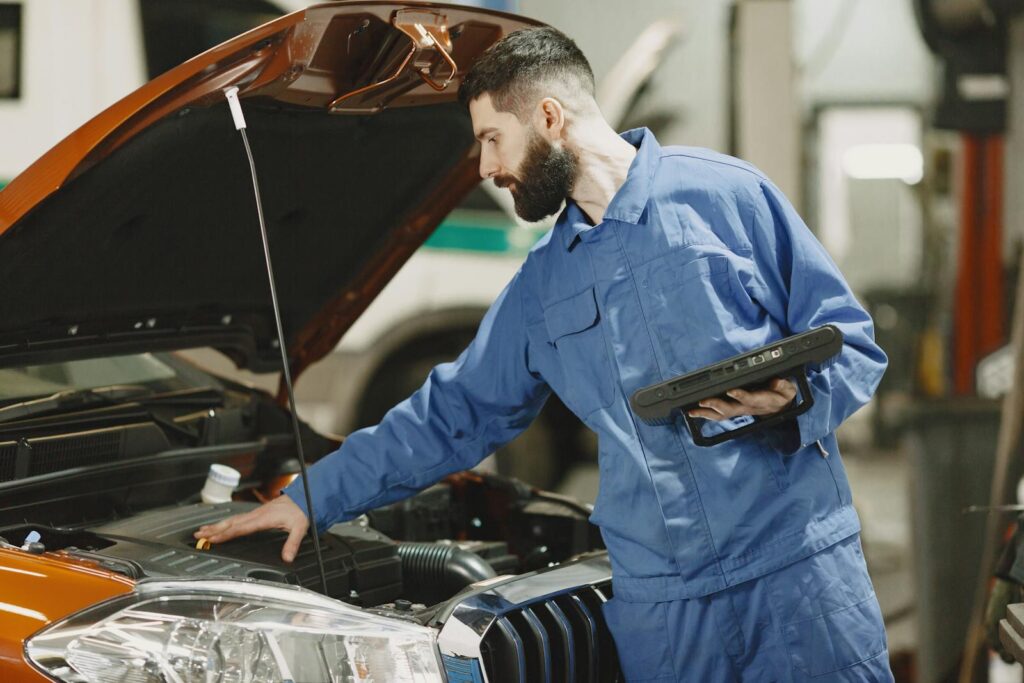
The Repair Pitch That Felt a Little Too Confident
According to him, the shop owner had been friendly in that practiced way some mechanics get, half buddy and half authority figure. He’d said he didn’t like installing “cheap stuff,” and that if the driver wanted it done right, they should go with premium parts. The driver remembered being pressured into agreement because the alternatives were framed like a choice between “safe and responsible” or “unsafe and broke.”
When the estimate came, it wasn’t just high—it was specific. Brand names, part lines, labor hours, shop supplies, the whole thing itemized like they wanted him to relax and think, See? Transparent. He signed off because the car was his daily driver and he didn’t want to play games with brakes and steering.
The pickup was almost too smooth. They called earlier than expected, said everything went great, and the car was ready. The driver paid, got his keys, and left with that tiny sting of financial regret but also a little relief that his car felt normal again.
The Trunk Surprise: Boxes That Told a Different Story
Later that day, he opened the trunk and saw the boxes like they’d been staged. Not tossed in a corner with greasy rags—placed. A premium brake pad box, a rotor box, and a couple of smaller boxes for hardware and bushings, all empty, all looking like they’d been flattened and tucked to take up minimal space.
At first, he thought it was a courtesy thing. Some shops toss the old parts in the trunk so you can see what got replaced; maybe the boxes were just leftover packaging. Then he noticed there weren’t any old parts. No worn rotors, no crusty pads, no bent brackets—just empty packaging for the shiny, expensive items he’d just paid for.
That was the moment his brain started doing math. If they’d installed the premium stuff, why were the boxes in his trunk at all? And if the boxes were in the trunk, where were the actual parts that came out?
He Looks Under the Car, and the Story Gets Worse
He didn’t have a lift, but he had a flashlight, a jack, and enough stubbornness to start checking what he could see. The brake hardware looked… off. Not “brand new, clean metal” off, but more like “been sitting in a yard” off. There was a layer of dust in places that didn’t match the idea of fresh parts installed that morning.
Then he noticed one rotor had a faint stamp that didn’t match the premium brand listed on the invoice. Not a logo you’d find on a new part, more like a generic marking. The pad backing plates looked scuffed. The bolts didn’t look like the fresh hardware he’d supposedly paid for either—they looked reused, with worn edges like someone had hit them with an impact gun a few too many times.
He took photos, partly to reassure himself he wasn’t being paranoid and partly because he could feel anger arriving. The boxes in the trunk turned from “weird oversight” into a breadcrumb trail. If the shop had bought those premium parts, where were they? If they hadn’t, why were the boxes there?
His suspicion shifted into a specific theory: the mechanic charged for premium new parts, installed used junkyard replacements, and accidentally left the empty premium packaging in the trunk like a magician forgetting the hidden compartment. Either the premium parts were returned for a refund or never purchased at all.
The Confrontation: Polite Questions Turn Into Defensive Answers
He went back the next morning with the boxes in the trunk, the invoice on the passenger seat, and his phone full of close-up pictures. He didn’t start with accusations. He started with the kind of careful question that gives someone an easy exit: “Hey, are these my boxes? And do you have the old parts you took off?”
The mechanic’s face, according to him, changed fast. Not outright panic, but that tight irritation of someone who feels caught and wants to regain control. The mechanic said the boxes were “just trash” and that they sometimes toss packaging in the trunk to keep the shop clean. The old parts, he claimed, had already been disposed of.
The driver pointed out that most shops, if they’re trying to show transparency, will bag the old parts or at least ask if you want them. He asked why the boxes for expensive parts were in his trunk but none of the old parts were. The mechanic shrugged and told him he was overthinking it.
That’s when the driver stopped playing nice and started getting specific. He asked why the markings on the rotor didn’t match the brand listed, why the hardware looked reused, and why some components looked oxidized. The mechanic’s answers turned into a fog of explanations: supply chain substitutions, parts coming from different distributors, “same manufacturer different stamping,” and the classic, “That’s just how it looks after it heats up.”
Then came the part that made it feel personal. The mechanic suggested the driver was trying to scam them, fishing for a refund after the work was done. It flipped the whole vibe in seconds—suddenly the customer wasn’t a guy with questions, he was a problem client.
Trying to Prove It Without Going Full War Mode
The driver didn’t want a screaming match in a garage bay. He wanted proof that would hold up if he took it further. He asked for receipts showing the parts purchase, or at least the part numbers off the installed components to match what he paid for. The mechanic got stuck on the idea that shops don’t “owe” customers their wholesale documentation.
So the driver did the next best thing: he asked for the car to be put on a lift so he could see the parts clearly, right there, with the mechanic present. That request landed like an insult. The mechanic claimed it was a liability issue and that customers weren’t allowed in the bay.
At this point, the driver’s calm sounded less like patience and more like restraint. He said he’d pay another shop to inspect it and document what was installed, and if it didn’t match the invoice, he’d be back. The mechanic told him to “do whatever you want,” which is never the tone of someone confident they did everything by the book.
He left without a refund, without old parts, and with the empty boxes still in the trunk like evidence someone forgot to destroy. The car drove fine, which made it extra infuriating—because the whole point of charging premium prices is that you’re buying peace of mind, not just “good enough to get home.”
By the time he got back in the driver’s seat, the issue wasn’t even the money anymore. It was the feeling of being played while being smiled at, and then being treated like the criminal for noticing the strings. He hadn’t decided whether he’d go through small claims, a credit card dispute, or just eat the cost and blast the shop with reviews—but he couldn’t shake the same thought: if they were so sure everything was legit, why did the only physical “proof” they left him happen to be empty premium boxes sitting in his trunk?
More from Steel Horse Rides: