
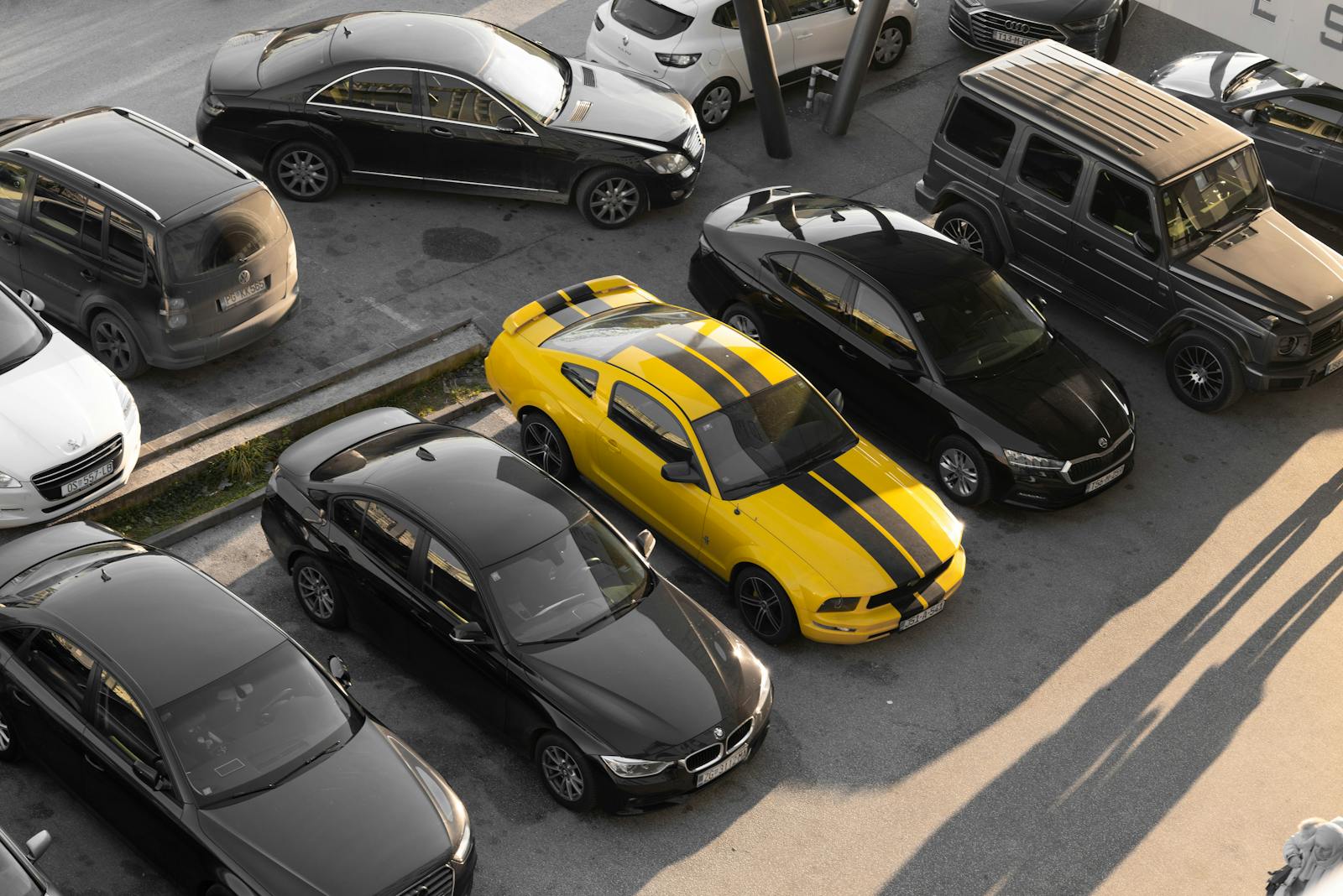

She was doing the boring, normal errand kind of day where nothing dramatic is supposed to happen. Park, grab the one thing you came for, maybe scroll your phone for a second before getting out. The parking lot was half-full, the kind with narrow lanes and people cutting behind cars like they’ve got nine lives.
She’d just backed out enough to angle toward the exit when she felt it: that unmistakable thud-and-scrape that doesn’t belong to a shopping cart. Not loud enough to sound like a major crash, but sharp enough that her stomach dropped instantly. She hit the brakes and sat there for a beat, hands locked on the wheel, already running through the mental checklist of “Please tell me that was not what I think it was.”
Before she even got her door open, a woman appeared at her driver’s side window like she’d been launched from somewhere between the rows. Mid-30s, hair pulled up messily, eyes already wet. She was waving her hands in that frantic way people do when they’re trying to control the narrative before you’ve said a single word.

The first version: instant tears and a rehearsed apology
The stranger started talking fast—too fast—like speed could outrun consequences. She was sorry, she didn’t see her, she wasn’t paying attention, she “just bumped” her. Then she looked over her shoulder at her own car and made a small helpless sound, like she couldn’t bear to look at the damage.
The driver got out and walked around to the back corner of her vehicle, where the impact had been. There was a fresh smear of paint and a shallow dent that hadn’t been there that morning, right on the bumper near the tail light. It was the kind of damage that’s not catastrophic but absolutely annoying, because it’s expensive enough to matter and small enough that people will try to talk you out of doing anything about it.
The stranger kept hovering close, crying harder now, her voice wobbling as she begged. Please don’t call the police. Please, she has kids. Please, she can pay cash. She said it like a script she’d used before, like the words were supposed to flick a switch where the other person suddenly becomes the villain for wanting an official record.
And the driver—who had started out calm—felt that familiar irritation bubbling up. Not because the woman was upset; because she was trying to steer the whole situation away from accountability before anyone had even exchanged names. The driver told her, evenly, that she needed insurance information and that she was documenting everything.
The paper-thin deal: “I’ll pay you, just don’t involve anyone”
The stranger nodded too fast, like agreement itself was a shield. She offered to Venmo. She offered to follow the driver to an ATM. She offered numbers—first a couple hundred, then “whatever it costs”—but nothing concrete, nothing that actually sounded like she’d ever follow through once everyone drove away.
The driver took out her phone and started taking pictures: her bumper, the other car’s front corner, the angle of the parking spaces, the license plate. The stranger flinched at every click, hovering her hand near the camera like she wanted to stop it but didn’t dare. When the driver asked for her insurance card, the stranger said it was “somewhere” and started rummaging in her glove box with theatrical panic.
That’s when the driver noticed something else: the way the other car was positioned. It wasn’t pulled cleanly into a space. It was angled out slightly, like it had been creeping forward when it made contact. The marks on the bumper weren’t from a clean back-out collision; they were low and lateral, the kind of scrape you get when someone turns too tight and kisses the corner of a parked car.
Still, the driver wasn’t trying to play detective in the middle of a parking lot. She just wanted the basics—info exchanged, damage documented, everyone moves on. She told the stranger she was calling the police for an incident report anyway, because that’s what her insurance company would ask for.
The switch flip: apologies disappear, blame appears
The stranger’s crying stopped almost instantly, like someone hit pause. Her shoulders squared. Her voice dropped into a steadier, colder register, and she said something that didn’t match the last five minutes at all: “Why would you call the police when you’re the one who hit me?”
The driver blinked, genuinely caught off guard. It wasn’t even a clever pivot—it was a full rewrite of reality, delivered with the confidence of someone betting that confusion would buy them time. The stranger pointed at the scrape on the driver’s bumper like it proved her case, as if the existence of damage automatically meant the person standing closest to it must be responsible.
The driver reminded her—out loud, calmly—that she’d just apologized and admitted she bumped her. The stranger shrugged and said she “never said that,” then started talking over her, louder now. She insisted the driver had backed into her car, and she said it with the kind of indignation that makes strangers in nearby rows glance over, trying to decide if they’re about to witness a full parking lot meltdown.
It got awkward fast. The driver felt her face go hot—not with guilt, but with the sheer audacity of the attempt. A minute ago this woman was begging and promising cash; now she was performing outrage, like volume could replace facts.
The parking lot theater: stalling, distractions, and a sudden urgency to leave
The driver went back to her phone and started recording video, narrating softly: time, location, both cars, the other driver’s plate. The stranger’s eyes darted to the phone, and for a second there was this tiny tell—panic cracking through the anger. She stepped closer and demanded the driver stop filming, then pivoted again and claimed filming was “illegal,” which isn’t how any of this works.
Then came the next tactic: urgency. The stranger said she had to pick up her kids, she couldn’t wait, this was going to “ruin her day,” could they just “be adults” and handle it privately. She kept repeating that phrase—be adults—like the adult thing was letting her leave without a report.
The driver asked again for insurance information. The stranger finally produced a card, but she held it in a way that made it hard to photograph, fingers covering key parts, shifting it away when the camera tried to focus. When the driver asked for a driver’s license, the stranger claimed she didn’t have it on her. When the driver asked for a phone number, the stranger offered to type it into the driver’s phone herself, which the driver immediately refused.
At some point, the stranger started inspecting her own car more dramatically, pointing out scuffs like they were fatal injuries. She gestured at her bumper and said, “Look what you did,” as if the previous crying confession had never happened. The driver kept her voice steady, but inside she was doing that fast mental math of how often this exact play ends with the at-fault person disappearing.
The call that changed the temperature
When the driver actually dialed the non-emergency line, the stranger’s whole body shifted again. She backed up a step, hands up, and said, “Wow, okay,” with a bitter laugh that didn’t match anything. She started pacing, muttering, calling the driver dramatic, calling her petty, calling her “the type” who “ruins people over nothing.”
The driver didn’t argue back, which somehow made it worse. She just kept recording and waiting, answering the dispatcher’s questions: location, vehicle descriptions, whether anyone was injured. Hearing it said out loud—no injuries, parking lot incident—made the whole scene feel even more ridiculous, like they were acting out a courtroom drama over a dented bumper.
The stranger tried one last time to regain control. She leaned in and said, quieter, “You don’t want to do this,” in a tone that was half warning, half plea. Then she snapped right back into her louder voice and announced that the driver was lying and she’d “tell the officer everything,” like truth was something you could decide to possess by declaring it first.
By the time they were waiting, the driver had that unpleasant clarity that nothing about this was going to be simple. Even if the damage was minor, the stranger had already shown she’d say anything to dodge responsibility. And the driver had the creeping sense that if she hadn’t started taking photos immediately—if she’d believed the tears and agreed to cash—she’d be the one left staring at a dent and an unanswered phone number.
The most unsettling part wasn’t the dent. It was how quickly the stranger’s emotions turned into tools: tears when she needed sympathy, panic when she needed the driver to hesitate, anger when she needed to intimidate, and then that brazen rewrite where she tried to swap roles entirely. The driver stood there in the fluorescent afternoon light, phone still in her hand, waiting for an officer to show up and tell her which version of reality would make it onto paper—because she’d learned, in about ten minutes, that the scariest collisions aren’t always the loud ones.
More from Steel Horse Rides: