


He’d been without his truck for nine days, which doesn’t sound that dramatic until you learn he needed it for work, his kid’s baseball gear lived in the back seat, and the loaner the dealer gave him smelled like someone had been living on gas station taquitos. Every afternoon he’d call the service desk, do the whole polite “just checking in” routine, and get some version of, “Yep, we’re wrapping it up.”
So when the service advisor finally said, “You’re good to go, it’s ready,” he didn’t even hesitate. He left early, drove across town, and walked into the dealership with that cautious optimism you only get when you’re about to stop spending money on rideshares and favors from coworkers. They had his keys on a lanyard, a printed invoice, and that breezy tone that says, See? We told you we’d take care of it.
He should’ve been suspicious right then, because the invoice was weirdly clean. Not cheap, exactly, but it had that vague “performed diagnostic / completed repair” language that never feels like it matches the amount you’re about to hand over. Still, he signed, paid, and told himself he’d do a quick loop around the block before heading home, just to make sure everything felt right.
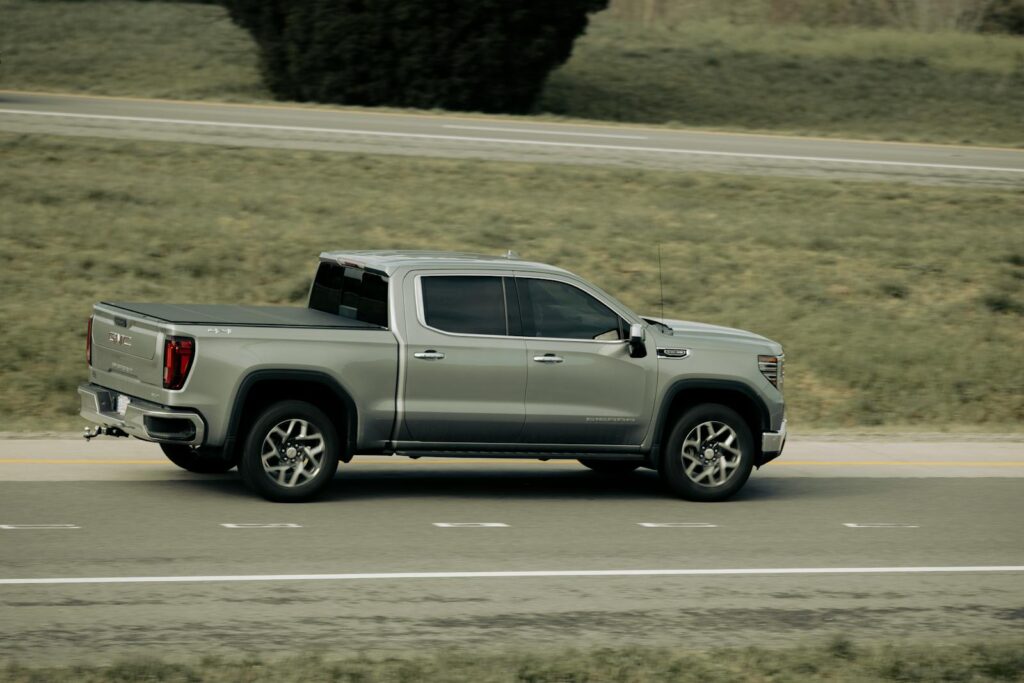
The “All Set” Hand-Off
The truck itself looked the same as always: a little dusty, a little tired, the kind of vehicle that’s earned its scratches. The service advisor walked him out with the practiced small talk—busy week, weather’s finally breaking, “she’s running great now.” He asked, one more time, if they’d addressed the main issues he’d originally brought it in for: the intermittent misfire, the traction control light that popped on randomly, and the grinding noise when turning left at low speed.
The advisor nodded fast, like it was a checkbox being ticked in his head. “Yep, we took care of it. You shouldn’t see that anymore,” he said, and then did the thing where he angled his body away, already moving the conversation toward goodbye. The man stood there for half a beat, waiting for a little more detail—what was replaced, what was adjusted, what was actually wrong—and got nothing but a smile and a “Let us know if you need anything.”
He climbed in and immediately noticed the first crack in the story: the dashboard lights did that usual startup glow…and then the traction control light stayed on. Not flickered. Not a momentary hiccup. Just on, steady, like it had been waiting to make a point.
He Didn’t Even Make It to the Street
At first he tried to talk himself out of it. Maybe it needed a reset. Maybe they’d disconnected the battery and the system just needed to re-learn something. He put it in drive and rolled forward, and that’s when the steering wheel gave that familiar gritty resistance on the left turn out of the parking spot—the exact grinding sensation he’d described, the one that sounded like sand in a blender.
He didn’t even make it to the main road. He looped around the dealership lot in that slow, embarrassed circle you do when you’re testing a car but don’t want to look like you’re testing a car. The misfire didn’t wait long either; at the first gentle acceleration, the engine hesitated and stuttered in the same annoying rhythm he’d been chasing for weeks.
He pulled back into the service lane with his blinker on like this was a normal, routine part of the pickup process. The advisor looked up from his computer and did that split-second face people make when they see a problem returning too quickly: surprise mixed with annoyance mixed with “please don’t make this my day.”
The Awkward Counter Conversation
He started calm. “Hey, I just picked it up. The traction control light is still on, and it’s still grinding on left turns,” he said, keeping his voice level like he was reporting a weather update. He mentioned the misfire too, and he was careful to frame it as an observation, not an accusation, because he knew how quickly these conversations can turn into a power struggle.
The advisor didn’t argue the symptoms. Instead, he reached for the paperwork and started scanning it like the truth would be hiding in the fine print. “We addressed the concerns,” he said, and then pivoted: “Sometimes after repairs, lights can stay on until the system cycles.” The man pointed out that the grinding noise is not a computer system cycling; it’s a mechanical sound coming from the front end when the wheel turns left.
That’s when the advisor hit him with the subtle reframe. “Well, your original concern was the check engine light,” he said, even though the man was pretty sure he’d been explicit about all three issues. He remembered because he’d said them out loud twice on the phone, and once in person, and had watched the advisor type them into the intake form while nodding along.
They pulled up the work order on the screen, and there it was in black and white—except it wasn’t. The description was boiled down to a general “customer states multiple warning lights / drivability concern,” with no mention of the grinding turn noise. The man felt that lurch in his stomach, the one you get when you realize a conversation that seemed clear in the moment has been translated into vague dealership language that gives them room to wiggle.
“We Can Take Another Look”—But Not Like That
He asked the obvious question: if the problems were still present, what exactly had they “fixed”? The advisor slid into the defensive tone customers can hear from a mile away. They’d replaced a sensor, supposedly. They’d cleared codes. They’d done a test drive. He asked how long the test drive was, and the advisor said something like “around the lot” or “a short drive,” which was not reassuring given the issues showed up within sixty seconds of leaving the service lane.
Then came the part that really set him off: the advisor suggested they could schedule him for another diagnostic appointment. Not “we’ll take it right back in.” Not “let’s get a tech out here and ride with you.” A new appointment, days out, like he hadn’t just paid them to return the truck in working order.
He pointed out that he’d literally just picked it up, and he hadn’t even made it to the street. The advisor’s posture got tighter, and he started using the kind of customer-service phrasing that sounds polite but feels like a wall. “I understand your frustration,” he said, while also implying the issues could be “unrelated” or “new,” as if a grinding front end and a persistent warning light had magically appeared in the last five minutes.
The man asked to speak to the service manager, and that’s when the whole counter dynamic shifted. The advisor’s voice got a shade cooler, like the conversation had moved from “we’re helping you” to “we’re managing you.” He disappeared into the back, leaving the man standing there with his keys in hand, staring at the little display rack of wiper blades and air fresheners like he was trapped in a retail purgatory.
The Part Where It Gets Personal
The service manager came out with the practiced calm of someone who’s handled a thousand situations that start the same way. He listened, nodded, and asked a few questions that were almost too reasonable—when did it happen, how often, what speed, what conditions. The man answered, and kept circling back to the same core point: he was told the truck was ready, he paid, and it clearly wasn’t.
The manager offered to have a technician ride with him right then, which felt like the first real concession. But even that came with a sting: he couldn’t guarantee it would be looked at today, and if they couldn’t replicate the issue, they might need to “start with another diagnostic.” The man heard that as, Pay again for the same problem you already paid for.
He didn’t explode, but he did get sharper. He mentioned that the light was currently on, which seemed pretty replicable. He suggested they walk out to the truck together so he could show the grinding noise on a left turn, right there in the lot, at five miles per hour. The manager hesitated, not because it was unreasonable, but because it would make the problem undeniable in front of everyone.
They went outside. The man drove a tight left circle, and the grinding noise showed up immediately, loud enough that even the manager’s face did that involuntary “oh” twitch. For a second, it felt like the air cleared—like now that the problem was audible, the conversation could stop being theoretical.
But then the manager went right back to the dealership script: they’d need to inspect it, they’d need time, and they couldn’t promise a same-day turnaround. The man asked what he was supposed to do in the meantime. The manager offered a shuttle ride and a “we’ll see what we can do” about a loaner, which is dealership-speak for “maybe, if you’re lucky.”
By then, the man wasn’t just mad about the truck. He was mad about the feeling of being managed—of being told “ready” because it was convenient, of watching his specific complaints get watered down into a vague work order, of being positioned like he was exaggerating something that was happening in real time. He left the keys on the counter and told them to keep it, because driving it home like this felt insane.
And the thing that stuck with him afterward wasn’t even the money, though that part stung. It was the weird, lingering uncertainty: if they were willing to hand the truck back with obvious issues still present, what else had they decided was “good enough” just to close the ticket. He went in expecting a fixed vehicle, and walked out with the same problems and a new one layered on top—trying to figure out whether the dealership was incompetent, careless, or just betting he wouldn’t push back hard enough to make it their problem again.
More from Steel Horse Rides: