
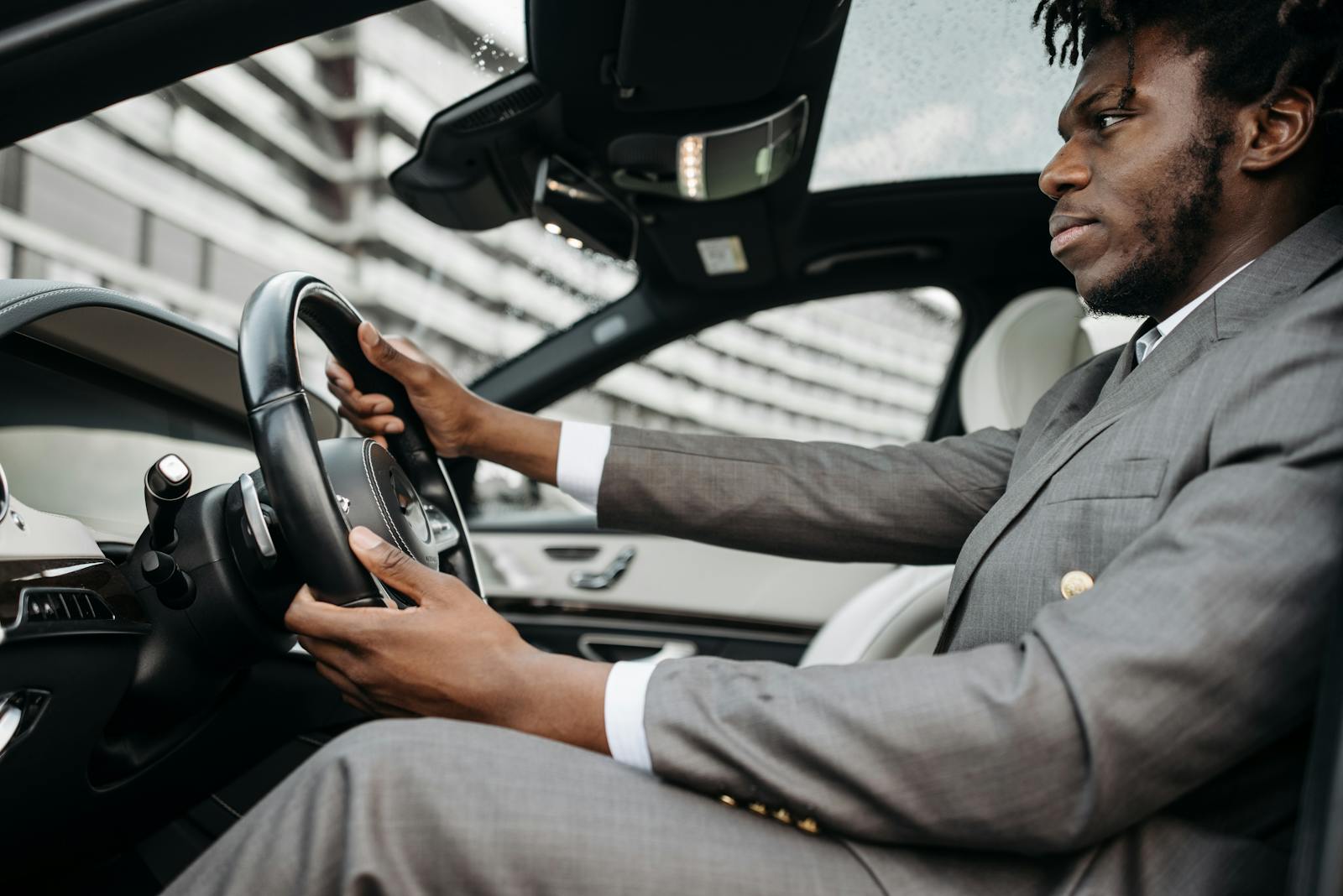

He thought it was going to be one of those boring, grown-up errands: drop the car off, sign a couple things, sip bad coffee in a waiting area, and leave with an oil change receipt he’d immediately lose. The dealership had been nudging him with reminders about a service interval, so he finally caved and booked a morning appointment.
He arrived on time, handed over the keys, and did the little handoff dance everyone does at service counters—confirm the mileage, circle a few boxes, listen to a guy in a branded polo suggest a couple “recommended” add-ons. Nothing felt off. If anything, it felt too normal: polite smiles, a clipboard, and the quiet hum of cars being shuffled around out back.
Then his phone buzzed about an hour later with a notification from his car’s app. Not a maintenance update. Not a “service in progress.” A location ping that made him squint: his car wasn’t sitting at the dealership anymore. It was moving.
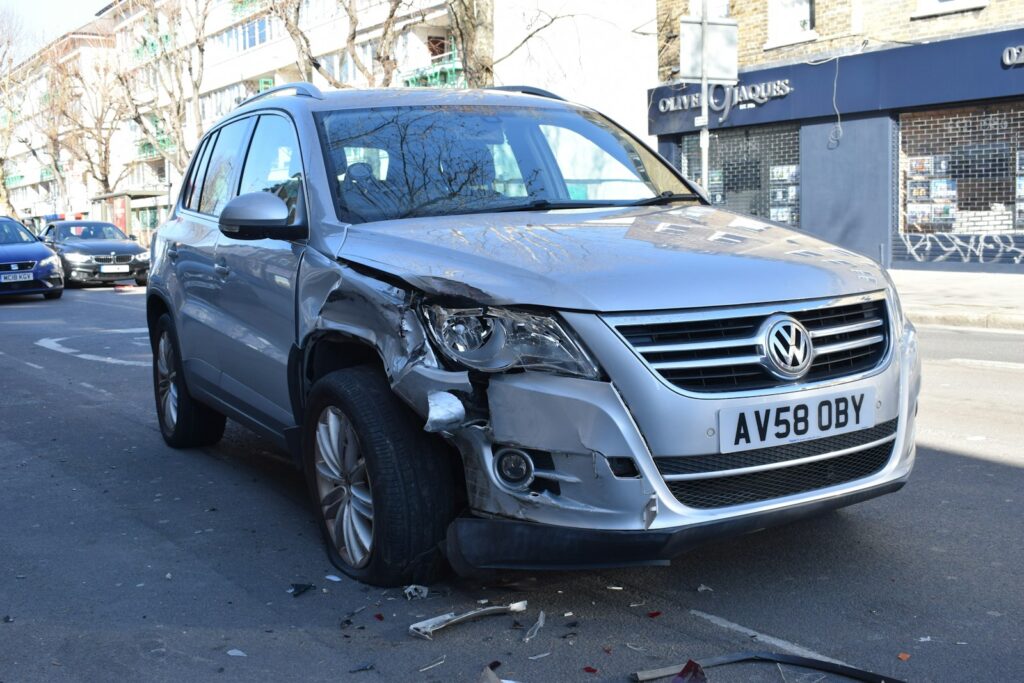
The first clue: “Why is my car not where I left it?”
At first he tried to talk himself out of it. Dealerships move cars around all the time—into bays, out of bays, around the lot. But the dot on the map wasn’t drifting a few hundred feet; it was traveling down main roads, away from the address he’d just visited. The speed indicator ticked up, then down, like it was catching traffic lights.
He called the service desk, keeping his voice casual because he didn’t want to be that customer accusing people of joyriding based on a phone map. The rep put him on hold, came back, and said something vague about “a technician verifying a concern.” That would’ve been comforting if he’d come in with anything to verify, but he hadn’t. He’d asked for routine service, nothing about a noise, a vibration, or a check engine light.
When he pressed for specifics—what concern, what route, how long—he didn’t get a straight answer. The rep sounded like he was talking while staring at a screen, trying to locate something without admitting he didn’t know where it was. The customer hung up with that uneasy feeling you get when a conversation stays polite but the logic doesn’t add up.
They called it a “test drive,” but nobody could explain the test
He drove back to the dealership, partly because he wanted eyes on the situation and partly because he didn’t trust whatever was happening out there to resolve itself cleanly. By the time he walked in, the front counter had the same calm rhythm—phones ringing, keyboards tapping, someone asking about tire rotations. That normalcy made him feel like he was overreacting, right up until he mentioned his car and watched a couple employees exchange quick looks.
The service advisor leaned into the usual dealership language: they sometimes have to “test drive to ensure quality,” and it was “standard procedure.” But the guy’s explanation kept shifting. First it was a quick loop. Then it was to “check something.” Then it was “a worker” took it, not specifically a technician, which is the kind of detail you don’t accidentally include if everything is perfectly above-board.
He asked a simple question: if it’s standard, why wasn’t it in the paperwork or mentioned at drop-off? The advisor gave a shrug that wasn’t quite a shrug and said they don’t always document every short drive. He asked how long it had been gone. The advisor glanced away and said he’d “find out,” which didn’t sound like someone who already knew.
It was the kind of conversation where both people are speaking English, but one person is speaking in information and the other is speaking in fog. The customer could feel himself getting angry, but it wasn’t the loud, satisfying kind. It was the slow kind where your chest tightens because you’re being managed, not helped.
The second clue: silence, stalling, and a car that still wasn’t back
Time stretched out in that waiting-room way. The customer sat down, stood up, walked outside, came back in, checked the app again, watched the location dot stop moving somewhere that was definitely not the dealership. When he asked for an update, the staff told him the same thing three different ways: they were looking into it.
At one point, someone suggested he might’ve misread the app and that the GPS can “jump around.” He showed them the location history, which was pretty hard to argue with: a clear route, a stop, and then nothing. The service advisor’s face tightened the way it does when someone realizes there’s a record of something they hoped would stay vague.
Then the story changed again, like it was being rewritten in real time. Now it wasn’t a “technician” but a “porter.” Now it wasn’t a “quality check” but a “quick drive to ensure everything was fine.” Nobody would say why his car needed to be fine when it came in fine. Nobody would say why the drive took it well off dealership property.
He asked for a manager. The manager didn’t appear right away. And that delay—the little gap where they clearly wanted to solve something before he spoke to anyone with authority—was when he realized he probably wasn’t going to like whatever the truth was.
He learned about the crash the way people learn about bad news: sideways
The first explicit hint didn’t come as a confession. It came as an accidental leak. A staffer he hadn’t spoken to yet walked by and said something about “an incident,” then stopped mid-sentence when he noticed the customer was listening. It was small, but it snapped the whole scene into focus.
When the manager finally came out, the tone shifted from vague reassurance to careful containment. The manager asked him to step aside, away from the counter, into one of those half-private corners that aren’t really private but are far enough away that other customers don’t immediately eavesdrop. The manager said there had been “a situation” involving the vehicle, and they were “working on it.”
The customer didn’t let him float in that language. He asked, directly, whether someone crashed his car. The manager paused just a hair too long and said there had been damage, yes, but they were assessing it. Not “we crashed it.” Not “our employee crashed it.” Just “there was damage,” like the car had wandered off and bumped into something on its own.
That was when the truth started arriving piece by piece, each piece pried loose with a question. Yes, an employee had taken it off-site. Yes, it wasn’t part of the work order. Yes, it had been in a collision. The manager wouldn’t say at first what it hit, who was driving, or whether a police report existed, only that they were “handling the details.”
The awkward part: they tried to keep the car out of his sight
He asked to see the car. They told him it wasn’t on the property. That made his stomach drop in a new way—because if the car wasn’t there, it meant it was either being towed, being stored somewhere, or sitting in a condition they didn’t want him to witness. He asked where it was. The manager said it had been moved “for evaluation,” which is a phrase that can mean anything from a body shop to a back lot.
When he asked for specifics, the manager offered to “arrange” a viewing later. That was the moment he stopped playing along. If it was his car, he shouldn’t need an appointment to look at it. He asked whether it was drivable. The manager avoided the word “no” and said they didn’t want him to “worry” before they had a full assessment.
The customer pulled up the app again and showed them the current location. The dot wasn’t at a body shop. It looked like a random industrial area, the kind of place that could be a tow yard or a storage lot. Watching the manager react to that—watching him realize the customer could see what they were trying to keep abstract—turned the conversation colder.
Eventually the manager acknowledged the car had been towed. The details came out like someone reading from a script they didn’t like: there was an employee, there was a test drive, there was an impact, and now the dealership needed time to “make it right.” The customer, still standing there with the smell of service-bay exhaust drifting in from the open doors, asked the obvious follow-up: why didn’t anyone call him the second it happened?
The manager said they wanted accurate information before contacting him. The customer heard what was underneath that: they wanted a plan before they told him. They wanted to control the first version of the story, the one that sticks. And he’d interrupted that timeline by noticing his car had taken a little field trip without him.
Where it landed: paperwork questions and a trust problem they couldn’t fix
Once the crash was out in the open, the conversation turned into a tangle of logistics that felt insulting in its own way. The dealership floated options: repairs, a rental, “taking care of everything,” maybe involving their insurance. But every offer came with a haze of non-answers about what the driver was doing, whether it was an authorized drive, and whether the employee was on the clock.
The customer asked for the incident report and any police documentation. The manager said they’d provide what they could, once they had it. He asked for the name of the employee who drove. The manager said they couldn’t share personnel details. That might be technically true, but it did nothing to lower the temperature of a situation where a stranger had just totaled—maybe not totaled, but definitely damaged—his property while it was supposed to be getting serviced.
He also couldn’t shake the way the story had been managed. If he hadn’t had an app with location tracking, would he have been told the same day? Would he have come back to pick it up and been met with an excuse about a “delay,” only to discover later that the delay was because it was sitting in a tow yard with a smashed bumper? That possibility hung over every sentence the manager said.
By the time he left, he didn’t have his car, didn’t have a clear written timeline, and didn’t have the one thing he’d walked in expecting: control. What he did have was a dealership promising to fix a mess they didn’t immediately admit existed—and the nagging sense that the most important details were still being held back, not because they didn’t know them, but because they were deciding which version of the truth he was allowed to hear first.
More from Steel Horse Rides: